
Equipment selection is one of the most consequential decisions in plant design. The equipment you choose determines capital cost, operating cost, reliability, maintenance requirements, and ultimately whether the plant meets its performance targets.
For small to medium-scale industrial plants, equipment selection is especially critical. There is less redundancy, less margin for error, and less room to absorb the consequences of a poor choice. A pump that is oversized wastes energy for decades. A heat exchanger that is undersized limits output from day one.
This article covers the key criteria that drive effective equipment selection for small to medium-scale plants. Whether you are specifying a boiler, a turbine, a pump, or a control system, these principles apply.
Why Equipment Selection Matters More for Small Plants
Large plants often have redundancy built into their designs. If one pump fails, a backup takes over. If one heat exchanger fouls, another compensates. Small plants rarely have this luxury.
The consequences of poor equipment selection in a small plant include:
- Higher capital cost: Oversized or over-specified equipment increases upfront investment.
- Higher operating cost: Inefficient equipment consumes more fuel, power, or chemicals over its life.
- Reduced reliability: Equipment that is marginal for the application fails more often.
- Maintenance burden: Equipment that is difficult to service increases downtime and cost.
- Limited flexibility: Equipment that cannot handle variations in load or feedstock restricts operations.
For these reasons, equipment selection should be treated as a strategic decision, not a procurement formality.
The Core Criteria for Equipment Selection
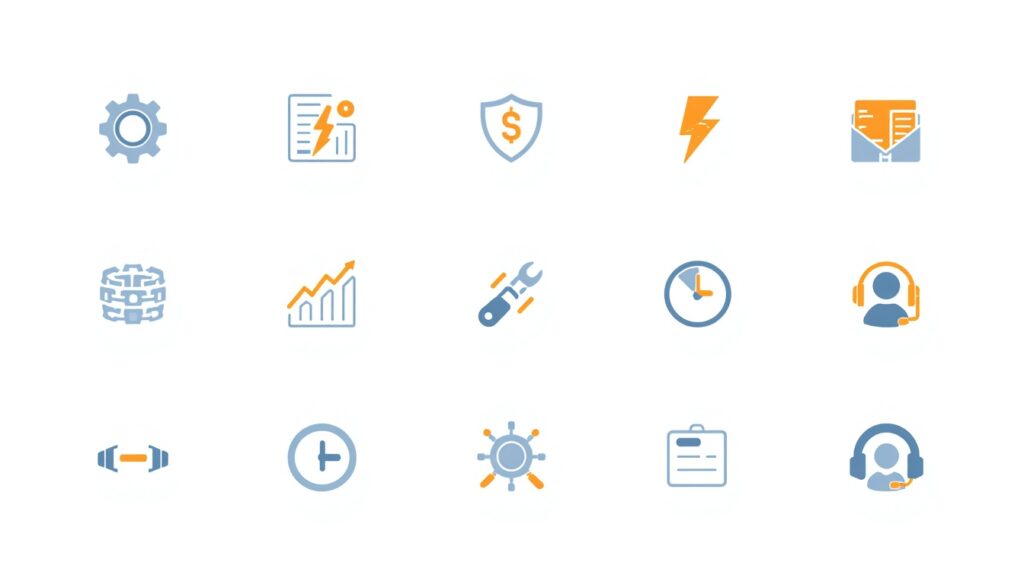
A good equipment selection process evaluates each item against several criteria simultaneously:
| Criterion | What It Means |
|---|---|
| Technical suitability | Does the equipment meet process requirements? |
| Reliability | How often does it fail, and how severe are failures? |
| Efficiency | How much energy, fuel, or consumable does it use? |
| Capital cost | What is the purchase price, including installation? |
| Operating cost | What are the ongoing costs of energy, maintenance, and spares? |
| Maintainability | How easy is it to inspect, repair, and replace? |
| Lead time | How long until delivery, and does it fit the schedule? |
| Vendor support | Does the supplier provide spares, service, and technical support? |
| Compliance | Does it meet codes, standards, and environmental requirements? |
These criteria sometimes conflict. A highly efficient piece of equipment may cost more upfront. A reliable vendor may have a longer lead time. Good selection balances these trade-offs.
Technical Suitability
The first question is always: does the equipment meet the process requirements?
This includes:
- Capacity: Can it handle the required flow, pressure, temperature, or load?
- Range: Can it operate across the expected range of conditions?
- Turndown: Can it operate stably and efficiently down to the minimum expected load?
- Compatibility: Is it compatible with the process fluid, fuel, or environment?
- Interfaces: Does it connect properly with upstream and downstream equipment?
Manufacturers provide performance curves and datasheets that define these limits. These should be reviewed carefully, not assumed.
A common mistake is selecting equipment that meets design conditions but performs poorly at off-design conditions. For small plants, which often operate across a wide range of loads, turndown and part-load efficiency are especially important.
Equipment selection also directly affects whether the plant can meet its performance guarantees. If the plant must achieve a guaranteed heat rate or output, every major item must be capable of supporting it. A pump or heat exchanger that is marginal at design conditions may cause the entire plant to fall short. (See [title/link of article on performance guarantees].)
Standardization vs. Customization
For small plants, standard, off-the-shelf equipment is usually preferable to custom-designed units. Catalogue equipment typically costs less, is delivered faster, has a proven field record, and uses spare parts that are easier to source and interchange. Standardizing on the same models across the plant, such as a single pump family, also reduces the number of different spares to hold and simplifies operator training.
Customization is justified when standard equipment cannot meet a process requirement or offers a clear performance advantage. Even then, its added cost, longer lead time, and heavier spares burden should be weighed explicitly rather than accepted by default.
Reliability
Reliability is the probability that equipment will perform its function without failure over a given period. For small plants, reliability is critical because there is often no redundancy.
Key reliability considerations include:
- Mean time between failures (MTBF): How often does the equipment fail?
- Mean time to repair (MTTR): How long does it take to restore operation after a failure?
- Failure mode: Does failure result in a safe shutdown or a hazardous condition?
- Service history: How has this equipment performed in similar applications?
Reliability data can come from manufacturer records, industry databases, or references from other plant owners. Do not rely solely on vendor claims.
For critical equipment, consider whether redundancy is justified. A single spare pump may cost less than the production lost during a failure.
Efficiency
Efficiency determines how much energy or fuel the equipment consumes over its life. For equipment that runs continuously, efficiency often matters more than capital cost.
Consider a pump, for example. Suppose it draws 100 kW and runs 8,000 hours per year at an electricity price of $0.10/kWh. Its annual energy cost is about $80,000. A pump that draws 5% less power saves about $4,000 per year, or roughly $40,000 over 10 years. If the more efficient pump carries a 20% price premium on a typical $20,000 unit, that premium is only $4,000, so it pays for itself in about one year. Even after discounting future savings (about $27,000 at an 8% discount rate), the energy savings far exceed the price difference.
The same logic applies to boilers, turbines, compressors, and heat exchangers. The key is to evaluate life-cycle cost, not just purchase price.
Capital Cost vs. Operating Cost
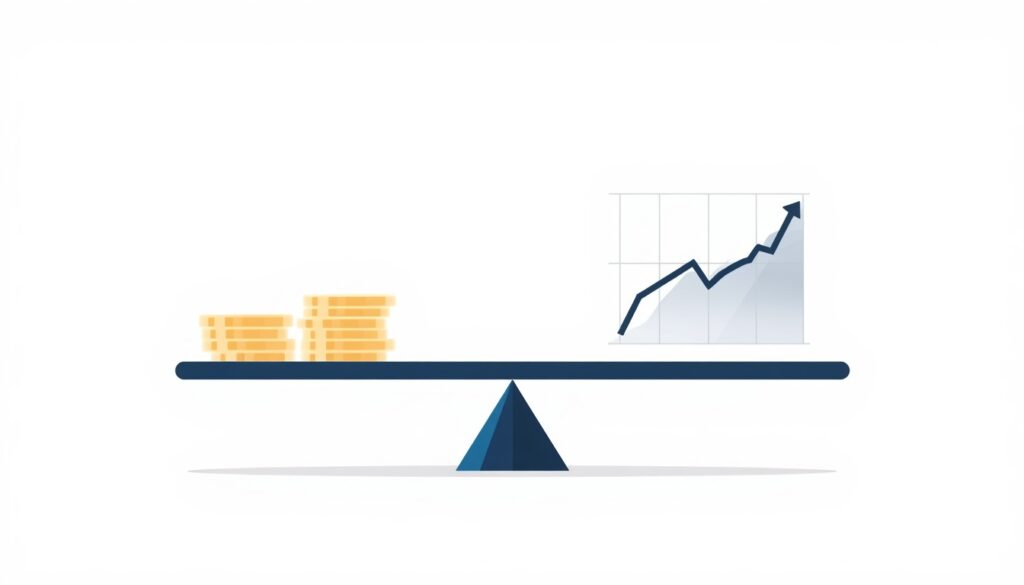
Equipment selection often involves a trade-off between capital cost and operating cost. A cheaper piece of equipment may consume more energy, require more maintenance, or fail more often.
The tool for evaluating this trade-off is life-cycle cost analysis, also known as total cost of ownership (TCO) analysis. This sums:
- Purchase price
- Installation cost
- Energy cost over the equipment’s life
- Maintenance and spares cost
- Downtime cost
- Disposal or replacement cost
For small plants, where margins are tight, life-cycle cost (TCO) is often the most important criterion. A slightly higher upfront investment in efficient, reliable equipment usually pays back many times over.
Maintainability
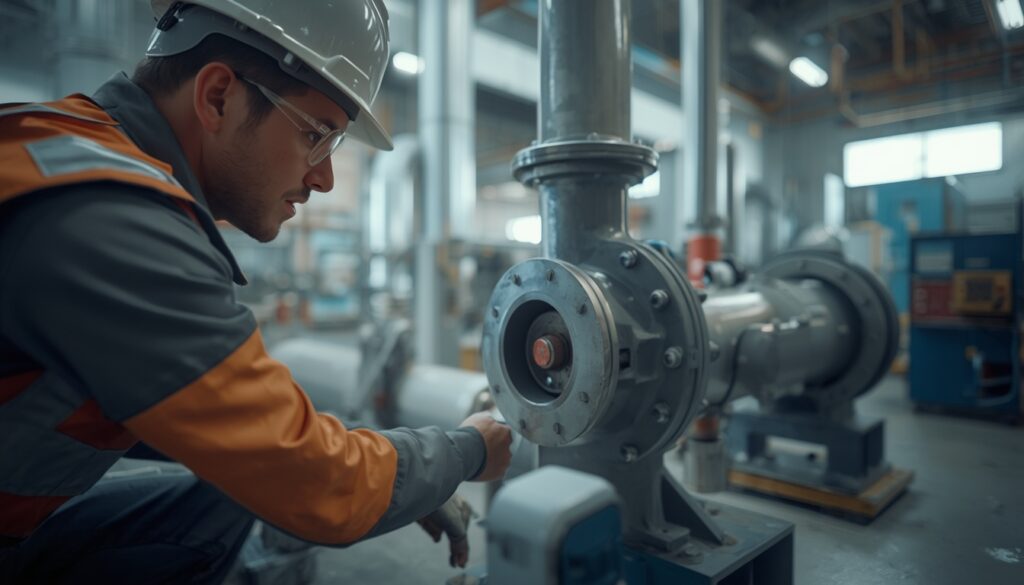
Equipment must be maintainable. This means:
- Access: Can it be reached for inspection and repair?
- Disassembly: Can components be removed and replaced without major work?
- Standardization: Are parts standard, or are they proprietary and slow to source?
- Documentation: Are manuals, drawings, and procedures available?
- Training: Can your team operate and maintain it, or is specialist support required?
For small plants, maintainability is often overlooked. Equipment that is difficult to service leads to longer downtime, higher costs, and more reliance on external support.
Lead Time and Schedule
Lead time is the time between placing an order and receiving the equipment. For long-lead items such as turbines, generators, and large vessels, lead times can be 12 to 24 months or more.
Lead time affects:
- Project schedule: Long-lead items determine the critical path.
- Procurement planning: Orders must be placed early enough to meet schedule.
- Storage and preservation: Equipment delivered early must be stored and protected.
- Vendor capacity: Popular vendors may be booked out for months.
For small plants, lead time is often a constraint. Early identification of long-lead items allows procurement to start as soon as the design is firm.
Vendor Support
The equipment vendor is a partner for the life of the plant. Good vendor support includes:
- Spare parts availability: Can parts be sourced quickly?
- Technical support: Is help available when problems arise?
- Warranty: What is covered, and for how long?
- Service agreements: Are maintenance and overhaul services available?
- Training: Does the vendor provide training for your team?
A vendor with strong support may be worth a higher price. A vendor with poor support can leave you stranded when equipment fails.
Spare Parts Strategy
Availability from the vendor is only half the question. The other half is what to hold on site. For critical equipment, consider whether to stock spare parts on-site or rely on vendor delivery. Remote plants often justify carrying key spares, because a single missing part can idle the plant for weeks. A practical approach is to ask each vendor for a recommended spares list, then stock the items that are critical to operation, have long lead times, or are unlikely to be available locally. Weigh the carrying cost of these spares against the cost of downtime.
Compliance and Standards
Equipment must comply with applicable codes, standards, and regulations. These may include:
- Pressure vessel codes: ASME, PED, or local equivalents
- Electrical standards: IEC, NEC, or local equivalents
- Environmental regulations: Emissions limits, noise limits, and discharge requirements
- Safety standards: ATEX, NFPA, or local equivalents
Compliance is not optional. Equipment that does not meet applicable standards cannot be legally operated, and may not be insurable.
Common Equipment Selection Mistakes
Even experienced designers make mistakes. Common ones include:
- Selecting on price alone: Ignoring efficiency, reliability, and maintenance costs
- Oversizing equipment: Adding unnecessary margin that increases cost and reduces efficiency
- Undersizing equipment: Leaving no margin for actual operating conditions
- Ignoring part-load performance: Optimizing for design point only
- Overlooking lead time: Discovering too late that equipment cannot be delivered on schedule
- Neglecting vendor support: Choosing a vendor with no local presence or spare parts
- Skipping life-cycle cost analysis: Comparing only purchase prices
These mistakes are costly to fix after equipment is installed. They are much cheaper to avoid during selection.
How Japanese EPC Firms Approach Equipment Selection
Japanese engineering firms are known for their disciplined approach to equipment selection. Common characteristics include:
- Conservative sizing: Equipment is specified with adequate margin, but not excessive.
- Emphasis on reliability: Proven equipment and vendors are preferred over untested alternatives.
- Life-cycle cost focus: Purchase price is evaluated alongside operating and maintenance costs.
- Long-term vendor relationships: Established vendors with strong support are favored.
- Detailed documentation: Specifications, datasheets, and test records are carefully maintained.
For plant owners, this often means equipment that performs reliably for decades, even if the initial price is higher than some alternatives.
How to Evaluate Equipment Selection
When reviewing equipment selections, ask:
| Question | Why It Matters |
|---|---|
| Does it meet process requirements? | Ensures the plant can achieve its design output |
| Can it support the performance guarantees? | Prevents a marginal item from causing the plant to fall short |
| Is it reliable? | Reduces downtime and maintenance cost |
| Is it efficient? | Reduces operating cost over the plant’s life |
| What is the life-cycle cost (TCO)? | Captures total cost, not just purchase price |
| Is it maintainable? | Reduces downtime and reliance on external support |
| Can it be delivered on schedule? | Keeps the project on track |
| Does the vendor provide good support, and are critical spares covered? | Ensures spare parts and technical help are available |
| Does it comply with standards? | Ensures legal and safe operation |
A selection that satisfies all these questions is likely to perform well over the plant’s life.
Conclusion
Equipment selection is not just a procurement exercise. It is a strategic decision that affects cost, reliability, efficiency, and long-term performance. For small to medium-scale industrial plants, where margins are tight and redundancy is limited, equipment selection deserves careful attention from the earliest stages of design.
By focusing on technical suitability, reliability, efficiency, life-cycle cost, maintainability, lead time, vendor support, and compliance, owners and designers can select equipment that performs reliably and economically for decades.
Key Takeaways
- Equipment selection affects cost, reliability, efficiency, and long-term performance.
- Life-cycle cost (total cost of ownership), not just purchase price, should drive decisions.
- Reliability and maintainability matter more in small plants with limited redundancy.
- Standard, proven equipment and a sensible on-site spares strategy reduce cost, lead time, and downtime.
- Lead time and vendor support are critical for schedule and long-term operation.
- Japanese EPC firms favor conservative sizing, proven vendors, and detailed documentation.
Comments
One response to “Equipment Selection Criteria for Small to Medium-Scale Industrial Plants”
[…] Chemical Storage and Handling — Water treatment chemicals must be stored and handled safely. This requires appropriate containment, ventilation, and personal protective equipment. Personnel handling water treatment chemicals must be trained in safe handling, emergency response, and proper use of personal protective equipment. […]