Tag: Engineering

  • Equipment Selection Criteria for Small to Medium-Scale Industrial Plants

    Equipment Selection Criteria for Small to Medium-Scale Industrial Plants

    Equipment selection is one of the most consequential decisions in plant design. The equipment you choose determines capital cost, operating cost, reliability, maintenance requirements, and ultimately whether the plant meets its performance targets.

    For small to medium-scale industrial plants, equipment selection is especially critical. There is less redundancy, less margin for error, and less room to absorb the consequences of a poor choice. A pump that is oversized wastes energy for decades. A heat exchanger that is undersized limits output from day one.

    This article covers the key criteria that drive effective equipment selection for small to medium-scale plants. Whether you are specifying a boiler, a turbine, a pump, or a control system, these principles apply.

    Why Equipment Selection Matters More for Small Plants

    Large plants often have redundancy built into their designs. If one pump fails, a backup takes over. If one heat exchanger fouls, another compensates. Small plants rarely have this luxury.

    The consequences of poor equipment selection in a small plant include:

    • Higher capital cost: Oversized or over-specified equipment increases upfront investment.
    • Higher operating cost: Inefficient equipment consumes more fuel, power, or chemicals over its life.
    • Reduced reliability: Equipment that is marginal for the application fails more often.
    • Maintenance burden: Equipment that is difficult to service increases downtime and cost.
    • Limited flexibility: Equipment that cannot handle variations in load or feedstock restricts operations.

    For these reasons, equipment selection should be treated as a strategic decision, not a procurement formality.

    The Core Criteria for Equipment Selection

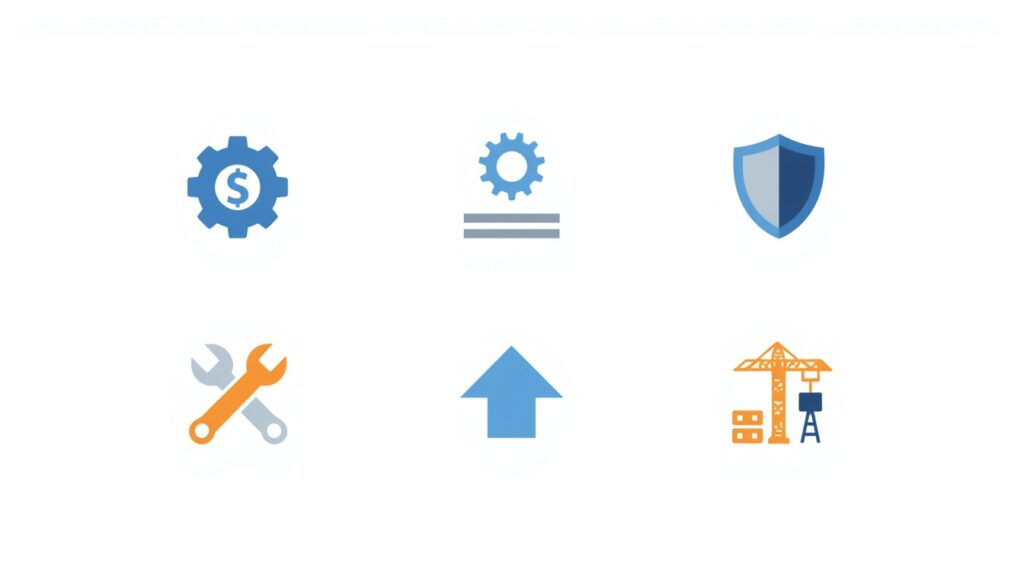
    Core criteria for industrial plant equipment selection

    A good equipment selection process evaluates each item against several criteria simultaneously:

    Criterion What It Means
    Technical suitability Does the equipment meet process requirements?
    Reliability How often does it fail, and how severe are failures?
    Efficiency How much energy, fuel, or consumable does it use?
    Capital cost What is the purchase price, including installation?
    Operating cost What are the ongoing costs of energy, maintenance, and spares?
    Maintainability How easy is it to inspect, repair, and replace?
    Lead time How long until delivery, and does it fit the schedule?
    Vendor support Does the supplier provide spares, service, and technical support?
    Compliance Does it meet codes, standards, and environmental requirements?

    These criteria sometimes conflict. A highly efficient piece of equipment may cost more upfront. A reliable vendor may have a longer lead time. Good selection balances these trade-offs.

    Technical Suitability

    The first question is always: does the equipment meet the process requirements?

    This includes:

    • Capacity: Can it handle the required flow, pressure, temperature, or load?
    • Range: Can it operate across the expected range of conditions?
    • Turndown: Can it operate stably and efficiently down to the minimum expected load?
    • Compatibility: Is it compatible with the process fluid, fuel, or environment?
    • Interfaces: Does it connect properly with upstream and downstream equipment?

    Manufacturers provide performance curves and datasheets that define these limits. These should be reviewed carefully, not assumed.

    A common mistake is selecting equipment that meets design conditions but performs poorly at off-design conditions. For small plants, which often operate across a wide range of loads, turndown and part-load efficiency are especially important.

    Equipment selection also directly affects whether the plant can meet its performance guarantees. If the plant must achieve a guaranteed heat rate or output, every major item must be capable of supporting it. A pump or heat exchanger that is marginal at design conditions may cause the entire plant to fall short. (See [title/link of article on performance guarantees].)

    Standardization vs. Customization

    For small plants, standard, off-the-shelf equipment is usually preferable to custom-designed units. Catalogue equipment typically costs less, is delivered faster, has a proven field record, and uses spare parts that are easier to source and interchange. Standardizing on the same models across the plant, such as a single pump family, also reduces the number of different spares to hold and simplifies operator training.

    Customization is justified when standard equipment cannot meet a process requirement or offers a clear performance advantage. Even then, its added cost, longer lead time, and heavier spares burden should be weighed explicitly rather than accepted by default.

    Reliability

    Reliability is the probability that equipment will perform its function without failure over a given period. For small plants, reliability is critical because there is often no redundancy.

    Key reliability considerations include:

    • Mean time between failures (MTBF): How often does the equipment fail?
    • Mean time to repair (MTTR): How long does it take to restore operation after a failure?
    • Failure mode: Does failure result in a safe shutdown or a hazardous condition?
    • Service history: How has this equipment performed in similar applications?

    Reliability data can come from manufacturer records, industry databases, or references from other plant owners. Do not rely solely on vendor claims.

    For critical equipment, consider whether redundancy is justified. A single spare pump may cost less than the production lost during a failure.

    Efficiency

    Efficiency determines how much energy or fuel the equipment consumes over its life. For equipment that runs continuously, efficiency often matters more than capital cost.

    Consider a pump, for example. Suppose it draws 100 kW and runs 8,000 hours per year at an electricity price of $0.10/kWh. Its annual energy cost is about $80,000. A pump that draws 5% less power saves about $4,000 per year, or roughly $40,000 over 10 years. If the more efficient pump carries a 20% price premium on a typical $20,000 unit, that premium is only $4,000, so it pays for itself in about one year. Even after discounting future savings (about $27,000 at an 8% discount rate), the energy savings far exceed the price difference.

    The same logic applies to boilers, turbines, compressors, and heat exchangers. The key is to evaluate life-cycle cost, not just purchase price.

    Capital Cost vs. Operating Cost
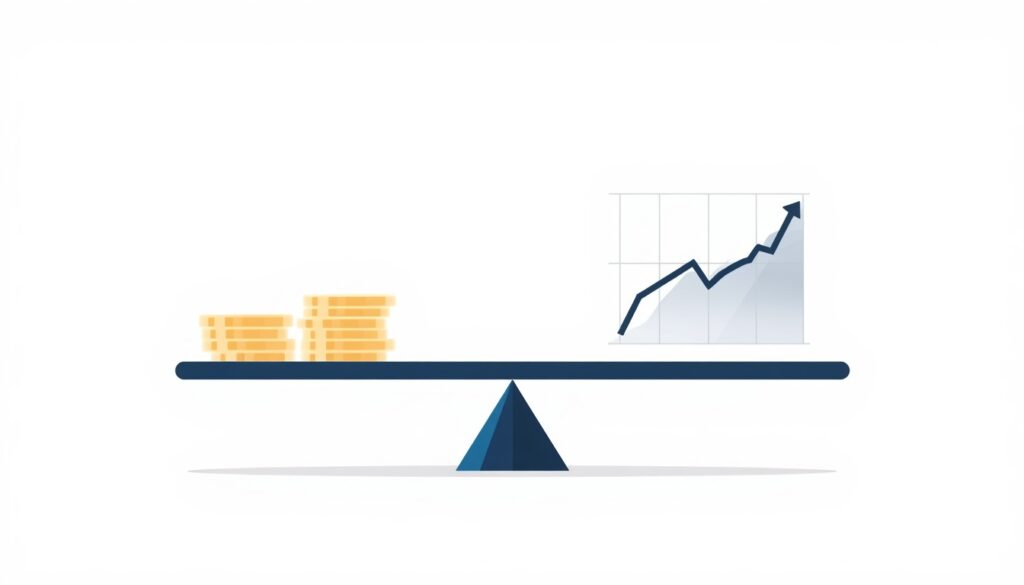
    Capital cost versus operating cost trade-off in equipment selection

    Equipment selection often involves a trade-off between capital cost and operating cost. A cheaper piece of equipment may consume more energy, require more maintenance, or fail more often.

    The tool for evaluating this trade-off is life-cycle cost analysis, also known as total cost of ownership (TCO) analysis. This sums:

    • Purchase price
    • Installation cost
    • Energy cost over the equipment’s life
    • Maintenance and spares cost
    • Downtime cost
    • Disposal or replacement cost

    For small plants, where margins are tight, life-cycle cost (TCO) is often the most important criterion. A slightly higher upfront investment in efficient, reliable equipment usually pays back many times over.

    Maintainability

    Maintainability considerations in industrial plant equipment selection

    Equipment must be maintainable. This means:

    • Access: Can it be reached for inspection and repair?
    • Disassembly: Can components be removed and replaced without major work?
    • Standardization: Are parts standard, or are they proprietary and slow to source?
    • Documentation: Are manuals, drawings, and procedures available?
    • Training: Can your team operate and maintain it, or is specialist support required?

    For small plants, maintainability is often overlooked. Equipment that is difficult to service leads to longer downtime, higher costs, and more reliance on external support.

    Lead Time and Schedule

    Lead time is the time between placing an order and receiving the equipment. For long-lead items such as turbines, generators, and large vessels, lead times can be 12 to 24 months or more.

    Lead time affects:

    • Project schedule: Long-lead items determine the critical path.
    • Procurement planning: Orders must be placed early enough to meet schedule.
    • Storage and preservation: Equipment delivered early must be stored and protected.
    • Vendor capacity: Popular vendors may be booked out for months.

    For small plants, lead time is often a constraint. Early identification of long-lead items allows procurement to start as soon as the design is firm.

    Vendor Support

    The equipment vendor is a partner for the life of the plant. Good vendor support includes:

    • Spare parts availability: Can parts be sourced quickly?
    • Technical support: Is help available when problems arise?
    • Warranty: What is covered, and for how long?
    • Service agreements: Are maintenance and overhaul services available?
    • Training: Does the vendor provide training for your team?

    A vendor with strong support may be worth a higher price. A vendor with poor support can leave you stranded when equipment fails.

    Spare Parts Strategy

    Availability from the vendor is only half the question. The other half is what to hold on site. For critical equipment, consider whether to stock spare parts on-site or rely on vendor delivery. Remote plants often justify carrying key spares, because a single missing part can idle the plant for weeks. A practical approach is to ask each vendor for a recommended spares list, then stock the items that are critical to operation, have long lead times, or are unlikely to be available locally. Weigh the carrying cost of these spares against the cost of downtime.

    Compliance and Standards

    Equipment must comply with applicable codes, standards, and regulations. These may include:

    • Pressure vessel codes: ASME, PED, or local equivalents
    • Electrical standards: IEC, NEC, or local equivalents
    • Environmental regulations: Emissions limits, noise limits, and discharge requirements
    • Safety standards: ATEX, NFPA, or local equivalents

    Compliance is not optional. Equipment that does not meet applicable standards cannot be legally operated, and may not be insurable.

    Common Equipment Selection Mistakes

    Even experienced designers make mistakes. Common ones include:

    • Selecting on price alone: Ignoring efficiency, reliability, and maintenance costs
    • Oversizing equipment: Adding unnecessary margin that increases cost and reduces efficiency
    • Undersizing equipment: Leaving no margin for actual operating conditions
    • Ignoring part-load performance: Optimizing for design point only
    • Overlooking lead time: Discovering too late that equipment cannot be delivered on schedule
    • Neglecting vendor support: Choosing a vendor with no local presence or spare parts
    • Skipping life-cycle cost analysis: Comparing only purchase prices

    These mistakes are costly to fix after equipment is installed. They are much cheaper to avoid during selection.

    How Japanese EPC Firms Approach Equipment Selection

    Japanese engineering firms are known for their disciplined approach to equipment selection. Common characteristics include:

    • Conservative sizing: Equipment is specified with adequate margin, but not excessive.
    • Emphasis on reliability: Proven equipment and vendors are preferred over untested alternatives.
    • Life-cycle cost focus: Purchase price is evaluated alongside operating and maintenance costs.
    • Long-term vendor relationships: Established vendors with strong support are favored.
    • Detailed documentation: Specifications, datasheets, and test records are carefully maintained.

    For plant owners, this often means equipment that performs reliably for decades, even if the initial price is higher than some alternatives.

    How to Evaluate Equipment Selection

    When reviewing equipment selections, ask:

    Question Why It Matters
    Does it meet process requirements? Ensures the plant can achieve its design output
    Can it support the performance guarantees? Prevents a marginal item from causing the plant to fall short
    Is it reliable? Reduces downtime and maintenance cost
    Is it efficient? Reduces operating cost over the plant’s life
    What is the life-cycle cost (TCO)? Captures total cost, not just purchase price
    Is it maintainable? Reduces downtime and reliance on external support
    Can it be delivered on schedule? Keeps the project on track
    Does the vendor provide good support, and are critical spares covered? Ensures spare parts and technical help are available
    Does it comply with standards? Ensures legal and safe operation

    A selection that satisfies all these questions is likely to perform well over the plant’s life.

    Conclusion

    Equipment selection is not just a procurement exercise. It is a strategic decision that affects cost, reliability, efficiency, and long-term performance. For small to medium-scale industrial plants, where margins are tight and redundancy is limited, equipment selection deserves careful attention from the earliest stages of design.

    By focusing on technical suitability, reliability, efficiency, life-cycle cost, maintainability, lead time, vendor support, and compliance, owners and designers can select equipment that performs reliably and economically for decades.

    Key Takeaways

    • Equipment selection affects cost, reliability, efficiency, and long-term performance.
    • Life-cycle cost (total cost of ownership), not just purchase price, should drive decisions.
    • Reliability and maintainability matter more in small plants with limited redundancy.
    • Standard, proven equipment and a sensible on-site spares strategy reduce cost, lead time, and downtime.
    • Lead time and vendor support are critical for schedule and long-term operation.
    • Japanese EPC firms favor conservative sizing, proven vendors, and detailed documentation.
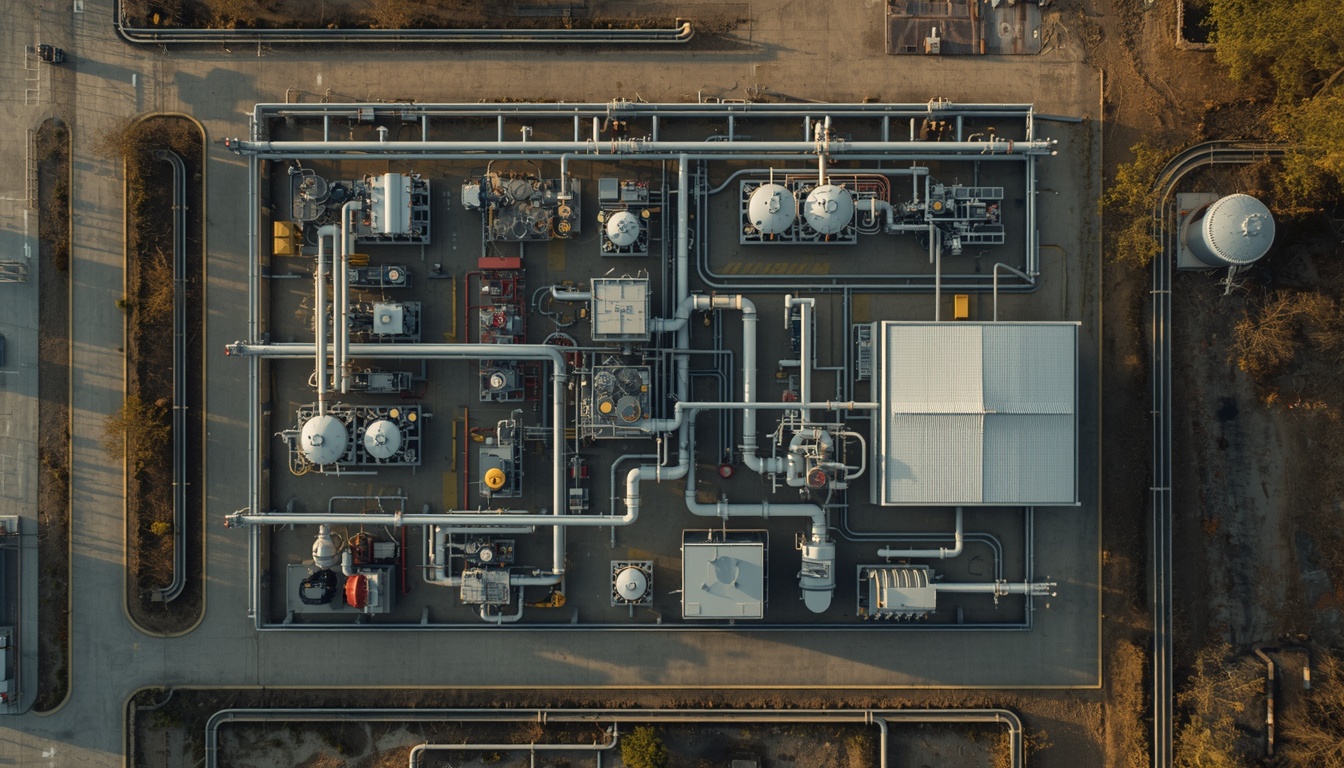
  • Key Considerations in Small-Scale Industrial Plant Layout Design

    Key Considerations in Small-Scale Industrial Plant Layout Design

    Plant layout is one of the most consequential decisions in industrial plant design. It affects construction cost, operating efficiency, maintenance access, safety, and future expansion. For small-scale industrial plants, layout decisions are especially critical because there is less space to work with and less margin for error.

    This article covers the key considerations that drive effective layout design for small to medium-scale industrial plants. Whether you are planning a biomass facility, a small thermal plant, or a process plant, these principles apply.

    Plot Plan vs. Equipment Layout

    Two related but distinct documents define a plant’s layout:

    • Plot plan: The site-level arrangement of buildings, roads, major equipment, tanks, utilities, and boundaries.
    • Equipment layout: The detailed arrangement of equipment, piping, and access within a building, structure, or process area.

    For small plants, the plot plan often determines whether the project is feasible at all. Site boundaries, setbacks, access roads, and separation distances are fixed early, and they constrain everything that follows. This article addresses both levels, but the plot plan should be settled before detailed equipment layout begins.

    Why Layout Matters More for Small Plants

    Large plants often have enough space to accommodate imperfect layouts. Small plants do not. Every meter counts. A poorly planned layout in a small plant can lead to:

    • Higher construction cost: Extra piping, longer cable runs, and additional structural steel.
    • Inefficient operations: Longer travel distances for operators and maintenance staff.
    • Safety risks: Inadequate separation between hazardous areas.
    • Limited expansion: No room to add equipment or capacity later.
    • Maintenance difficulties: Equipment that cannot be accessed for service.

    For these reasons, layout should be treated as a strategic decision, not a drafting exercise.

    The Core Objectives of Plant Layout

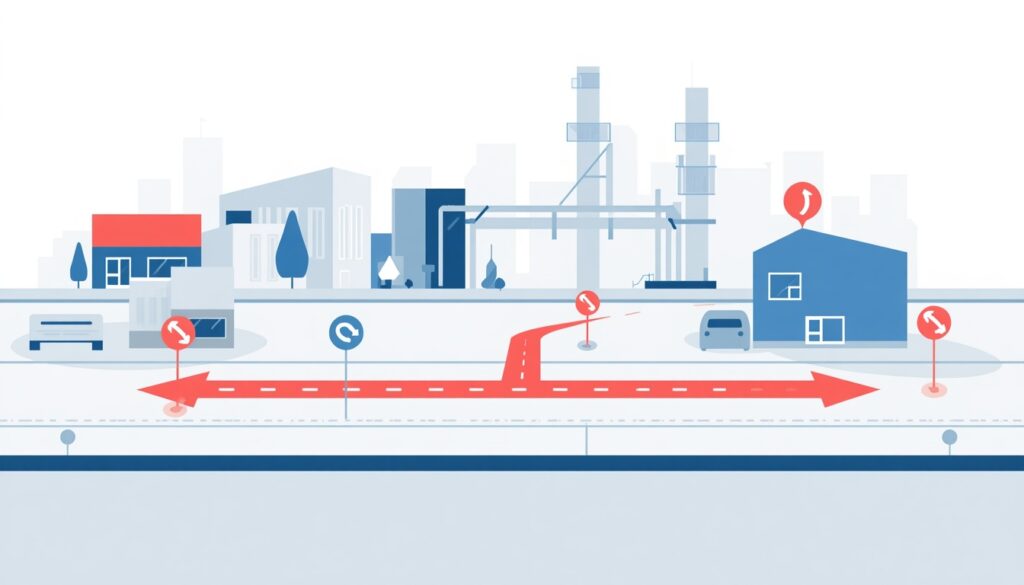
    Core objectives of industrial plant layout design

    A good layout achieves several objectives simultaneously:

    Objective What It Means
    Minimize capital cost Reduce piping, cabling, and structural requirements
    Optimize operations Place equipment in logical process order
    Ensure safety Separate hazardous areas and provide clear escape routes
    Enable maintenance Provide access for inspection, repair, and replacement
    Allow expansion Reserve space for future equipment or capacity increase
    Facilitate construction Allow efficient sequencing of civil, mechanical, and electrical work

    These objectives sometimes conflict. For example, minimizing cost may push equipment closer together, but safety and maintenance requirements may demand more space. Good layout design balances these trade-offs.

    Key Considerations

    1. Process Flow

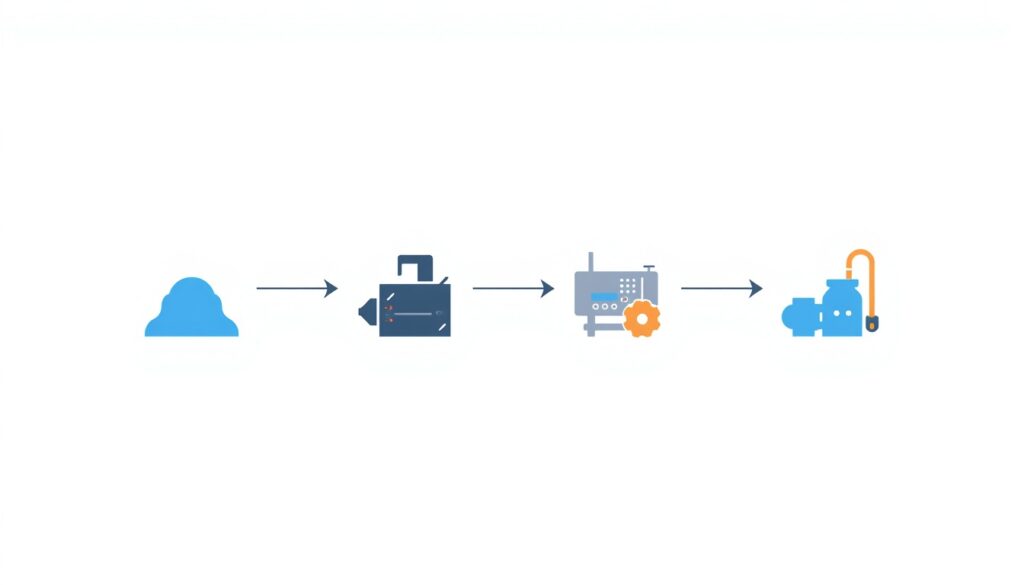
    Process flow diagram for industrial plant layout design

    The layout should follow the process flow as closely as possible. Raw material should enter at one end, and finished product or output should exit at the other. This minimizes piping runs, reduces pressure drops, and simplifies operation.

    For small plants, a linear or L-shaped layout often works best. Linear layouts minimize piping runs and simplify construction, while L-shaped layouts allow the plant to fit into constrained sites while preserving process flow. Both are simple, efficient, and easy to expand.

    2. Equipment Spacing

    Equipment must be spaced to allow:

    • Operation: Space for operators to monitor and adjust equipment.
    • Maintenance: Room to remove and replace components such as heat exchangers, pumps, and motors.
    • Safety: Adequate distance between hot surfaces, electrical equipment, and flammable materials.
    • Ventilation: Airflow to prevent heat buildup and gas accumulation.

    Manufacturers typically provide minimum clearance recommendations. These should be treated as minimums, not targets.

    3. Piping, Pipe Racks, and Cable Routing

    Piping and cabling are significant cost drivers. A layout that minimizes the length and complexity of these runs reduces both capital cost and pressure losses.

    Key principles:

    • Group equipment that shares piping or cabling connections.
    • Use common pipe racks and cable trays where possible.
    • Avoid unnecessary elevation changes in piping.
    • Route cables away from hot or hazardous areas.

    Pipe racks as the backbone of the layout. In many plants, the pipe rack is the organizing element around which everything else is arranged. Its location drives equipment spacing, since equipment is typically placed along both sides of the rack. It also drives construction sequence, because rack foundations and steel are often erected early so that piping and cable trays can be installed as equipment arrives. Deciding rack location and routing early, ideally alongside the plot plan, avoids expensive rework later. Leave spare capacity on the rack for future lines, and keep power and instrument cable trays segregated from process piping according to applicable standards.

    4. Access and Egress

    Safe access is essential. The layout must provide:

    • Primary access routes: For normal operations and maintenance.
    • Emergency egress routes: For evacuation during an incident.
    • Vehicle access: For deliveries, mobile equipment, and emergency response.
    • Pedestrian access: Separate from vehicle routes where possible.

    In small plants, access routes often do double duty. This requires careful planning to avoid conflicts.

    5. Safety, Hazard Separation, and Regulatory Compliance

    Safety should be a primary driver of layout, not an afterthought. Key considerations include:

    • Separation distances: Between hazardous and non-hazardous areas.
    • Fire zones: Segregation of equipment by fire risk.
    • Explosion protection: Location of electrical equipment relative to flammable areas.
    • Toxic gas dispersion: Placement of vents and stacks relative to occupied areas.
    • Emergency shutdown: Access to isolation valves and controls.

    Recognized codes and standards (such as NFPA, IEC, and API) provide guidance on separation distances. These must be respected.

    Regulatory compliance. Local regulations often dictate separation distances, fire zone requirements, and emergency access routes. These must be identified early, as they can constrain the layout significantly. A layout that is efficient on paper but fails a permit review can force a costly redesign.

    6. Maintenance and Replacement

    Equipment must be accessible for maintenance. The layout should allow:

    • Removal of major components: Heat exchanger tubes, turbine rotors, and pump internals.
    • Lifting access: Overhead clearance for cranes or mobile lifting equipment.
    • Workspace: Room for maintenance personnel and tools.
    • Spare parts storage: Nearby but not blocking access.

    For small plants, maintenance access is often compromised by tight layout. This should be addressed early in design, not discovered during operation.

    Operation vs. maintenance. Layout for operation and layout for maintenance sometimes conflict. A compact layout may be efficient for operations but difficult for maintenance. The trade-off should be evaluated explicitly.

    7. Future Expansion

    Even small plants sometimes need to expand. A good layout reserves space for:

    • Additional equipment: Parallel process lines, additional pumps, or extra capacity.
    • Utility upgrades: Larger transformers, additional cooling capacity.
    • Control system expansion: Space for additional panels or instruments.
    • Site infrastructure: Roads, parking, and storage.

    Expansion space should be identified during initial design, even if expansion is not certain.

    8. Construction Sequence

    Layout affects how the plant is built. A layout that allows efficient construction sequencing can reduce schedule and cost. Key considerations include:

    • Access for construction equipment: Cranes, trucks, and heavy lift equipment.
    • Laydown areas: Space for temporary storage of materials and equipment.
    • Sequencing: Ability to install equipment in a logical order without blocking access.
    • Temporary facilities: Site offices, warehouses, and worker facilities.

    For small plants, construction access is often constrained. Early planning helps avoid delays.

    9. 3D Modeling and Clash Detection

    Modern layout design uses 3D modeling to detect clashes between piping, structural, and electrical systems before construction begins. This reduces field changes and rework. In tight small-plant layouts, where piping, steel, cable trays, and maintenance envelopes compete for the same space, clash detection is especially valuable. The 3D model can also be used to check maintenance access and lifting paths, not just physical interferences.

    Common Layout Mistakes

    Even experienced designers make mistakes. Common ones include:

    • Insufficient maintenance access: Equipment installed too close to walls or other equipment.
    • Ignoring expansion: No space reserved for future needs.
    • Poor process flow: Equipment arranged inefficiently, increasing piping and operating cost.
    • Inadequate safety separation: Hazardous areas too close to occupied areas.
    • Overlooking construction access: Equipment that cannot be delivered or installed.
    • Forgetting utilities: Insufficient space for piping, cabling, and instrumentation.

    These mistakes are costly to fix after construction begins. They are much cheaper to avoid during design.

    How Japanese EPC Firms Approach Layout

    Japanese engineering firms often take a disciplined approach to plant layout. Common characteristics include:

    • Thorough front-end planning: Layout is developed early and refined through multiple reviews.
    • Attention to detail: Clearances, access routes, and maintenance space are carefully considered.
    • Safety focus: Hazard separation and emergency access are prioritized.
    • Long-term perspective: Expansion space is reserved even when not immediately needed.
    • Constructability review: Layout is evaluated for ease of construction, not just operation.

    For plant owners, this often means a layout that is efficient, safe, and adaptable to future needs.

    How to Evaluate a Layout

    When reviewing a proposed layout, ask:

    Question Why It Matters
    Does it follow the process flow? Minimizes piping and operating cost
    Is there adequate maintenance access? Reduces downtime and maintenance cost
    Are safety separations respected? Protects people and assets
    Is there space for expansion? Avoids costly future modifications
    Can it be constructed efficiently? Reduces schedule and cost
    Are utilities properly routed? Avoids conflicts and inefficiencies
    Is it compliant with regulations? Ensures legal and safe operation

    A layout that satisfies all these questions is likely to perform well over the plant’s life.

    Conclusion

    Plant layout is not just a drawing exercise. It is a strategic decision that affects cost, safety, operations, and future flexibility. For small-scale industrial plants, where space is limited and margins are tight, layout deserves careful attention from the earliest stages of design.

    By focusing on process flow, equipment spacing, safety, maintenance access, and expansion, owners and designers can create layouts that are efficient, safe, and built to last.

    Key Takeaways

    • Plant layout affects cost, safety, operations, and future flexibility.
    • The plot plan often determines project feasibility, so settle it before detailed equipment layout.
    • Process flow should drive the overall arrangement.
    • Equipment spacing must allow operation, maintenance, and safety.
    • Access and egress must be planned for normal and emergency conditions.
    • Local regulations should be identified early, since they can constrain the layout significantly.
    • 3D modeling and clash detection reduce field changes and rework.
    • Japanese EPC firms emphasize front-end planning and constructability review.
  • The Three Stages of EPC Project Delivery: Engineering, Procurement, Construction

    The Three Stages of EPC Project Delivery: Engineering, Procurement, Construction

    An EPC contract is often described as a single, unified delivery method. But behind that single contract are three distinct stages, each with its own activities, risks, and deliverables. Understanding how these stages fit together helps plant owners know what to expect at each phase and where problems are most likely to arise.

    This article walks through the three stages of EPC project delivery, explains what happens in each, and highlights the key points where owners should pay close attention.

    Stage 1: Engineering

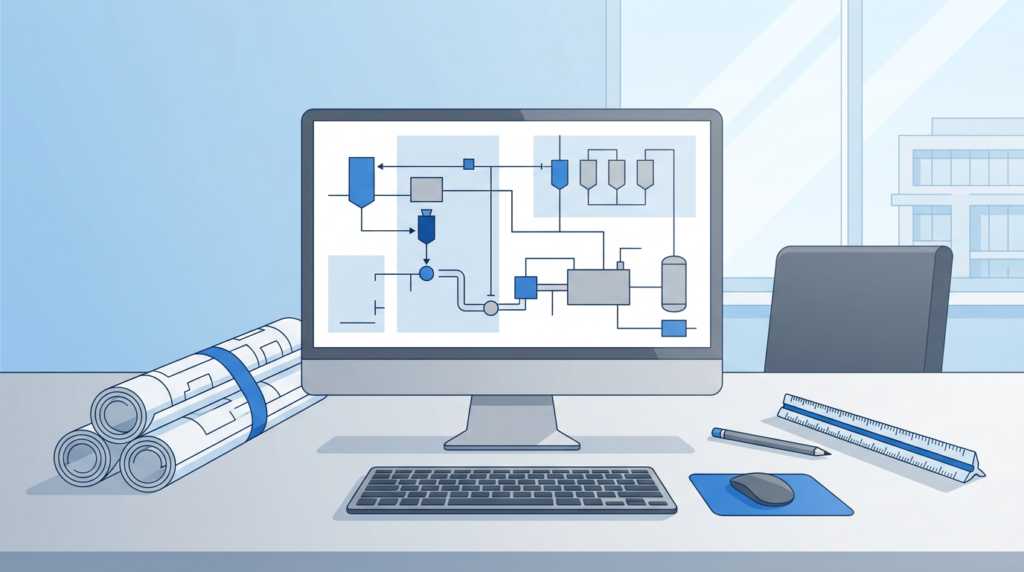
    Engineering stage of EPC project delivery showing design documents

    The engineering stage is where the plant is designed. Under the EPC contract, it begins after the contract is signed and continues until the design is complete enough to support procurement and construction. Engineering support typically continues through construction to handle field changes and prepare as-built documentation.

    A note on FEED: In many projects, a front-end engineering design (FEED) phase precedes the EPC contract. FEED defines the basic design, cost estimate, and schedule that form the basis for the EPC bid. A well-executed FEED reduces the risk of scope changes during detailed engineering.

    Engineering typically includes:

    • Basic design: Process flow diagrams, heat and mass balances, and overall plant layout.
    • Detailed design: Equipment specifications, piping and instrumentation diagrams (P&IDs), electrical drawings, and civil/structural drawings.
    • Engineering calculations: Equipment sizing, pipe sizing, structural analysis, and control system logic.
    • Technical documentation: Datasheets, equipment lists, and operating manuals.

    Why Engineering Matters Most

    The engineering stage has an outsized influence on the project’s success. Decisions made here determine:

    • Capital cost: Equipment selection and layout decisions set most of the project’s capital cost before a single item is purchased.
    • Operating cost: Efficiency, fuel consumption, and maintenance requirements are set during design.
    • Schedule: Delays in engineering cascade into procurement and construction.
    • Performance: Whether the plant meets its output and efficiency guarantees depends on design choices made at this stage.

    For plant owners, the engineering stage is where you have the most influence. Once construction begins, changes become expensive and slow.

    Key Owner Touchpoints in Engineering

    Owners should be actively involved in:

    Touchpoint Why It Matters
    Design reviews Catch errors before they become costly changes
    Equipment selection Ensure vendor choices match your reliability and maintenance preferences
    HAZOP studies Identify safety risks in the design before construction
    Interface definition Clarify what the owner supplies vs. what the contractor supplies
    Documentation review Ensure drawings and manuals meet your operational needs

    Owner-supplied equipment: Some projects include owner-supplied equipment, where the owner procures certain items directly. This can reduce cost but increases coordination complexity, since the contractor must integrate owner-supplied items into the overall design and schedule.

    Stage 2: Procurement

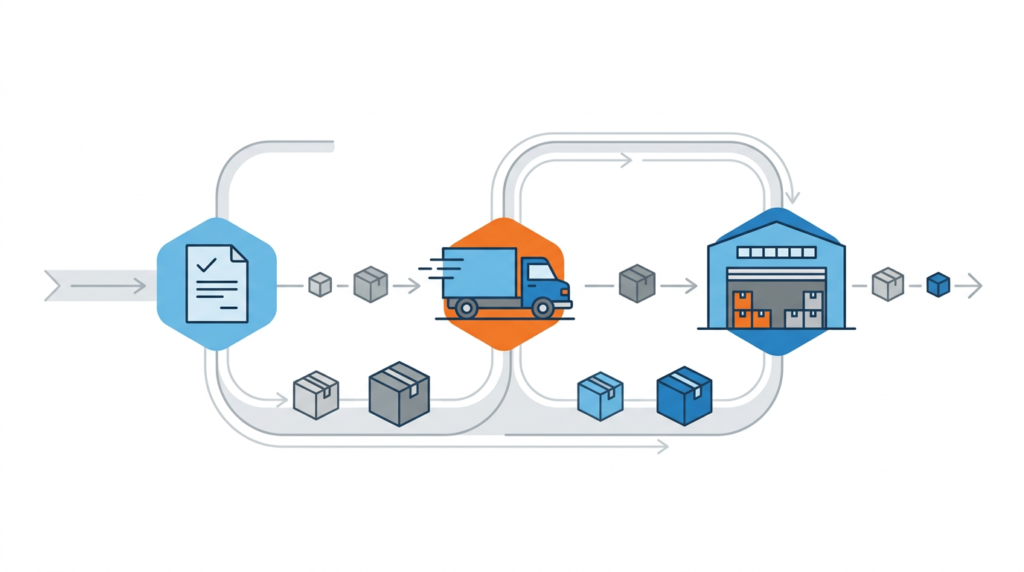
    Procurement stage of EPC project delivery showing supply chain

    Procurement is the process of sourcing and purchasing all equipment, materials, and services required for the plant. It overlaps with engineering and often extends into construction.

    Procurement activities include:

    • Vendor identification and qualification: Finding suppliers capable of meeting technical and delivery requirements.
    • Request for quotation (RFQ): Issuing specifications and soliciting bids.
    • Bid evaluation: Comparing technical compliance and commercial terms.
    • Purchase orders and contracts: Placing orders and managing supplier agreements.
    • Expediting: Monitoring supplier progress to ensure on-time delivery.
    • Inspection and testing: Verifying equipment meets specifications before shipment.
    • Logistics: Managing shipping, customs, and delivery to site.

    Why Procurement Is a Common Source of Delays

    Procurement is frequently the stage where projects fall behind. Common causes include:

    • Long lead times: Items like turbines, generators, and large vessels can take 12 to 24 months or more to manufacture.
    • Vendor capacity constraints: Popular vendors may be booked out for months.
    • Supply chain disruptions: Material shortages, shipping delays, and customs issues.
    • Quality issues: Equipment that fails inspection must be reworked or replaced.
    • Currency and price volatility: Commodity prices can shift between quotation and order.

    For owners, the lesson is simple: the earlier procurement starts, the better. Long-lead items should be identified during engineering and ordered as soon as the design is firm enough.

    Key Owner Touchpoints in Procurement

    Touchpoint Why It Matters
    Vendor list approval Ensure the contractor is not using unqualified suppliers
    Critical equipment review Verify specifications for major items
    Inspection witness points Attend or send a representative for key factory tests
    Delivery schedule review Confirm long-lead items are on track
    Change order review Approve any scope changes that affect cost or schedule

    Stage 3: Construction

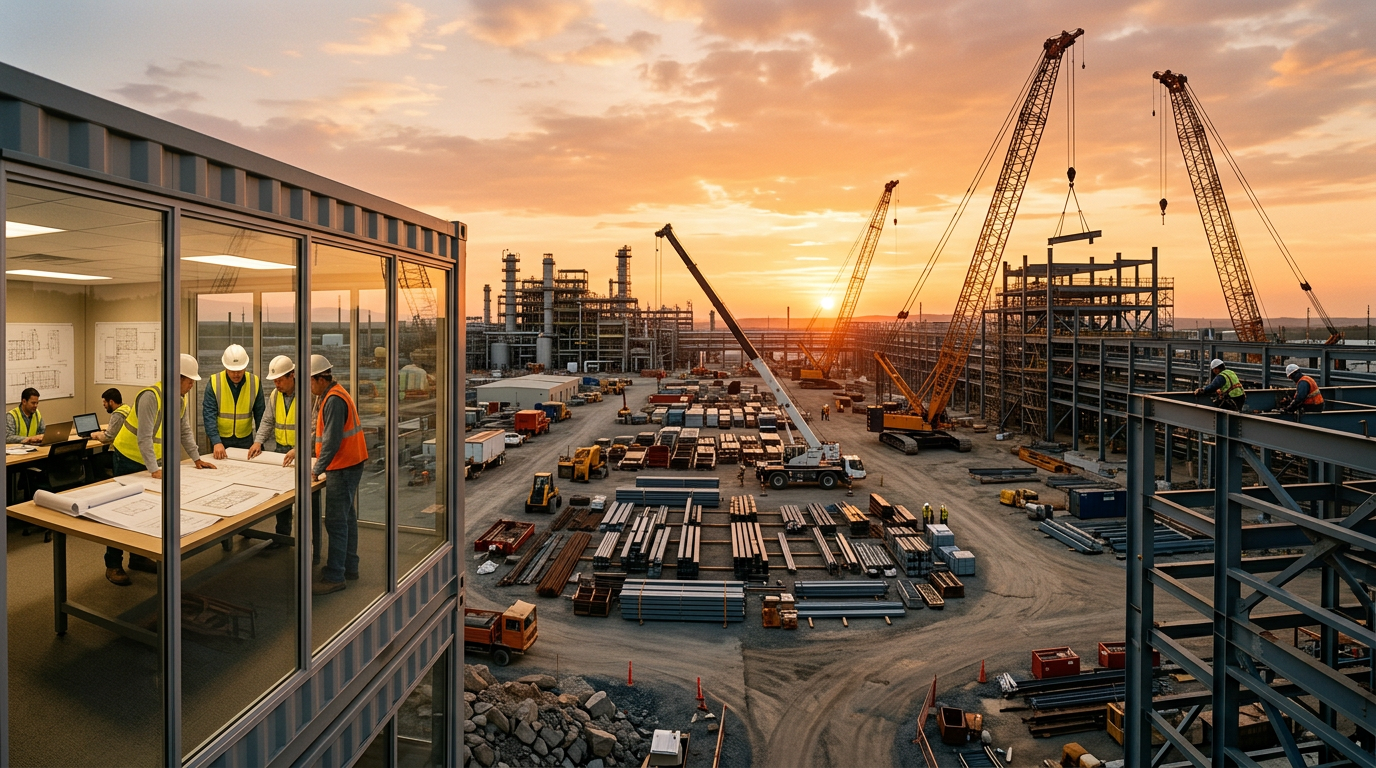
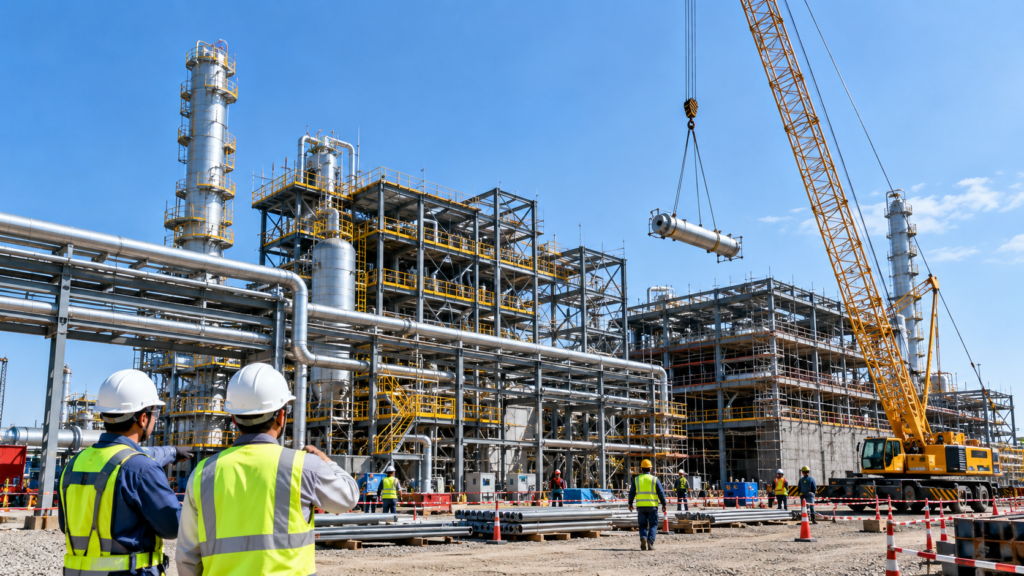
    Construction stage of EPC project delivery at an industrial plant

    Construction is the physical execution of the project. It includes civil works, structural erection, equipment installation, piping, electrical and instrumentation, and commissioning.

    Construction activities include:

    • Site preparation: Earthworks, foundations, and access roads.
    • Civil and structural works: Buildings, structures, and support systems.
    • Mechanical erection: Installation of equipment, piping, and valves.
    • Electrical and instrumentation: Cable trays, wiring, control systems, and instruments.
    • Testing and commissioning: Pressure tests, loop checks, commissioning, and performance testing.
    • Handover: Documentation, training, and final acceptance.

    The importance of commissioning: Commissioning is where the plant is tested under actual operating conditions. This is when performance guarantees are verified through commissioning and performance testing, and when any deficiencies must be corrected before acceptance.

    What good handover looks like: Good handover includes complete as-built drawings, equipment manuals, operating procedures, maintenance schedules, and training for the owner’s team. Incomplete handover documentation is a common source of problems during the first years of operation.

    Why Construction Is the Most Visible Stage

    Construction is where the project becomes tangible. It is also where:

    • Safety risks are highest: Heavy lifting, working at height, and live electrical work.
    • Coordination is most complex: Multiple subcontractors must work in sequence.
    • Schedule pressure is most intense: Every delay compounds.
    • Quality issues surface: Installation errors, misalignment, and missing components.

    For owners, construction is a period of high activity and high risk. Regular site visits and progress meetings help catch problems early.

    Key Owner Touchpoints in Construction

    Touchpoint Why It Matters
    Site progress meetings Track actual vs. planned progress
    Safety audits Ensure contractor is maintaining safety standards
    Quality inspections Verify installation meets specifications
    Witness testing Observe pressure tests and loop checks
    Punch list review Ensure outstanding items are completed before handover
    Commissioning attendance Verify the plant operates as designed

    How the Three Stages Overlap

    While it is convenient to describe engineering, procurement, and construction as sequential stages, in practice they overlap significantly.

    Stage Typical Overlap
    Engineering → Procurement Procurement of long-lead items begins before detailed design is complete
    Procurement → Construction Early construction (civil works) starts while equipment is still being manufactured
    Engineering → Construction Design changes during construction are common but costly

    This overlap is one reason EPC delivery is complex. The contractor must manage multiple activities simultaneously while maintaining schedule and budget.

    Managing the interfaces: The overlap between stages is a common source of disputes. If engineering is not sufficiently advanced, procurement may order equipment that later needs modification. If procurement is delayed, construction may start before key equipment is available. Managing these interfaces is one of the contractor’s most important responsibilities.

    Why Japanese EPC Firms Excel at This

    Japanese EPC firms are known for managing the three stages with particular discipline. Key characteristics include:

    • Front-loaded engineering: More time spent on design before construction begins, reducing costly changes later.
    • Careful procurement planning: Long-lead items identified early and ordered promptly.
    • Strong site management: Detailed construction planning, safety focus, and quality control.
    • Integrated communication: Engineering, procurement, and construction teams work closely together.

    For plant owners, this often translates into a smoother project with fewer surprises, even if the initial schedule appears slower.

    What Owners Should Focus On

    Across all three stages, owners should prioritize:

    1. Clear scope definition before the contract is signed.
    2. Active participation in design reviews and key decisions.
    3. Regular progress monitoring during procurement and construction.
    4. Documentation of all changes, approvals, and decisions.
    5. Commissioning involvement to ensure the plant meets its guarantees.

    Conclusion

    The three stages of EPC project delivery (engineering, procurement, and construction) form the backbone of any plant project. Each stage has its own activities, risks, and owner touchpoints. Understanding how they fit together helps owners anticipate problems, ask the right questions, and keep the project on track.

    Whether you are building a small biomass plant or a medium-scale thermal facility, the principles are the same: good engineering drives good procurement, and good procurement enables good construction.

    Key Takeaways

    • EPC delivery has three stages: engineering, procurement, and construction.
    • Engineering has the greatest influence on cost, schedule, and performance.
    • Procurement is a common source of delays, especially for long-lead items.
    • Construction is the most visible stage and carries the highest safety and coordination risk.
    • The stages overlap significantly, and managing interfaces is critical.
    • Japanese EPC firms emphasize front-loaded engineering and careful procurement planning.