
Heat rate is one of the most important performance metrics in thermal power generation. It measures how efficiently a plant converts fuel into electricity. For plant owners, heat rate directly affects operating cost, fuel consumption, and profitability.
Despite its importance, heat rate is often misunderstood. It is sometimes confused with thermal efficiency, and its relationship to fuel cost is not always clear. This article explains what heat rate is, how it is calculated, what affects it, and why it matters for small to medium-scale industrial plants.
What Is Heat Rate?
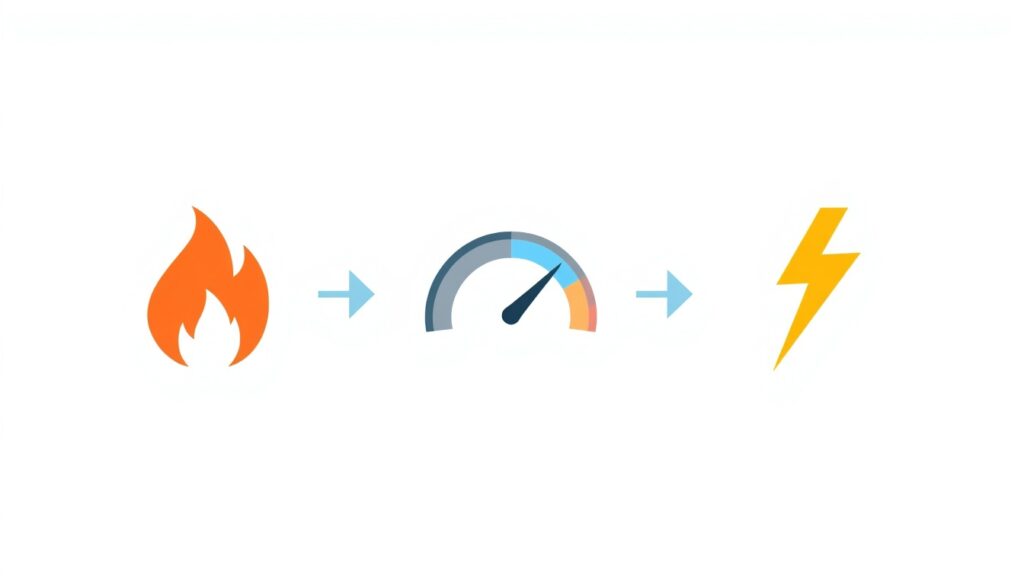
Heat rate is the amount of energy input required to produce one unit of energy output. In power generation, it is typically expressed in kJ/kWh (kilojoules per kilowatt-hour) or Btu/kWh (British thermal units per kilowatt-hour). To convert between them, 1 kJ/kWh ≈ 0.948 Btu/kWh (equivalently, 1 Btu/kWh ≈ 1.055 kJ/kWh). This article uses kJ/kWh throughout.
A lower heat rate means better efficiency. A higher heat rate means more fuel is required to produce the same output.
For example:
- A plant with a heat rate of 10,000 kJ/kWh requires 10,000 kJ of fuel energy to produce 1 kWh of electricity.
- A plant with a heat rate of 8,000 kJ/kWh requires only 8,000 kJ of fuel energy to produce the same 1 kWh.
The second plant is more efficient and will have lower fuel costs for the same output.
One caution on the fuel side: heat rate can be based on the fuel’s lower heating value (LHV) or higher heating value (HHV). HHV-based figures are higher (worse) than LHV-based figures for the same plant, by roughly 10% for natural gas and less for coal. Always confirm which basis is being used before comparing numbers.
Heat Rate vs. Thermal Efficiency
Heat rate and thermal efficiency are related but not identical. Thermal efficiency is the ratio of useful output to energy input, expressed as a percentage.
The relationship is:
Thermal Efficiency (%) = 3,600 / Heat Rate (kJ/kWh) × 100 (3,600 kJ = 1 kWh)
The 3,600 is simply the number of kilojoules in one kilowatt-hour, that is, the energy content of one unit of electrical output. In Btu units, the equivalent constant is 3,412 Btu = 1 kWh.
For example:
- Heat rate of 10,000 kJ/kWh → efficiency = 36%
- Heat rate of 8,000 kJ/kWh → efficiency = 45%
- Heat rate of 12,000 kJ/kWh → efficiency = 30%
In simple terms:
- Lower heat rate = higher efficiency
- Higher heat rate = lower efficiency
Both metrics describe the same thing from different angles. Heat rate is preferred in some regions and industries; thermal efficiency is preferred in others.
Why Heat Rate Matters
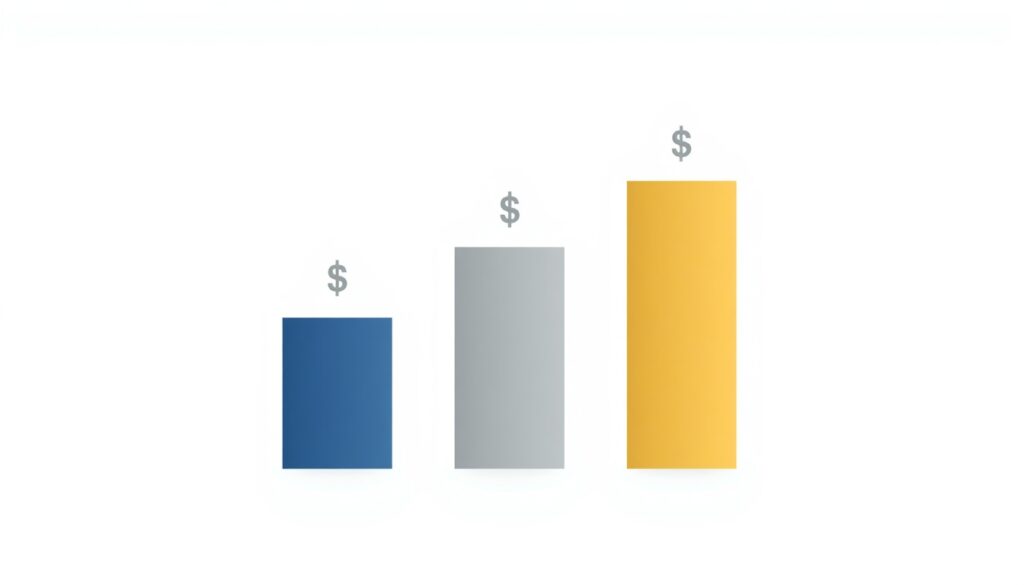
Heat rate matters because fuel is the largest operating cost for most thermal plants. A small improvement in heat rate can translate into significant savings over the plant’s life.
Consider a plant that consumes fuel at a cost of $5 per million kJ (equivalent to $5/GJ, or roughly $5.3/MMBtu). Fuel prices vary widely by region and over time, so the absolute numbers below are illustrative; substitute your own fuel contract price.
| Heat Rate (kJ/kWh) | Fuel Cost per kWh | Annual Fuel Cost (100 MW plant, full load, 8,760 h/year) |
|---|---|---|
| 12,000 | $0.060 | $52.6 million |
| 10,000 | $0.050 | $43.8 million |
| 8,000 | $0.040 | $35.0 million |
The difference between a heat rate of 12,000 and 8,000 is about $17.5 million per year for a 100 MW plant running continuously at full output. For smaller plants, the absolute numbers are lower, but the percentage impact is the same.
This is why heat rate is often a key performance guarantee in EPC contracts. If the plant does not meet its guaranteed heat rate, the contractor may be liable for liquidated damages.
For context, guarantee values depend on plant type, size, and the basis used (LHV or HHV, gross or net). For combined cycle plants, guarantees typically range from 6,000 to 7,500 kJ/kWh. For simple cycle plants, 9,000 to 12,000 kJ/kWh is common. Smaller plants tend toward the upper end of these ranges or above them.
What Affects Heat Rate?
Many factors influence a plant’s heat rate. Some are design-related, others are operational.
Design factors:
- Cycle configuration: Combined cycle plants have lower heat rates than simple cycle plants.
- Equipment efficiency: Turbine, boiler, and generator efficiency all affect heat rate.
- Steam conditions: Higher temperature and pressure improve efficiency.
- Condenser performance: Better vacuum improves efficiency.
- Auxiliary power consumption: Pumps, fans, and controls consume power, increasing net heat rate.
Operational factors:
- Load level: Plants are usually most efficient at or near full load.
- Ambient conditions: Higher ambient temperature reduces output and increases heat rate.
- Fuel quality: Lower heating value or impurities can reduce efficiency.
- Equipment degradation: Fouling, wear, and leaks increase heat rate over time.
- Operational practices: Startup, shutdown, and part-load operation affect average heat rate.
For small plants, operational factors often have a larger impact because there is less design margin.
Gross vs. Net Heat Rate
Heat rate can be expressed as gross or net.
- Gross heat rate: Based on total generator output, before subtracting auxiliary power consumption.
- Net heat rate: Based on net output delivered to the grid, after subtracting auxiliary power.
Net heat rate is always higher (worse) than gross heat rate because auxiliary equipment consumes power. For plant owners, net heat rate is the more relevant metric because it reflects the actual output available for sale.
A common mistake is to compare gross heat rates from different plants without adjusting for auxiliary power. Always confirm which basis is being used.
How Heat Rate Is Measured
Heat rate is determined through performance testing, typically conducted after commissioning. The test measures:
- Fuel input: Flow rate and heating value of fuel
- Power output: Gross and net electrical output
- Auxiliary power: Consumption of pumps, fans, and other equipment
- Ambient conditions: Temperature, pressure, and humidity
International standards such as ASME PTC 46 (overall plant performance) or ISO 2314 (gas turbines) provide procedures for conducting and reporting these tests. The results are used to verify contractual performance guarantees.
Improving Heat Rate

Heat rate can be improved through both design and operational measures.
Design improvements:
- Higher steam conditions: Supercritical or ultra-supercritical cycles (mainly practical for large utility-scale plants)
- Combined cycle: Recovering waste heat from exhaust gases
- Better condensers: Lower condenser pressure improves efficiency
- Efficient auxiliaries: Variable frequency drives, high-efficiency motors
- Advanced controls: Optimizing combustion and load allocation
Operational improvements:
- Operating at design point: Running at or near full load
- Regular maintenance: Cleaning heat exchangers, repairing leaks, replacing worn components
- Fuel management: Using consistent, high-quality fuel
- Performance monitoring: Tracking heat rate trends to detect degradation
- Operator training: Ensuring best practices for startup, shutdown, and load changes
For existing plants, operational improvements often provide the fastest payback. For new plants, design improvements are built in from the start.
Common Mistakes in Heat Rate Management
Even experienced operators make mistakes. Common ones include:
- Ignoring auxiliary power: Focusing on gross heat rate instead of net
- Comparing at different conditions: Not correcting for ambient temperature or fuel quality
- Neglecting degradation: Assuming heat rate stays constant over time
- Operating at part load: Running at low load when full load is possible
- Skipping performance tests: Not verifying heat rate after major overhauls
- Poor fuel quality: Using inconsistent or low-quality fuel that increases heat rate
These mistakes can lead to higher operating costs and missed performance targets.
How Japanese EPC Firms Approach Heat Rate
Japanese engineering firms are known for their focus on thermal efficiency. Common characteristics include:
- Conservative design margins: Equipment is specified with enough margin to maintain performance over time.
- Detailed performance testing: Heat rate tests are carefully planned and executed.
- Long-term monitoring: Performance is tracked over the plant’s life, not just at commissioning.
- Operational support: Japanese firms often provide ongoing support to help owners maintain efficiency.
- Continuous improvement: Lessons from each project are applied to the next.
For plant owners, this often means a plant that meets its heat rate guarantee and maintains performance over time.
How to Evaluate Heat Rate Performance
When reviewing heat rate performance, ask:
| Question | Why It Matters |
|---|---|
| Is the heat rate gross or net? | Net heat rate reflects actual output for sale |
| Is it based on LHV or HHV? | The two bases differ by roughly 5–10%, depending on fuel |
| What conditions apply? | Heat rate varies with ambient temperature and fuel |
| Has it been corrected to reference conditions? | Allows comparison across different tests |
| How has it changed over time? | Detects degradation and maintenance needs |
| How does it compare to the guarantee? | Determines whether the contractor has met obligations |
| What is the fuel cost impact? | Translates heat rate into financial terms |
A plant that understands its heat rate performance can manage fuel costs, plan maintenance, and verify contractual compliance.
Conclusion
Heat rate is a fundamental measure of thermal plant efficiency. It directly affects fuel cost, operating profitability, and contractual performance. For small to medium-scale industrial plants, where margins are tight, understanding and managing heat rate is essential.
By focusing on design efficiency, operational practices, and continuous monitoring, owners and operators can keep heat rate low and fuel costs under control.
Key Takeaways
- Heat rate measures fuel energy input per unit of electricity output.
- Lower heat rate = higher efficiency.
- Net heat rate reflects actual output for sale.
- Heat rate is affected by design, operation, and ambient conditions.
- Regular monitoring detects degradation and supports maintenance planning.
Comments
3 responses to “Understanding Heat Rate and Thermal Efficiency in Industrial Plants”
[…] heat rate: More fuel consumed per unit of […]
[…] Dissolved minerals precipitate and form deposits on heat transfer […]
[…] plants can report “availability” or “heat rate” and mean different things. Before comparing, agree on definitions and […]