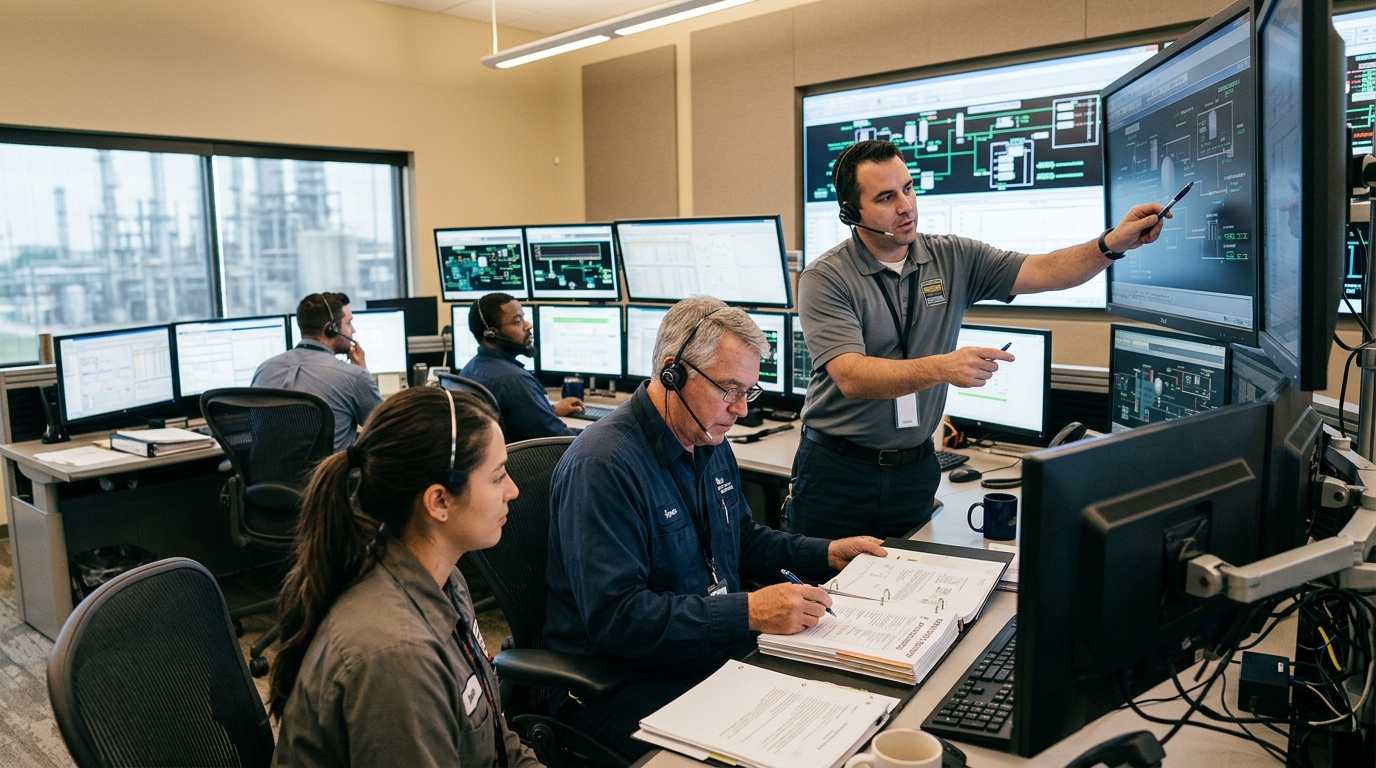
A plant can be built on time, within budget, and to specification, and still fail in its first months of operation. The equipment works. The systems are commissioned. But the owner’s team is not ready to run the plant. Procedures are missing, staff are untrained, spare parts are not in place, and the first failures catch everyone by surprise.
Operations readiness is the discipline of ensuring that the owner’s organization is prepared to operate and maintain the plant from day one. It is not just about the plant being ready. It is about the people, procedures, systems, and support being ready too.
For small to medium-scale industrial plants, operations readiness is especially important because there is less redundancy and fewer resources to absorb the consequences of an unprepared start. A plant that starts up without a ready operations team can suffer early failures, safety incidents, and extended teething problems.
This article covers the key practices in operations readiness, from readiness planning to staffing, procedures, training, the transition to operations, and first-year support.
What Is Operations Readiness?
Operations readiness is the process of preparing the owner’s organization to operate and maintain the plant. It covers:
- Organization: Is the right team in place, with the right skills?
- Procedures: Are operating, maintenance, and emergency procedures ready?
- Training: Are staff trained and competent?
- Systems: Are maintenance, stores, information, and other support systems in place?
- Spares and consumables: Are the parts and materials needed for operation available?
- Support: Are vendor support and technical assistance arrangements in place?
- Safety: Are safety systems, permits, and emergency arrangements ready?
- Budget and contracts: Are operating funds and service contracts approved and in place?
Operations readiness is not the same as plant readiness. A plant can be mechanically complete and commissioned while the owner’s team is still unprepared to operate it.
Why Operations Readiness Matters
| Factor | Good Readiness | Poor Readiness |
|---|---|---|
| Startup | Smooth start; issues resolved quickly | Chaotic start; issues escalate |
| Safety | Hazards understood and controlled | Incidents during early operation |
| Reliability | Equipment operated within limits | Early failures from poor operation |
| Cost | Operating costs controlled | Emergency purchases; rework |
| Morale | Team confident and capable | Team overwhelmed and demoralized |
| Compliance | Regulatory requirements met | Non-compliance from day one |
For small plants, where the team may be small and multi-skilled, operations readiness determines whether the plant can actually be run.
Operations Readiness Planning
Operations readiness should be planned alongside the project, not after it. Readiness planning activities include:
- Define readiness criteria: What must be in place before startup?
- Define readiness scope: Which areas, systems, and functions are covered?
- Assign responsibility: Who is responsible for each readiness element?
- Develop a readiness plan: What must be done, by when, and by whom?
- Track readiness: Monitor progress against the plan.
- Conduct readiness reviews: Verify readiness before startup.
Readiness planning should begin early, ideally during design, so that the owner’s organization has time to recruit, train, and prepare. Readiness activities should also be built into the project schedule, so that they are not squeezed when construction runs late.
The Operations Readiness Coordinator
Someone must own the readiness process. An operations readiness coordinator should be appointed to lead the readiness effort. This person tracks progress, coordinates between the project team and the owner’s operations team, and reports to management. Without a clear owner, readiness tasks tend to fall between the project team (focused on construction) and the operations team (not yet fully formed).
Operations Readiness Reviews
Operations readiness reviews should be conducted at defined milestones, such as 6 months and 3 months before startup. Each review verifies progress against the readiness plan and identifies gaps that must be closed before startup. A final review shortly before startup confirms that all readiness criteria are met and supports the decision to proceed. This review complements the pre-startup safety review (PSSR), which focuses on process safety, by covering the full scope of organizational readiness.
Operations Readiness Criteria
Readiness criteria define what must be in place before startup.
| Criterion | Description |
|---|---|
| Organization | Team in place, roles defined, skills available |
| Procedures | Operating, maintenance, and emergency procedures ready |
| Training | Staff trained and assessed as competent |
| Maintenance systems | CMMS, planning, and scheduling in place |
| Stores and spares | Spare parts and consumables available |
| Vendor support | Support arrangements in place |
| Safety systems | Safety systems, permits, and emergency plans ready |
| Documentation | Operating and maintenance documentation available |
| Utilities and consumables | Utilities and consumables available |
| Information systems | Plant data, reporting, and control system access and security in place |
| Budget and contracts | Operating budget approved; service contracts in place |
| Regulatory approvals | Permits and approvals in place |
Readiness criteria should be defined in the contract and agreed by both parties.
Organization and Staffing
The owner’s organization must be in place before startup. Staffing considerations include:
- Roles and responsibilities: Who does what?
- Skills and competencies: What skills are required?
- Staffing levels: How many people are needed?
- Shift arrangements: How will shifts be covered?
- Reporting lines: Who reports to whom?
- Contractor support: What support will be provided by contractors?
- Recruitment lead time: When must hiring start so that staff are on board in time to train?
For small plants, staff may be multi-skilled and cover multiple roles. Clarity of roles and responsibilities is still essential.
Procedures
Operating, maintenance, and emergency procedures must be ready before startup.
| Procedure Type | Purpose |
|---|---|
| Operating procedures | How to start up, operate, and shut down |
| Emergency procedures | How to respond to emergencies |
| Maintenance procedures | How to inspect, maintain, and repair |
| Safety procedures | Permit-to-work, lockout/tagout, confined space |
| Alarm response procedures | How to respond to specific alarms |
| Laboratory procedures | How to sample and test |
Procedures must be accurate, clear, and available to the people who need them. They should be reviewed by the operators who will use them and updated after commissioning to reflect how the plant actually behaves.
Training and Competency
The owner’s staff must be trained and competent before startup.
| Category | Description |
|---|---|
| Operations training | How to operate the plant |
| Maintenance training | How to maintain equipment |
| Safety training | How to work safely |
| Emergency training | How to respond to emergencies |
| Vendor training | Equipment-specific training from vendors |
| Simulator training | Practice in a simulated environment |
Training considerations:
- Timing: Training should begin well before startup.
- Competency assessment: Training should include assessment of competency.
- Documentation: Training records should be maintained.
- Drills: Emergency drills should be held before startup, not after the first real event.
- Refresher training: Refresher training should be planned.
Training is not complete until staff can demonstrate competency.
Operator Involvement in Commissioning
Operators should be involved in commissioning where possible. Participating in cold and hot commissioning, and assisting with integrated testing, gives them hands-on familiarity with the plant that classroom training cannot provide. Involvement also lets operators learn the plant’s quirks, test the draft procedures, and raise concerns while changes are still easy to make. For this to work, operators must be recruited early enough to be present during commissioning.
Maintenance Systems
Maintenance systems should be set up and populated before startup. Key elements include:
- CMMS: Computerized maintenance management system.
- Equipment register: List of equipment and assets.
- Preventive maintenance plans: Scheduled maintenance tasks.
- Spare parts inventory: Parts and materials in stock.
- Work order system: How work is requested and tracked.
- Planning and scheduling: How work is planned and scheduled.
Spares and Consumables
Spare parts and consumables should be in place before startup, not ordered after the first failure.
- Critical spares: Spares essential for operation.
- Recommended spares: Spares recommended by vendors.
- Consumables: Filters, lubricants, chemicals, and initial fills.
- Inventory: Spare parts inventory and location.
- Supplier information: Supplier contacts and part numbers.
Vendor Support
Vendor support arrangements should be in place before startup.
- Warranty support: Who to contact for warranty claims.
- Technical support: Who to contact for technical assistance.
- Field service: Availability of field service support.
- Spare parts support: Availability of spare parts.
- Training support: Availability of vendor training.
- Documentation support: Access to vendor documentation.
Vendor support is especially important for specialized equipment.
Safety Systems and Permits
Safety readiness is not optional. It is a prerequisite for startup.
- Safety systems: Fire and gas detection, emergency shutdown, relief systems.
- Permits: Operating permits, environmental permits, and other approvals.
- Emergency response: Emergency plans, equipment, and training.
- Safety procedures: Permit-to-work, lockout/tagout, confined space.
- PPE: Personal protective equipment available.
- Safety training: Staff trained on safety systems and procedures.
Regulatory Approvals
Regulatory approvals should be obtained before startup, not after.
- Operating permits: Permits to operate the plant.
- Environmental permits: Permits for emissions, discharges, and waste.
- Safety certifications: Pressure vessel, boiler, and other certifications.
- Occupancy certificates: Certificates for buildings and structures.
- Insurance: Insurance coverage in place.
Operating Budget, Contracts, and Information Systems
Two further areas are often overlooked.
Budget and contracts. The operating budget should be approved before startup, covering staffing, consumables, utilities, spares, and service contracts. Where the owner relies on third parties for services such as specialist maintenance, laboratory testing, or waste handling, these contracts should be in place and tested before they are needed.
Information systems. Plant data, reporting, and control system access should be ready, with clear ownership of data and appropriate cybersecurity controls. Operators and engineers need the data to run the plant and track performance from the first day.
The Transition from Project to Operations
The transition from project to operations is a critical handover point and should be carefully managed. This includes transferring responsibility, documentation, and knowledge from the project team to the operations team, with clear milestones and sign-offs. A good transition addresses:
- Responsibility: When does each system pass from the project team to operations?
- Documentation: Are as-built drawings, manuals, and records complete and accessible?
- Knowledge: Are key project staff available to brief the operations team and answer questions?
- Open items: Is there an agreed punch list, with owners and deadlines?
- Sign-offs: Are handover milestones formally recorded?
First-Year Support
The first year of operation is critical. Support during this period helps the owner’s team through teething problems.
- Vendor support: Ongoing support from equipment vendors.
- Contractor support: Support from the EPC contractor during the warranty and defect liability period.
- Technical assistance: Access to technical expertise when needed.
- Performance monitoring: Monitoring plant performance, including performance guarantee tests, and addressing issues.
- Training refreshers: Additional training as needed.
- Lessons learned: Capturing and applying lessons from early operation.
First-year support helps the owner’s team build confidence and competence.
Common Mistakes in Operations Readiness
- No readiness planning: Readiness left to chance.
- No owner: No one appointed to lead the readiness effort.
- Late staffing: Staff recruited too late.
- Incomplete training: Staff not trained or competent.
- Procedures missing: Procedures not ready at startup.
- Spares missing: Spares ordered after the first failure rather than before startup.
- No maintenance systems: CMMS and maintenance plans not in place.
- No vendor support: Support arrangements not in place.
- Safety gaps: Safety systems or permits not ready.
- Rushed handover: Responsibility transferred without documentation or sign-off.
- No first-year support: Owner left to fend for themselves after startup.
These mistakes are costly to correct. They are much cheaper to avoid through good planning and disciplined execution.
How Japanese EPC Firms Approach Operations Readiness
Japanese engineering firms are known for their disciplined approach to operations readiness. Common characteristics include:
- Early planning: Readiness is planned from the beginning of the project.
- Detailed preparation: Procedures, training, and systems are prepared carefully.
- Comprehensive training: Staff are trained and assessed for competency.
- Operator participation: Owner’s operators take part in commissioning and testing.
- Strong support: Vendor and contractor support is in place.
- Disciplined startup: Startup is controlled and monitored.
- Continuous improvement: Lessons are captured and applied.
- Long-term focus: Readiness is treated as the foundation for reliable operation.
For plant owners, this often means a plant that starts up smoothly and operates reliably from day one.
How to Evaluate Operations Readiness
| Question | Why It Matters |
|---|---|
| Is readiness planned? | Provides a roadmap for readiness |
| Is a readiness coordinator appointed? | Ensures someone owns the process |
| Are readiness criteria defined? | Defines what must be in place |
| Are readiness reviews scheduled? | Finds gaps while there is time to close them |
| Is the organization in place? | Ensures someone is available to operate |
| Are procedures ready? | Ensures staff know what to do |
| Is training complete? | Ensures staff are competent |
| Are operators involved in commissioning? | Builds hands-on familiarity |
| Are maintenance systems in place? | Ensures maintenance can be planned and tracked |
| Are spares available? | Ensures critical parts are on hand when failures occur |
| Is vendor support in place? | Ensures support is available when needed |
| Are safety systems and permits ready? | Ensures safe and legal operation |
| Is the handover managed? | Ensures responsibility, documents, and knowledge transfer cleanly |
| Is first-year support in place? | Ensures teething problems are addressed |
A plant that addresses these questions is ready to operate.
Conclusion
Operations readiness is critical to plant success. For small to medium-scale industrial plants, it determines whether the owner can operate the plant effectively from day one.
By focusing on readiness planning, criteria, organization, procedures, training, maintenance systems, spares, vendor support, safety, a managed transition, and first-year support, owners and project teams can ensure that the plant starts up smoothly and operates reliably.
Key Takeaways
- Operations readiness ensures the owner’s organization is prepared to operate and maintain the plant
- Readiness is not the same as plant readiness
- Readiness should be planned from the beginning of the project
- Appoint an operations readiness coordinator and hold reviews at defined milestones, such as 6 and 3 months before startup
- Readiness criteria define what must be in place before startup
- Organization, procedures, training, and systems must all be ready
- Involve operators in commissioning for hands-on familiarity
- Spares, vendor support, and safety systems are essential
- Manage the transition from project to operations with clear milestones and sign-offs
- First-year support helps the team through teething problems
- Japanese EPC firms emphasize early planning and comprehensive training