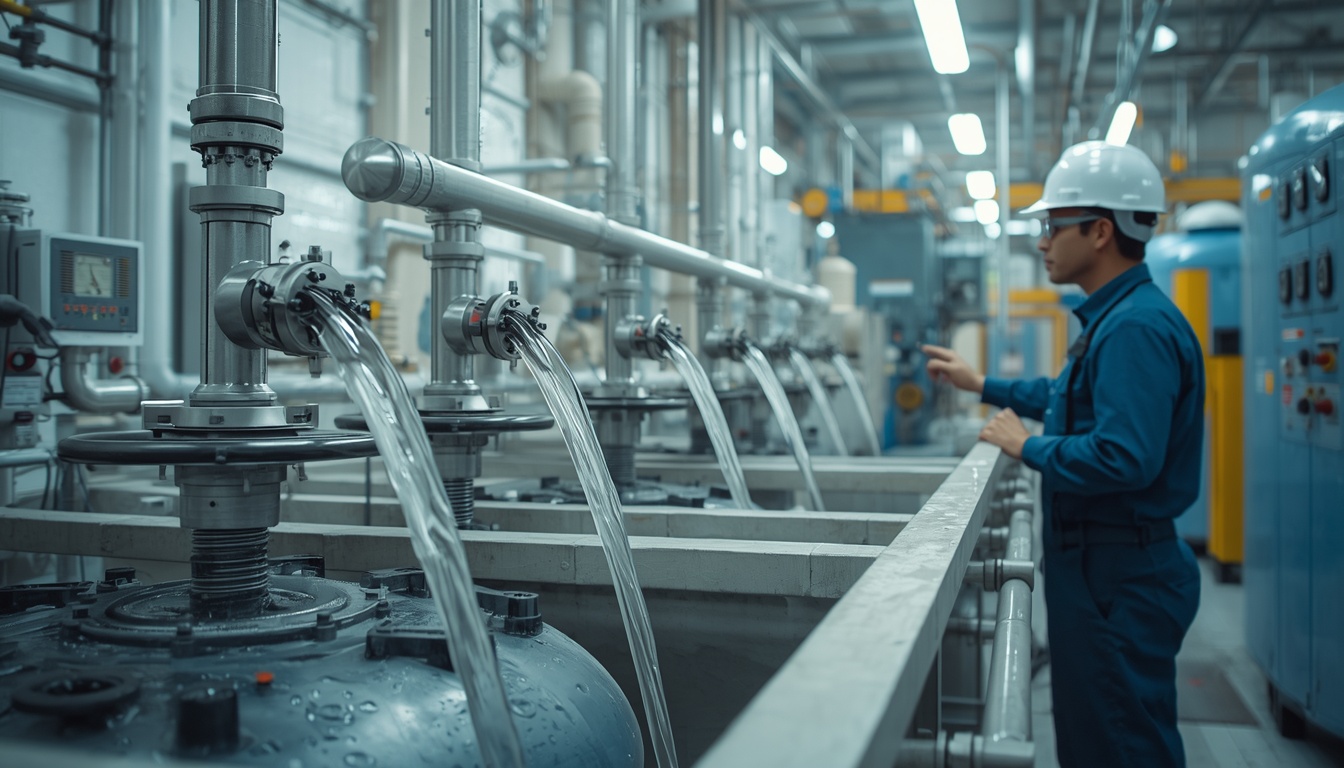
Water is essential to almost every industrial plant. It is used for cooling, steam generation, process operations, and equipment cleaning. But water is rarely pure. It contains dissolved minerals, suspended solids, dissolved gases, and microorganisms that can cause corrosion, scaling, fouling, and biological growth.
Water treatment is the process of removing or controlling these impurities so that water can be used safely and reliably in plant systems. For small to medium-scale industrial plants, water treatment is especially critical because there is less redundancy and less margin for error. A poorly treated cooling system can lead to tube failures, reduced output, and costly downtime.
This article covers the fundamentals of water treatment for industrial plants, the key treatment processes, and the considerations that plant owners should be aware of.
Why Water Treatment Matters
Water quality affects plant reliability, efficiency, and cost. Poor water quality can lead to:
- Corrosion: Dissolved oxygen, low pH, and dissolved solids attack metal surfaces.
- Scaling: Dissolved minerals precipitate and form deposits on heat transfer surfaces.
- Fouling: Suspended solids and biological growth block flow and reduce heat transfer.
- Foaming and carryover: Impurities in boiler water cause foaming, leading to carryover into steam and turbine deposits.
- Microbiological growth: Bacteria, algae, and fungi form biofilms that reduce heat transfer and promote corrosion.
These problems reduce plant efficiency, increase maintenance cost, and shorten equipment life. In severe cases, they cause forced outages.
The Main Water Systems in an Industrial Plant
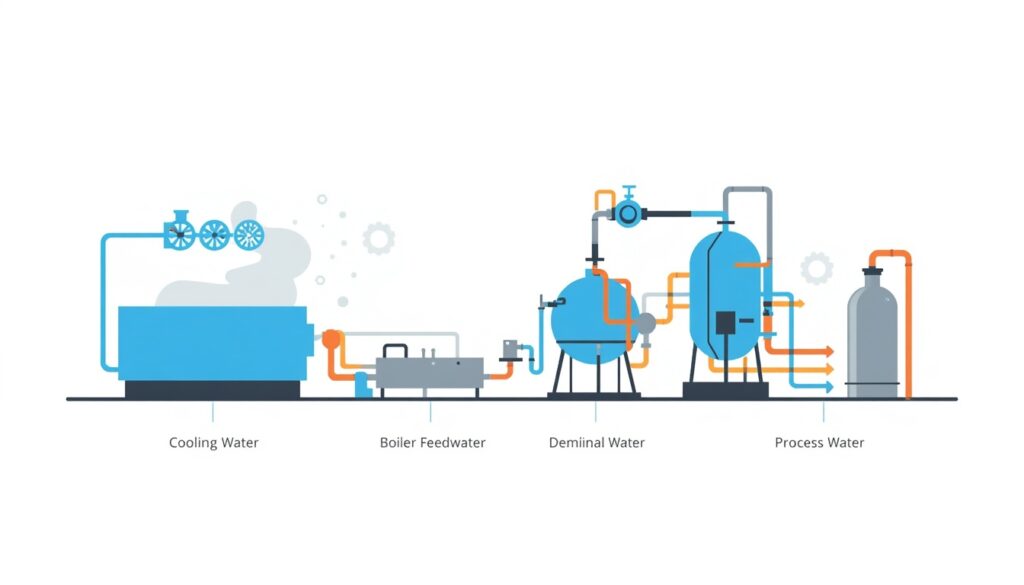
Main water systems in an industrial plant diagram
Different plant systems have different water quality requirements.
| System | Purpose | Key Water Quality Concerns |
|---|---|---|
| Cooling water | Reject heat from condensers and auxiliary equipment | Scaling, corrosion, biological growth |
| Boiler feedwater | Produce steam in boilers | Scale, corrosion, carryover |
| Demineralized water | Feed high-pressure boilers and process systems | Dissolved solids, silica, conductivity |
| Process water | Used in chemical or manufacturing processes | Varies by process |
| Potable water | For human consumption and sanitation | Microbial, chemical, and aesthetic standards |
Each system requires a different level of treatment. Cooling water typically needs less treatment than boiler feedwater, which must be nearly pure. Process water treatment depends on the specific process. Some processes require demineralized water, while others can tolerate lower quality.
Key Water Quality Parameters
Water treatment is designed to control specific parameters. These include:
- Hardness: Calcium and magnesium ions that cause scaling.
- Alkalinity: Bicarbonate and carbonate ions that affect pH and scaling potential.
- pH: Acidity or alkalinity of the water.
- Conductivity: Measure of dissolved solids.
- Silica: Forms hard deposits on boiler and turbine surfaces.
- Dissolved oxygen: Causes corrosion in boilers and cooling systems.
- Iron and copper: Corrosion products that deposit on surfaces.
- Chlorides: Cause pitting corrosion in stainless steels.
- Suspended solids: Cause fouling and deposits.
- Microorganisms: Cause biofilms and microbiologically influenced corrosion.
Cooling Water Treatment
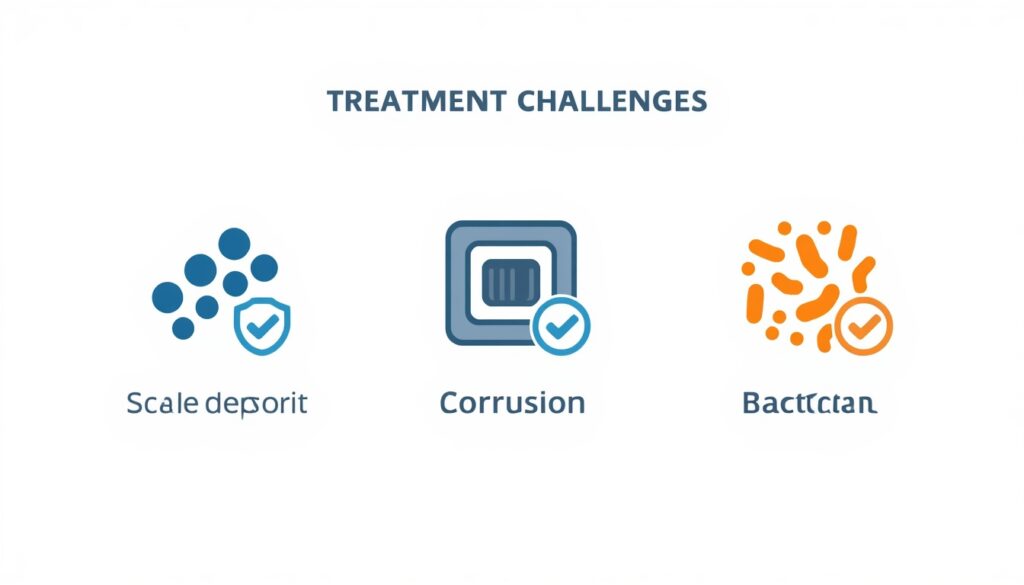
Cooling water treatment challenges including scaling, corrosion, and biological growth
Cooling water treatment focuses on three main problems: scaling, corrosion, and biological growth. Treatment requirements also depend heavily on the type of cooling system used.
Scaling control:
Scale forms when dissolved minerals precipitate on heat transfer surfaces. The most common scale is calcium carbonate, but calcium sulfate, silica, and other deposits also occur.
Control methods include:
- Chemical inhibitors: Phosphonates, polymers, and other chemicals that prevent crystal formation.
- pH control: Adjusting pH to keep minerals soluble.
- Blowdown: Removing a portion of recirculating water to control dissolved solids concentration.
- Softening: Removing hardness ions before they enter the system.
Corrosion control:
Corrosion in cooling systems is caused by dissolved oxygen, low pH, chlorides, and microbiological activity.
Control methods include:
- Corrosion inhibitors: Chemicals that form protective films on metal surfaces.
- pH control: Maintaining pH in a range that minimizes corrosion.
- Material selection: Using corrosion-resistant materials where needed.
- Cathodic protection: For critical components.
Biological control:
Bacteria, algae, and fungi grow in cooling systems, especially in warm water with nutrients.
Control methods include:
- Biocides: Oxidizing (chlorine, bromine) or non-oxidizing chemicals that kill microorganisms.
- Dispersants: Chemicals that break up biofilms.
- Physical cleaning: Periodic flushing or mechanical cleaning.
Once-through cooling systems:
Once-through cooling systems require less chemical treatment than closed-loop systems because water is not recirculated. However, intake screening, chlorination, and corrosion control may still be required.
Air-cooled systems:
Plants using air-cooled cooling systems eliminate cooling water treatment, but boiler water treatment and demineralized water production may still be required.
Boiler Water Treatment
Boiler water treatment is more demanding than cooling water treatment because boilers operate at high temperature and pressure.
External treatment:
External treatment removes impurities before water enters the boiler. Common processes include:
- Clarification: Removing suspended solids.
- Filtration: Removing fine particles.
- Softening: Removing hardness ions.
- Demineralization: Removing all dissolved solids using ion exchange.
- Reverse osmosis: Removing dissolved solids using membrane filtration.
Internal treatment:
Internal treatment controls residual impurities inside the boiler. Common chemicals include:
- Oxygen scavengers: Remove dissolved oxygen.
- pH adjusters: Maintain alkaline pH to minimize corrosion.
- Scale inhibitors: Prevent precipitation on boiler surfaces.
- Anti-foaming agents: Prevent foaming and carryover.
Blowdown:
Blowdown removes a portion of boiler water to control dissolved solids concentration. Continuous blowdown is preferred for larger boilers; intermittent blowdown is used for smaller ones.
Demineralized Water Production
High-pressure boilers and some process systems require demineralized water, which is water with almost all dissolved solids removed.
Common demineralization processes include:
- Ion exchange: Uses resins to exchange dissolved ions for hydrogen and hydroxide ions.
- Reverse osmosis: Uses pressure to force water through a semi-permeable membrane, leaving dissolved solids behind.
- Electrodeionization (EDI): Combines ion exchange and membrane processes for continuous demineralization.
Demineralized water is essential for high-pressure boilers because dissolved solids can deposit on turbine blades, causing imbalance and efficiency loss.
Key Design Considerations
- Water Source and Quality — The first step in water treatment design is understanding the water source. Surface water, groundwater, seawater, and municipal water all have different characteristics and require different treatment.
- Treatment Goals — Treatment goals depend on the end use. Cooling water, boiler feedwater, and demineralized water each have different quality requirements.
- Chemical Storage and Handling — Water treatment chemicals must be stored and handled safely. This requires appropriate containment, ventilation, and personal protective equipment. Personnel handling water treatment chemicals must be trained in safe handling, emergency response, and proper use of personal protective equipment.
- Waste Streams — Water treatment produces waste streams, including blowdown, filter backwash, and regeneration waste. These must be managed in compliance with environmental regulations.
- Monitoring and Control — Water quality must be monitored continuously. Key parameters include pH, conductivity, hardness, silica, and dissolved oxygen. Automated control systems help maintain treatment within specified limits.
- Redundancy — Critical water treatment components (pumps, resin beds, membrane units) may require redundancy to ensure continuous operation.
Common Mistakes in Water Treatment
Even experienced designers make mistakes. Common ones include:
- Undersizing treatment systems: Leading to inadequate water quality and equipment damage.
- Ignoring water source variability: Water quality changes seasonally and over time.
- Insufficient chemical storage: Running out of treatment chemicals causes system upsets.
- Poor waste management: Leading to environmental violations.
- Inadequate monitoring: Failing to detect water quality excursions before damage occurs.
- Skipping redundancy: A single point of failure can shut down the plant.
These mistakes are costly to fix after construction. They are much cheaper to avoid during design.
How Japanese EPC Firms Approach Water Treatment
Japanese engineering firms are known for their disciplined approach to water treatment design. Common characteristics include:
- Thorough water source assessment: Water quality is analyzed over time to capture variability.
- Conservative design margins: Treatment systems are sized with adequate margin for worst-case water quality.
- Detailed chemical management: Chemical selection, storage, and handling are carefully planned.
- Comprehensive monitoring: Water quality is tracked continuously with clear alarm and response procedures.
- Long-term performance focus: Treatment system performance is monitored and optimized over the plant’s life.
For plant owners, this often means a water treatment system that performs reliably for decades, even under challenging water conditions.
How to Evaluate Water Treatment Design
When reviewing water treatment design, ask:
| Question | Why It Matters |
|---|---|
| What is the water source and quality? | Determines treatment requirements |
| What are the treatment goals for each system? | Ensures water quality meets end-use requirements |
| How is water quality monitored? | Detects excursions before damage occurs |
| How are chemicals stored and handled? | Ensures safety and regulatory compliance |
| How are waste streams managed? | Ensures environmental compliance |
| Is redundancy provided for critical components? | Ensures continuous operation |
| What is the life-cycle cost? | Captures total cost, not just capital |
A water treatment system that addresses these questions is likely to perform well over the plant’s life.
Key Takeaways
- Water treatment controls corrosion, scaling, fouling, and biological growth
- Different plant systems have different water quality requirements
- Cooling water treatment focuses on scaling, corrosion, and biological control
- Boiler water treatment is more demanding and requires external and internal treatment
- Demineralized water is essential for high-pressure boilers
- Japanese EPC firms emphasize thorough water source assessment and conservative design margins
Conclusion
Water treatment is a critical but often overlooked aspect of industrial plant design. It affects reliability, efficiency, maintenance cost, and environmental compliance. For small to medium-scale industrial plants, where margins are tight, water treatment deserves careful attention from the earliest stages of design.
By understanding water quality requirements, selecting appropriate treatment processes, and planning for monitoring, redundancy, and waste management, owners and designers can ensure reliable water quality and long-term plant performance.