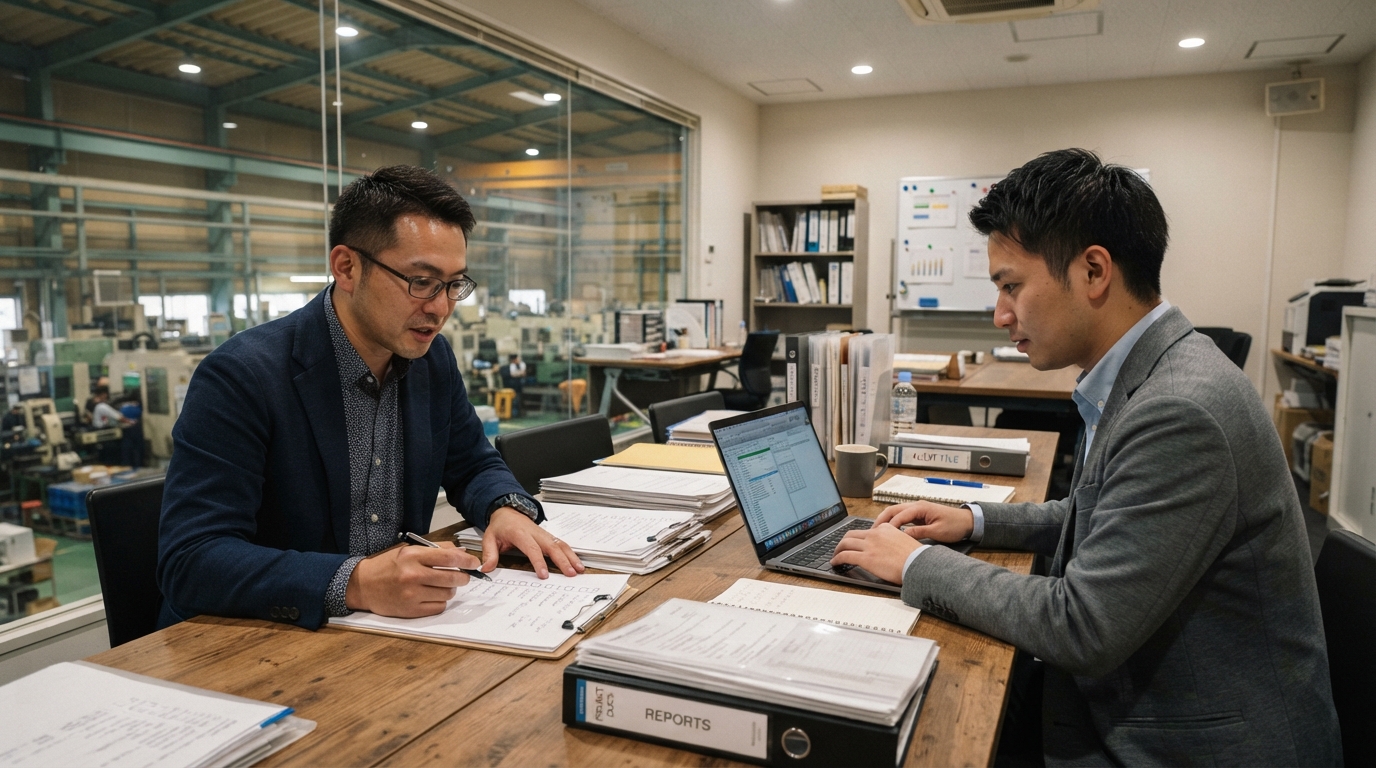
Projects do not fail suddenly. They fail gradually, through small errors, missed steps, and unnoticed problems that accumulate until they become serious. Project audits and reviews are the discipline of catching these problems early, before they become crises. They provide an independent check on project performance (safety, quality, schedule, cost, and compliance) and help the project team identify where improvement is needed.
At EPC Partners Inc., project audits and reviews have been a core part of our work across a wide range of plant projects, from geothermal power plants in Kenya, Indonesia, and Iceland to large-scale desalination facilities in the UAE and Saudi Arabia, and from thermal power plants in Vietnam and Bangladesh to water treatment plants in Vietnam and Kuwait. Our audit work has ranged from quality audits of welding and pressure testing on geothermal projects in Kenya and Indonesia to project reviews at key milestones on thermal power projects in Vietnam and Bangladesh. Each project has presented different challenges, and each has reinforced the same lesson: audits and reviews are not about finding fault. They are about finding opportunities for improvement.
This article covers the key practices in plant project audits and reviews, drawing on our experience supporting projects across Asia, the Middle East, Africa, and Europe.
What Are Project Audits and Reviews?
Project audits are formal, systematic examinations of project activities, processes, and documentation to verify compliance with requirements and identify opportunities for improvement.
Project reviews are broader assessments of project performance, typically conducted at key milestones, to evaluate progress, identify risks, and recommend corrective actions.
Together, they provide independent assurance that the project is on track and show where improvement is needed.
Why Project Audits and Reviews Matter
| Factor | Impact of Good Audits and Reviews | Impact of Poor Audits and Reviews |
|---|---|---|
| Compliance | Requirements met | Non-compliance and penalties |
| Quality | Quality issues identified and corrected | Quality problems persist |
| Safety | Safety issues identified and corrected | Safety incidents |
| Schedule | Delays identified early | Delays discovered too late |
| Cost | Cost issues identified early | Cost overruns |
| Risk | Risks identified and managed | Risks materialize |
For small to medium-scale industrial plants, audits and reviews determine whether the project stays on track and avoids costly surprises.
Types of Audits and Reviews
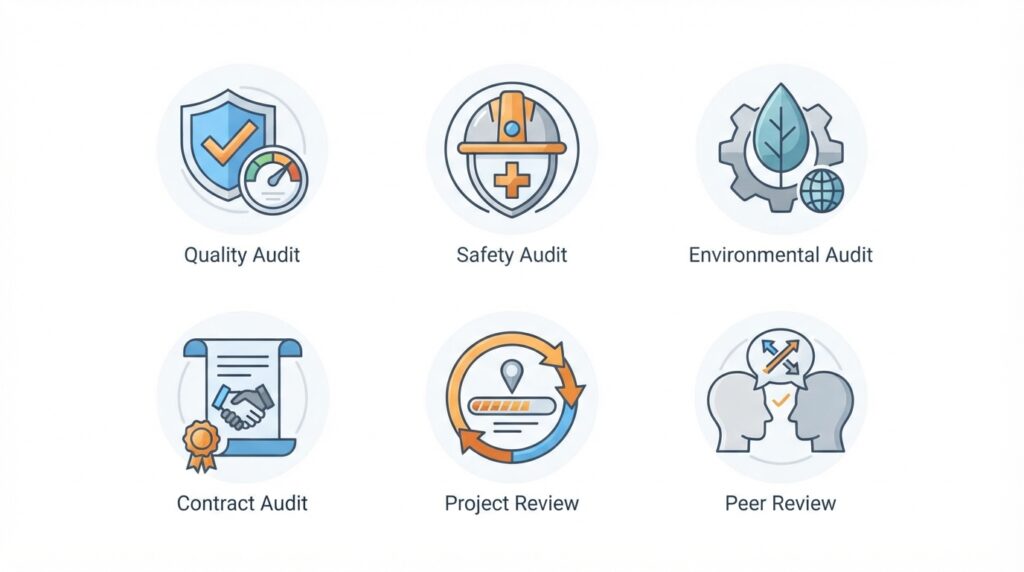
| Type | Description | When to Use |
|---|---|---|
| Quality audit | Examines quality systems and processes | During design and construction |
| Safety audit | Examines safety systems and practices | During construction and commissioning |
| Environmental audit | Examines environmental compliance | During construction and operation |
| Contract audit | Examines contract administration and compliance | During and after contract execution |
| Supplier and subcontractor audit | Examines the quality, safety, and compliance systems of suppliers and subcontractors | Before award and during execution |
| Project review | Assesses overall project performance | At key milestones |
| Peer review | Independent review by external experts | At critical decision points |
Each type requires a different approach and different expertise.
Standards and Frameworks
Audits are more credible when they are based on recognized standards. Common references include:
- ISO 19011: guidelines for auditing management systems, covering audit principles, programme management, and auditor competence.
- ISO 9001, ISO 45001, and ISO 14001: quality, occupational health and safety, and environmental management system requirements, often used as audit criteria.
- Technical codes and standards: for example, ASME Section IX for welder and welding procedure qualification, and the applicable codes for pressure testing, electrical work, and piping.
- Contract and owner requirements: the project specifications, quality plans, and owner or lender requirements that define what “compliant” means for the project.
The audit criteria should be agreed in advance, so that the audit measures the project against requirements that everyone recognizes.
Audit Planning
Audit planning defines what will be audited, when, and by whom.
Audit planning activities:
- Define audit scope: What will be audited?
- Define audit criteria: What standards and requirements apply?
- Define audit schedule: When will the audit occur?
- Define audit team: Who will conduct the audit?
- Define audit methodology: How will the audit be conducted?
- Define reporting: How will audit findings be reported?
Audit planning should be based on risk and criticality. Activities where failure would be most serious, or most expensive to correct later, deserve the most attention.
At our geothermal projects in Kenya (Olkaria I Unit 6, 83 MW) and Indonesia (Muara Laboh, 85.2 MW), audit planning focused on quality systems for welding and pressure testing, given the criticality of these activities for plant safety. In Iceland (Theistareykir, 2×45 MW), audit planning considered the specific regulatory and environmental requirements of the Icelandic project.
Audit Team
The audit team should have the skills and experience needed to conduct the audit effectively.
Audit team considerations:
- Competence: Does the team have the technical knowledge required?
- Independence: Is the team independent of the activities being audited?
- Objectivity: Can the team conduct the audit objectively?
- Training: Has the team been trained in audit techniques?
Independence matters because auditors who review their own work, or work of their own colleagues, cannot be fully objective.
Audit Methodology
Audit methodology defines how the audit will be conducted.
Audit methodology activities:
- Document review: Reviewing project documentation.
- Interviews: Interviewing project personnel.
- Site inspection: Inspecting the site and work activities.
- Testing: Testing systems and processes.
- Sampling: Sampling activities and records for review.
The methodology should be appropriate to the scope and objectives of the audit.
The Audit Process
A typical audit follows a clear sequence:
- Notification: The audited party is informed of the scope, criteria, schedule, and team.
- Opening meeting: The audit team confirms the scope, approach, and logistics with the project team.
- Fieldwork: The team reviews documents, interviews personnel, inspects the site, and gathers evidence.
- Closing meeting: Preliminary findings are presented and discussed, so that there are no surprises and factual errors are corrected.
- Reporting: The formal audit report is issued.
- Follow-up: Corrective actions are tracked and verified.
Findings should always be based on objective evidence, such as records, observations, and test results, rather than opinion.
Audit Findings
Audit findings are the results of the audit.
| Finding Type | Description | Action Required |
|---|---|---|
| Major non-conformance | Serious deviation from requirements | Corrective action required before proceeding |
| Minor non-conformance | Minor deviation from requirements | Corrective action required within a defined period |
| Observation | Opportunity for improvement | Consideration for improvement |
| Positive practice | Good practice identified | Recognition and sharing |
Findings should be documented clearly and objectively, with reference to the specific requirement and the evidence.
Examples from our projects: At one geothermal project in Indonesia, a quality audit identified that some welders’ qualifications had expired, which was corrected before the affected welds were made. At one thermal power project in Vietnam, a project review at the start of commissioning identified a potential delay in the completion of the control system, allowing corrective action to be taken before it affected the startup schedule.
Root Cause Analysis
Correcting an individual finding is not enough if the cause remains. For significant findings, the project team should ask why the problem occurred. Was it a gap in procedures, a training issue, unclear responsibilities, or schedule pressure? Corrective actions that address root causes prevent recurrence. Trends across several audits, such as repeated findings in the same area, often point to systemic issues that need management attention.
Audit Reporting
Audit reporting communicates audit findings to management.
Audit report contents:
- Audit scope: What was audited?
- Audit criteria: What standards and requirements applied?
- Audit findings: What was found?
- Conclusions: What do the findings mean?
- Recommendations: What actions are recommended?
Audit reports should be clear, objective, and actionable, and should reach the people who can act on them.
Project Reviews
Project reviews are broader assessments of project performance at key milestones.
Project review activities:
- Progress review: Assessing progress against schedule.
- Cost review: Assessing cost performance against budget.
- Quality review: Assessing quality performance.
- Safety review: Assessing safety performance.
- Risk review: Assessing project risks and mitigation.
- Stakeholder review: Assessing stakeholder engagement.
Project reviews should be conducted at key milestones and when significant issues arise. Typical milestones include completion of design, completion of procurement, start of construction, start of commissioning, and handover.
For thermal power projects in Vietnam (Thai Binh 1, 2×300 MW) and Bangladesh (Bibiyana-III, 400 MW CCGT), project reviews were conducted at key milestones, including completion of design, completion of procurement, start of construction, and start of commissioning, with recommendations for improvement at each stage.
Stage-Gate and Lender Reviews
Many projects use formal stage-gate reviews, where the project must demonstrate readiness before moving to the next phase, for example from design to procurement, or from construction to commissioning. Projects with external financing may also be subject to reviews by a lender’s technical advisor or independent engineer. Preparing for these reviews, with complete documentation and clear evidence of progress, helps avoid delays in approvals and funding.
Peer Reviews
Peer reviews are independent reviews by external experts.
Peer review activities:
- Selection of reviewers: Selecting reviewers with relevant expertise.
- Review scope: Defining what will be reviewed.
- Review process: Conducting the review.
- Review findings: Reporting findings and recommendations.
Peer reviews provide an independent perspective on project performance and can identify issues that the project team may have missed. They are particularly valuable at critical decision points, such as technology selection, design freeze, and commissioning readiness.
Supplier and Subcontractor Audits
Much of the quality and safety performance of a plant project depends on suppliers and subcontractors. Audits of their systems, before award and during execution, help confirm that they can meet requirements. Typical areas include quality management systems, welder and inspector qualifications, calibration of equipment, safety practices, and record-keeping. Findings from supplier and subcontractor audits should be followed up in the same way as findings on the main project.
Follow-Up and Corrective Action
Follow-up and corrective action ensure that audit findings are addressed.
Follow-up activities:
- Action planning: Developing action plans to address findings.
- Responsibility assignment: Assigning responsibility for actions.
- Deadline setting: Setting deadlines for completion.
- Verification: Verifying that actions are completed and effective.
- Closure: Closing findings when actions are complete.
Follow-up should be tracked and reported to management. A finding is not closed until the corrective action has been verified as effective, not merely completed.
Lessons Learned
Audits and reviews generate valuable information. Capturing lessons learned, both what went wrong and what worked well, allows the organization to improve on future projects. Lessons should be documented, shared with project teams, and reflected in procedures, checklists, and training.
Audits and Reviews in Small Plants
Small plants face particular challenges with audits and reviews.
Challenges:
- Fewer resources for audits and reviews.
- Less expertise.
- Less access to independent reviewers.
- Competing priorities.
Practical approaches:
- Focus on critical areas: Prioritize audits and reviews of critical areas.
- Use simple tools: Simple checklists and templates can be sufficient.
- Use external support: Leverage external auditors or reviewers for specialized expertise.
- Document everything: Good records support audit and review activities.
- Train staff: Ensure staff understand audit and review requirements.
- Learn from others: Apply lessons from other projects.
Audits and reviews do not need to be complex. They need to be thorough and consistent.
Common Mistakes in Audits and Reviews
Even experienced organizations make mistakes. Common ones include:
- No audit plan: Audits conducted without planning.
- Inadequate audit scope: Audits too narrow or too broad.
- Poor audit team: Auditors lacking competence or independence.
- Weak findings: Findings not clearly documented or substantiated.
- No root cause analysis: Symptoms corrected while causes remain.
- No follow-up: Findings not addressed.
- No reporting: Management not informed of findings.
- No learning: Lessons not captured and applied.
- Audits seen as fault-finding: Creating a defensive culture.
These mistakes are costly to correct. They are much cheaper to avoid through disciplined audits and reviews.
How EPC Partners Inc. Approaches Audits and Reviews
At EPC Partners Inc., we bring practical experience from projects across Asia, the Middle East, Africa, and Europe to audits and reviews.
Our approach includes:
- Thorough planning: Audits and reviews are planned carefully, with clear scope and criteria.
- Competent teams: Auditors and reviewers are selected for their competence and independence.
- Objective findings: Findings are documented clearly and objectively.
- Actionable recommendations: Recommendations are practical and actionable.
- Follow-up: Findings are tracked and verified.
- Constructive approach: Audits and reviews are seen as opportunities for improvement.
- Continuous improvement: Lessons are captured and applied.
Our experience includes supporting geothermal projects in Kenya, Ethiopia, Indonesia, Iceland, and Japan; desalination projects in the UAE, Saudi Arabia, Oman, and Qatar; thermal power projects in Vietnam, Bangladesh, and Japan; and water treatment projects in Vietnam, Kuwait, and Qatar.
We have also supported clients including Marubeni Corporation, Fuji Electric Co., Ltd., and Toyota Tsusho Corporation on audit and review aspects of their projects.
How to Evaluate Audit and Review Readiness
| Question | Why It Matters |
|---|---|
| Is there an audit plan? | Provides a roadmap for audits |
| Are audit criteria agreed in advance? | Ensures audits measure against recognized requirements |
| Are audits conducted by competent, independent teams? | Ensures objectivity and credibility |
| Are findings documented clearly and based on evidence? | Ensures findings are actionable |
| Are root causes analyzed? | Prevents recurrence |
| Are findings followed up and verified? | Ensures issues are addressed |
| Are suppliers and subcontractors audited? | Extends assurance across the supply chain |
| Are reviews conducted at key milestones? | Provides early warning of problems |
| Are recommendations acted upon? | Ensures improvement |
| Is there a learning culture? | Ensures lessons are applied |
A project that addresses these questions is ready for effective audits and reviews.
Key Takeaways
- Audits and reviews are about finding opportunities for improvement, not finding fault.
- Plan audits based on risk and criticality, and agree the criteria in advance.
- Use competent, independent auditors, and base findings on objective evidence.
- Address root causes, and verify that corrective actions are effective.
- Hold project reviews at key milestones, and extend audits to suppliers and subcontractors.
- Capture lessons learned and apply them to future projects.
Conclusion
Project audits and reviews are critical to plant success. For small to medium-scale industrial plants, they determine whether the project stays on track and avoids costly surprises.
By focusing on audit planning, audit teams, audit methodology, audit findings, audit reporting, project reviews, peer reviews, and follow-up, owners and project teams can ensure that audits and reviews support the project throughout its life.
If you are planning a plant project and need support with project audits and reviews or EPC project delivery, contact us to discuss how we can help.
EPC Partners Inc. is a Japanese EPC support firm with experience supporting power, water, and industrial plant projects across Asia, the Middle East, Africa, and Europe. For more information, visit our project list.