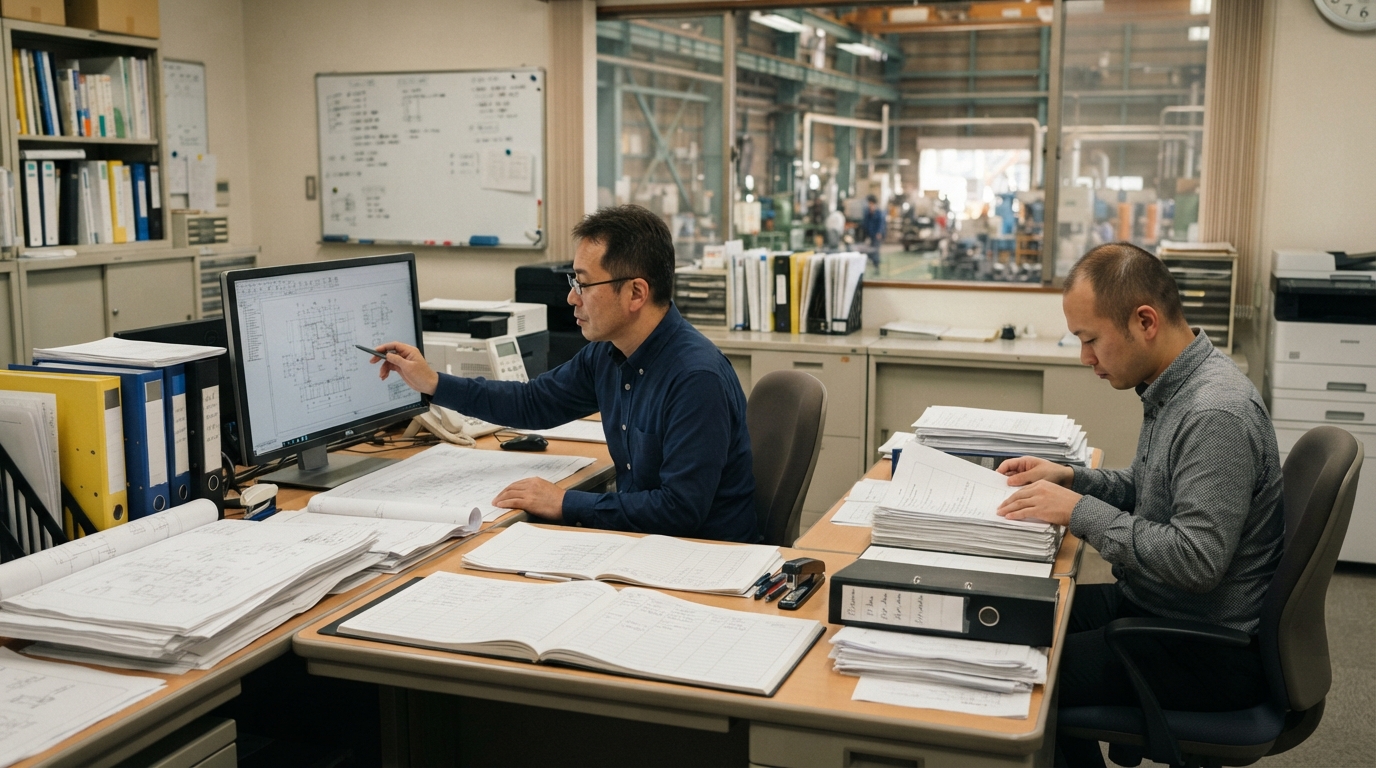
Every industrial plant project generates vast amounts of documentation: design drawings, specifications, datasheets, calculations, test records, inspection reports, operating procedures, and maintenance manuals. All of it must be created, reviewed, issued, filed, and retained. Documentation and records management is the discipline of ensuring that this information is accurate, accessible, and available to the people who need it, when they need it.
At EPC Partners Inc., documentation and records management have been a core part of our work across geothermal power plants in Kenya, Indonesia, and Iceland, desalination facilities in the UAE and Saudi Arabia, thermal power plants in Vietnam and Bangladesh, and water treatment plants in Vietnam and Kuwait. Our documentation work has ranged from document control for geothermal projects in Kenya and Indonesia, where P&ID version control was critical, to transmittal management for thermal power projects in Vietnam and Bangladesh, where formal issue of drawings to contractors was essential. Each project has presented different challenges, and each has reinforced the same lesson: documentation is not just paperwork. It is the memory of the project, the record of what was designed, what was built, and what was tested.
This article covers the key practices in plant documentation and records management, drawing on our experience across Asia, the Middle East, Africa, and Europe.
What Is Documentation and Records Management?
It is the discipline of creating, controlling, storing, retrieving, retaining, and archiving project documentation. It includes:
- Document creation: Producing drawings, specifications, and reports.
- Document control: Managing versions, approvals, and distribution.
- Storage and retrieval: Keeping documents in a structured, searchable system.
- Retention: Keeping documents for the required period.
- Archiving and disposal: Preserving documents at project closeout and disposing of them when retention periods expire.
A useful distinction: documents (drawings, procedures, specifications) are controlled and revised as the project develops, while records (test results, inspection reports, signed certificates) provide evidence of what was done and must not be altered. Both need management, but in different ways.
Why It Matters
| Factor | Good Documentation | Poor Documentation |
|---|---|---|
| Construction | Work proceeds smoothly | Rework and delays from missing or outdated information |
| Quality | Quality verified and documented | Quality problems and disputes |
| Operations | Plant operated and maintained effectively | Operational problems |
| Compliance | Regulatory requirements met | Non-compliance and fines |
| Disputes | Records support claims and defences | Disputes lost for lack of evidence |
| Handover | Smooth handover to operations | Difficult handover and operational problems |
For small to medium-scale industrial plants, documentation and records management often determine whether the plant is built correctly and operated effectively.
Roles and Responsibilities
Documentation fails most often when nobody owns it. Define clearly:
- Document controller: Maintains the register, numbering, transmittals, and distribution.
- Discipline leads: Responsible for the content and technical accuracy of their documents.
- Project manager: Ensures resources, procedures, and compliance.
- Owner’s representative: Reviews and approves documents as required by the contract.
- Vendors and subcontractors: Responsible for supplying documents to the agreed schedule and format.
In small projects one person may hold several roles, but the responsibilities should still be written down.
Document Control
Document control manages document versions, approvals, and distribution. Key activities:
- Document numbering: A unique number for each document.
- Version control: Clear revision identification and history.
- Approval: Review and approval before issue.
- Distribution: Delivery to the right people.
- Transmittals: A record of issue and receipt.
- Superseded documents: Marking old versions as obsolete and removing them from use.
Document control ensures everyone works from the current, approved version.
Numbering and metadata. Agree a numbering convention at project start (project, discipline, document type, sequence, revision), and define the metadata each document carries, such as title, status, originator, date, and purpose of issue. Consistent numbering makes search, cross-referencing, and later handover far easier.
At our geothermal projects in Kenya (Olkaria I Unit 6, 83 MW) and Indonesia (Muara Laboh, 85.2 MW), document control covered P&IDs, equipment datasheets, and test records, with version control ensuring that construction used the latest approved drawings. In Iceland (Theistareykir, 2×45 MW), document control also had to accommodate the documentation practices and regulatory expectations of the local project environment.
Document Management Systems
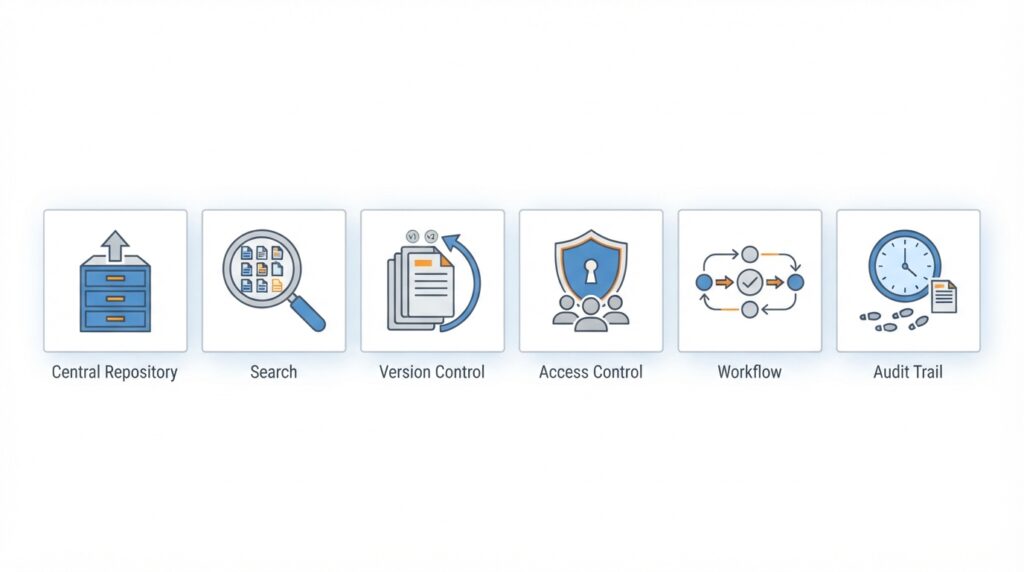
A document management system (DMS) provides a structured way to store and retrieve documents.
| Feature | Description |
|---|---|
| Central repository | All documents in one place |
| Search | Fast search by number, title, or content |
| Version control | Automatic tracking of versions |
| Access control | Permissions by user or role |
| Workflow | Review and approval workflows |
| Audit trail | Record of who accessed or changed documents |
Whatever the tool, the principle is the same: one source of truth, with clear access rights.
Document Types and Retention
| Document Type | Examples | Typical Retention |
|---|---|---|
| Design documents | P&IDs, PFDs, isometrics, electrical drawings | Life of plant |
| Equipment documents | Datasheets, vendor manuals, spare parts lists | Life of plant |
| Test records | Commissioning records, test certificates | Life of plant |
| Quality records | Inspection reports, material certificates | Life of plant |
| Operating procedures | Startup, operation, shutdown procedures | Life of plant |
| Maintenance procedures | Inspection, maintenance, repair procedures | Life of plant |
| Safety procedures | Emergency procedures, safety data sheets | Life of plant |
| Regulatory documents | Permits, licenses, compliance reports | As required by regulation |
Retention requirements vary by document type, contract, and jurisdiction, so always confirm them against local regulations and the contract.
Review and Approval
Review and approval ensure documents are correct before use:
- Internal review: By the originating discipline and other affected disciplines.
- Client review: By the owner or their representative.
- Comment resolution: Tracked comments with documented responses.
- Approval: Formal sign-off by authorized personnel.
- Issue: Release of the approved document, with a clear status such as “For Review,” “For Approval,” or “For Construction.”
Status codes matter: a drawing issued “for review” must never be mistaken for one issued “for construction.”
Transmittals
Transmittals are the formal record of document issue. A transmittal should include:
- Transmittal number: A unique identifier.
- Date: Date of issue.
- Recipient: Who receives the documents.
- Documents: What is included, with revision numbers.
- Purpose: For review, approval, construction, or information.
- Response required: What response is needed and by when.
Transmittals provide an audit trail of issue and receipt.
At one thermal power project in Vietnam, transmittals were used to formally issue the P&IDs and equipment datasheets to the construction contractor, with each transmittal recording the purpose and the required response date. At one geothermal project in Kenya, the transmittal log was used to track the issue of revised drawings as the design developed, ensuring that construction always worked from the latest approved version. On thermal power projects in Vietnam (Thai Binh 1, 2×300 MW) and Bangladesh (Bibiyana-III, 400 MW CCGT), formal transmittals gave clear records of what was issued, when, and to whom.
Vendor Documentation
Equipment vendors supply a large share of project documents: datasheets, certified drawings, test certificates, manuals, and spare parts lists. Manage this deliberately:
- Include a vendor document requirements list (VDRL) in each purchase order, with required formats and due dates.
- Track vendor submissions in the same register as other project documents.
- Link payment milestones to delivery of required documents where the contract allows.
- Check that vendor documents match what was actually supplied, including serial numbers and final test results.
Late or missing vendor documents are a common cause of delayed handover.
Managing Changes to Documents
Design changes during construction and commissioning must be reflected in the documents. Link document control to the project’s change management process: every approved change should identify the documents affected, and those documents should be revised, reissued, and redistributed. For operating plants, the same principle applies under management of change (MOC).
As-Built Documentation
As-built documentation reflects the plant as actually built, not as designed:
- Field verification: Confirming as-built conditions against the design.
- Marking changes: Recording deviations on drawings during construction.
- Updating drawings: Revising documents to reflect actual construction.
- Approval: Reviewing and approving as-built documents.
- Delivery: Handing them to the owner.
Collecting as-built markups progressively during construction is far easier than reconstructing them at the end. As-built documents are essential for future maintenance, modifications, and safety.
Electronic Records, Security, and Backup
Most project records are now electronic, which brings its own requirements:
- Use agreed file formats, and keep native files where editing may be needed later.
- Back up regularly and test restoration.
- Control access, particularly for commercially sensitive or security-related documents.
- Plan for long-term readability: file formats and software change over the life of a plant.
Records Retention and Archiving
Retention considerations:
- Regulatory requirements: Retention periods set by law.
- Contractual requirements: Periods set by the contract, including warranty and defects liability periods.
- Operational needs: How long documents are needed for operation and maintenance.
- Legal needs: How long they may be needed for claims or disputes.
Document these in a retention schedule, and align it with recognized frameworks such as ISO 15489 (records management) and, where applicable, the documented-information requirements of ISO 9001.
Archiving activities:
- Selection: Choosing documents to archive.
- Indexing: Indexing them for retrieval.
- Storage: Keeping them in a secure, accessible location.
- Retrieval: Providing access when needed.
- Disposal: Disposing of documents, securely and with authorization, when retention periods expire.
Handover Documentation
At handover, the owner should receive a complete, organized dossier, typically including as-built drawings, final equipment documentation and manuals, test and commissioning records, quality records, certificates, permits, spare parts lists, and operating and maintenance procedures. Agree the content and format of this dossier early, ideally in the contract, so that documents are collected throughout the project rather than assembled in a rush at the end.
Documentation in Small Plants
Small plants face particular challenges: fewer resources, less expertise, limited access to document management systems, and competing priorities. Practical approaches:
- Focus on critical documents: Prioritize those that affect safety, operation, and compliance.
- Use simple tools: Registers and well-organized shared drives can be sufficient if used consistently.
- Use templates: Standard templates save time and improve consistency.
- Document everything important: Good records support operations and resolve disputes.
- Train staff: Make sure people understand the requirements.
- Learn from others: Apply lessons from previous projects.
Documentation management does not need to be complex. It needs to be thorough and consistent.
Common Mistakes
- No document control: Documents not controlled or versioned.
- Poor storage: Documents hard to find or access.
- Incomplete records: Records missing or unsigned.
- No transmittals: No record of issue and receipt.
- Unclear status: Drafts mistaken for approved documents.
- No as-builts: Drawings that no longer match the plant.
- Late vendor documents: Missing manuals and certificates at handover.
- No retention schedule: Documents kept too long or disposed of too early.
- No backup or archive: Records lost through system failure or staff turnover.
- No training: Staff unaware of requirements.
These mistakes are costly to correct and much cheaper to avoid.
How EPC Partners Inc. Approaches Documentation and Records Management
Our approach includes:
- Document control: Controlled, versioned documents with clear status.
- Document management systems: Structured, accessible storage.
- Transmittals: Formal issue of documents with clear records.
- Vendor documentation: Requirements defined at purchase order stage and tracked.
- As-built documentation: Prepared progressively and delivered at handover.
- Retention and archiving: Defined schedules and secure archives.
- Continuous improvement: Lessons captured and applied to later projects.
Our experience includes geothermal projects in Kenya, Ethiopia, Indonesia, Iceland, and Japan; desalination projects in the UAE, Saudi Arabia, Oman, and Qatar; thermal power projects in Vietnam, Bangladesh, and Japan; and water treatment projects in Vietnam, Kuwait, and Qatar. We have supported clients including Marubeni Corporation, Fuji Electric Co., Ltd., and Toyota Tsusho Corporation on documentation and records management aspects of their projects.
How to Evaluate Readiness
| Question | Why It Matters |
|---|---|
| Is there a document control system? | Ensures documents are current and approved |
| Are roles and responsibilities defined? | Ensures accountability |
| Is there a numbering convention and status system? | Prevents confusion between versions and statuses |
| Are documents stored in an accessible system? | Ensures documents can be found |
| Are transmittals used? | Provides an audit trail |
| Are vendor document requirements defined? | Prevents gaps at handover |
| Is as-built documentation planned? | Supports maintenance and modifications |
| Is there a retention schedule? | Ensures documents are kept as long as required |
| Are backup and archiving in place? | Protects against loss |
| Are staff trained? | Ensures requirements are understood |
Key Takeaways
- Documentation is the memory of the project: treat it as an engineering deliverable, not an afterthought.
- Control versions, statuses, and distribution from day one.
- Use transmittals to create a clear audit trail.
- Collect vendor documents and as-built information progressively.
- Define retention, backup, and archiving early.
- Simple, consistently used tools beat sophisticated systems used badly.
Conclusion
Documentation and records management are critical to plant success. For small to medium-scale industrial plants, they help determine whether the plant is built correctly and operated effectively. By focusing on document control, document management systems, review and approval, transmittals, vendor documentation, as-built records, retention, and archiving, owners and project teams can ensure that documentation supports the project throughout its life.
EPC Partners Inc. is a Japanese EPC support firm with experience supporting power, water, and industrial plant projects across Asia, the Middle East, Africa, and Europe. If you are planning a plant project and need support with documentation and records management or EPC project delivery, contact us to discuss how we can help. For more information, visit our project list.