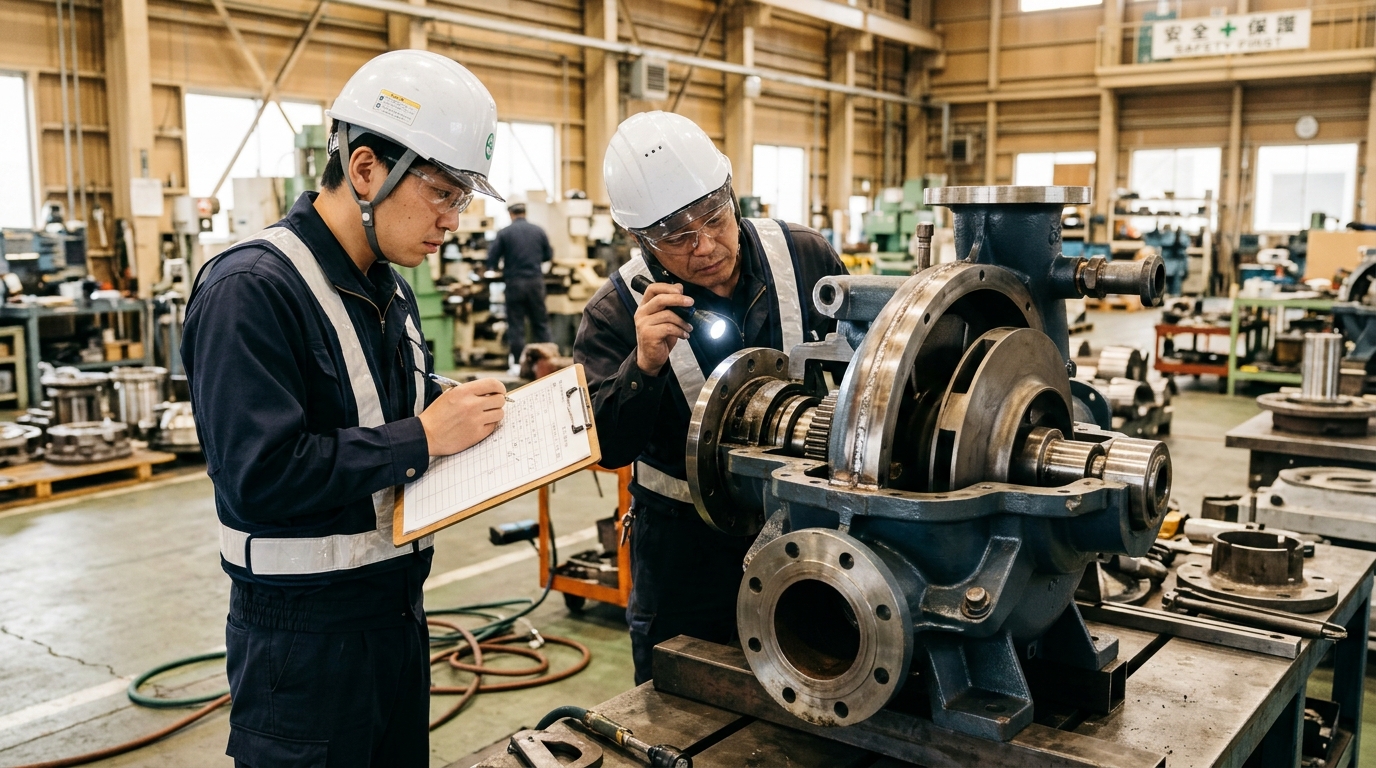
Vendor inspection and expediting are the disciplines that ensure equipment arrives on time and meets specifications. Inspection verifies that equipment is manufactured correctly before it leaves the vendor’s facility. Expediting monitors vendor progress and intervenes when delays threaten the project schedule. Together, they protect the project from the two most common procurement failures: late delivery and poor quality.
At EPC Partners Inc., vendor inspection and expediting have been a core part of our work across a wide range of plant projects, from geothermal power plants in Kenya, Indonesia, and Iceland to large-scale desalination facilities in the UAE and Saudi Arabia, and from thermal power plants in Vietnam and Bangladesh to water treatment plants in Vietnam and Kuwait. Our inspection and expediting work has ranged from geothermal projects in Kenya and Indonesia, where corrosion-resistant materials required careful verification, to desalination projects in the Gulf, where high-pressure pumps and membrane skids were inspected at source before shipment.
Each project has presented different challenges, and each has reinforced the same lesson: vendor inspection and expediting are not just about checking boxes. They are about building relationships with vendors, understanding their capabilities, and intervening early when problems arise.
This article covers the key practices in plant vendor inspection and expediting, drawing on our experience supporting projects across Asia, the Middle East, Africa, and Europe.
What Is Vendor Inspection and Expediting?
Vendor inspection is the process of verifying that equipment is manufactured to the contract specifications, applicable codes, and approved drawings before it is shipped.
Vendor expediting is the process of monitoring vendor progress against the purchase order schedule and intervening to keep deliveries on track.
The two disciplines work best together. Inspection findings often explain schedule slippage (rework, failed tests, material problems), and schedule pressure can tempt vendors to cut corners on quality. A coordinated approach keeps both under control.
Why Vendor Inspection and Expediting Matter
Vendor inspection and expediting directly affect project success.
| Factor | Impact of Good Inspection and Expediting | Impact of Poor Inspection and Expediting |
|---|---|---|
| Quality | Equipment meets specifications | Defective equipment arrives at site |
| Schedule | Equipment arrives on time | Delays cascade to construction |
| Cost | Rework and delays avoided | Rework, demurrage, and delay costs |
| Safety | Equipment is safe to install and operate | Safety hazards from defective equipment |
| Integration | Equipment integrates with the plant | Interface problems |
| Warranty | Clear records of inspection and testing | Disputes over warranty coverage |
Problems found at the vendor’s works are far cheaper to fix than problems found at site. A dimensional error corrected in the shop costs hours; the same error discovered during installation can cost weeks. For small to medium-scale industrial plants, vendor inspection and expediting determine whether equipment arrives on time and meets specifications.
Vendor Inspection Planning
Vendor inspection planning defines what inspections are required, when, and by whom.
Inspection planning activities:
- Define inspection requirements: What inspections are required for each equipment item?
- Define inspection levels: Full inspection, sampling inspection, witness testing, or documentation review?
- Define inspection criteria: What standards and specifications apply?
- Define inspection responsibilities: Who performs and witnesses the inspection?
- Define inspection schedule: When will inspections occur, and how will they be coordinated with the vendor’s production schedule?
- Define documentation: What records will be produced?
Inspection planning should be based on equipment criticality and risk. A useful starting point is a criticality ranking of every purchase order, considering factors such as safety consequence, effect on plant availability, lead time, complexity, and the vendor’s track record.
At our geothermal projects in Kenya (Olkaria I Unit 6, 83 MW) and Indonesia (Muara Laboh, 85.2 MW), inspection planning for steam turbines included witness testing of performance and material verification for corrosion-resistant components. In Iceland (Theistareykir, 2×45 MW), inspection planning considered the seismic and environmental requirements of the site.
Inspection and Test Plans (ITPs)
Inspection and test plans (ITPs) define the inspections and tests required for each equipment item.
| Element | Description |
|---|---|
| Activity | What work is being inspected |
| Inspection/test | What inspection or test is required |
| Reference | What standard or specification applies |
| Acceptance criteria | What defines acceptable quality |
| Responsibility | Who performs and witnesses the inspection |
| Hold points | Points where work cannot proceed without inspection and release |
| Witness points | Points where the inspector is notified and may attend, but work can proceed if the inspector does not attend |
| Records | What records are produced |
ITPs should be agreed with the vendor before manufacturing begins, and vendor ITPs should be reviewed against the purchase order requirements. Agreeing on hold and witness points early avoids disputes later, because the vendor knows in advance when production must pause and how much notice the inspector needs.
Inspection Levels
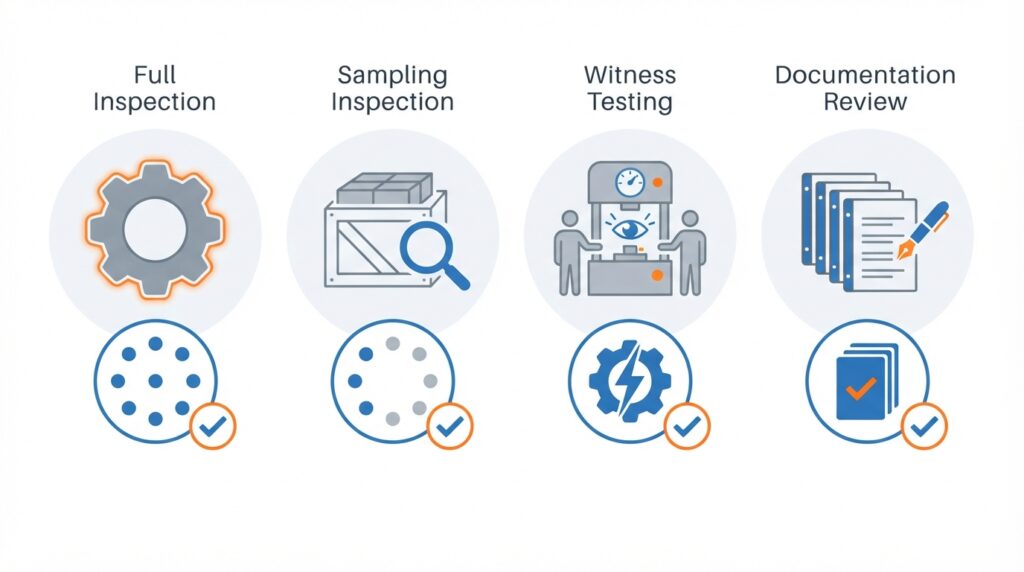
Inspection levels determine how much inspection is performed.
| Level | Description | When to Use |
|---|---|---|
| Full inspection | Every item inspected | Critical equipment |
| Sampling inspection | A sample of items inspected | Standard equipment |
| Witness testing | Specific tests witnessed | Equipment with critical performance requirements |
| Documentation review | Records reviewed without physical inspection | Low-risk equipment |
Inspection levels should be based on equipment criticality and risk, and they can be adjusted as experience with a vendor builds. A vendor with a strong record may justify lighter inspection; early problems justify more.
Vendor Expediting
Vendor expediting monitors vendor progress and intervenes when delays threaten the project schedule.
Expediting activities:
- Progress monitoring: Tracking vendor progress against the schedule.
- Milestone verification: Confirming that milestones (material orders, machining, assembly, testing, painting, packing) are actually met, not just reported.
- Document tracking: Monitoring submission and approval of vendor drawings and data, since late document approvals are a frequent cause of delay.
- Issue resolution: Identifying and resolving problems.
- Reporting: Reporting progress and issues to project management.
- Escalation: Escalating issues that cannot be resolved at the working level.
- Sub-supplier monitoring: Monitoring sub-suppliers, where delays often originate.
Expediting is especially important for long-lead items, where delays have the greatest impact. Expediting effort should be prioritized by schedule criticality, so that items on or near the critical path receive the closest attention.
For thermal power projects in Vietnam (Thai Binh 1, 2×300 MW) and Bangladesh (Bibiyana-III, 400 MW CCGT), expediting included regular progress reviews with turbine and generator vendors, with early identification of potential delays and proactive intervention to keep delivery on track.
Kick-Off Meetings
Kick-off meetings set expectations with vendors at the start of the order.
Kick-off meeting topics:
- Scope: What is being supplied?
- Schedule: What are the key milestones and delivery dates?
- Quality: What are the quality requirements and ITPs?
- Documentation: What documentation is required and when?
- Communication: Who are the points of contact?
- Reporting: What progress reports are required and how often?
- Inspection: What inspections are required and when?
- Sub-suppliers: Which sub-suppliers are involved, and what approvals apply?
Kick-off meetings should be held for all major equipment orders. For critical equipment, they are best held at the vendor’s facility, where the team can see the shop, the planned sequence of work, and the people responsible.
Progress Reporting
Progress reporting keeps project management informed of vendor progress.
Progress report contents:
- Overall status: On track, at risk, or delayed?
- Milestones: Status of key milestones, with planned and actual dates.
- Issues: Any issues or risks?
- Actions: What actions are being taken, by whom, and by when?
- Forecast: Predicted delivery date.
- Photographs and evidence: Where possible, supporting evidence of actual progress.
Progress reports should be regular and accurate. Reports that always say “on track” until the final weeks are a warning sign; physical verification of progress through visits or inspection reports is the best check.
Inspection at Source
Inspection at source verifies equipment before it leaves the vendor’s facility.
Inspection at source activities:
- Pre-inspection meeting: Reviewing inspection requirements with the vendor.
- In-process inspection: Inspecting during manufacturing, when defects are easiest to correct.
- Final inspection: Inspecting before shipment, including packing and preservation.
- Witness testing: Witnessing tests specified in the contract, such as factory acceptance tests (FATs), hydrostatic tests, and performance tests.
- Documentation review: Reviewing material certificates, test certificates, and quality records.
- Release for shipment: Issuing an inspection release note or certificate only when all requirements are met.
Inspection at source prevents defective equipment from arriving at site.
For desalination projects in the Gulf (Taweelah, 909,200 m³/day; Jubail 3A, 600,000 m³/day), inspection at source included the inspection of high-pressure pumps, membrane skids, and energy recovery devices, with witness testing of performance and material verification before shipment.
Lessons from the Field
At one thermal power project in Vietnam, inspection at source identified a dimensional discrepancy in the turbine casing before shipment, allowing the vendor to correct it before delivery. At another project in Bangladesh, expediting revealed that a sub-supplier was behind schedule on generator components, and early intervention prevented a delay to the overall delivery.
Both cases show why inspection and expediting are most valuable when they happen early, at the vendor’s works, rather than at site.
Non-Conformance Management
Non-conformances are deviations from requirements. Managing them is critical.
Non-conformance process:
- Identify: Identify the non-conformance.
- Document: Record the non-conformance in a non-conformance report (NCR).
- Assess: Assess the impact and severity.
- Disposition: Determine disposition (repair, rework, replace, accept as-is).
- Approve: Approve the disposition. Accept-as-is and repair dispositions should be approved by the engineer responsible and, where required, by the owner.
- Implement: Implement the disposition.
- Verify: Verify that the disposition was effective, with re-inspection where necessary.
- Close: Close the non-conformance.
Non-conformances should be tracked and analyzed to identify trends and prevent recurrence. Repeated NCRs from the same vendor or the same sub-supplier may indicate a systemic problem that calls for a vendor quality audit or a corrective action plan.
Shipping and Logistics
Shipping and logistics ensure that equipment arrives at site safely and on time.
Shipping and logistics activities:
- Packing and preservation: Verifying that packing, marking, and preservation meet the specification, particularly for sea freight and long storage.
- Shipping arrangements: Arranging transport from vendor to site, including heavy-lift and oversized cargo planning.
- Customs clearance: Managing import/export procedures and documentation.
- Insurance: Insuring goods during transport.
- Tracking: Monitoring shipment progress.
- Receiving: Inspecting and accepting deliveries at site, and recording any damage or shortages immediately.
- Storage: Storing and preserving equipment in accordance with vendor instructions.
Shipping and logistics should be planned to avoid delays and damage. Delivery terms (such as the applicable Incoterms) should be clear in the purchase order so that responsibility for risk, insurance, and customs is not in doubt.
Using Third-Party Inspection and Remote Inspection
Projects often use third-party inspection agencies, especially when vendors are located in many countries or when the owner’s own staff cannot attend every inspection. Third-party inspectors can provide local presence and specialized expertise, but they need a clear scope, the approved ITPs, and clear reporting lines. Remote inspection, using video, photographs, and electronic records, can supplement physical visits for lower-risk items or when travel is restricted, but it should not replace physical witnessing of critical tests.
Vendor Inspection and Expediting in Small Plants
Small plants face particular challenges with vendor inspection and expediting.
Challenges:
- Fewer resources for inspection and expediting.
- Less expertise.
- Less access to vendor facilities.
- Competing priorities.
Practical approaches:
- Focus on critical equipment: Prioritize inspection and expediting for critical equipment.
- Use third-party inspection: Leverage third-party inspectors for specialized work.
- Use vendor information: Leverage vendor data and references.
- Document everything: Good records support claims and disputes.
- Train staff: Ensure staff understand inspection requirements.
- Learn from others: Apply lessons from other projects.
Vendor inspection and expediting do not need to be complex. They need to be thorough and consistent.
Common Mistakes in Vendor Inspection and Expediting
Even experienced organizations make mistakes. Common ones include:
- No inspection plan: Inspection left to chance.
- Inadequate ITPs: Inspection and test plans incomplete or not followed.
- Skipping inspection: Accepting defective equipment.
- Poor expediting: Discovering delays too late.
- No progress reporting: Management not informed of vendor progress.
- Ignoring sub-suppliers: Delays originating at sub-suppliers.
- Releasing shipment before closing NCRs: Open non-conformances traveling to site.
- Poor documentation: Records missing or incomplete.
- No non-conformance management: Deviations not addressed.
These mistakes are costly to correct. They are much cheaper to avoid through disciplined vendor inspection and expediting.
How EPC Partners Inc. Approaches Vendor Inspection and Expediting
At EPC Partners Inc., we bring practical experience from projects across Asia, the Middle East, Africa, and Europe to vendor inspection and expediting.
Our approach includes:
- Thorough planning: Inspection and expediting are planned from the beginning.
- Detailed ITPs: Inspection and test plans are comprehensive and followed.
- Disciplined inspection: Equipment is inspected before shipment.
- Active expediting: Vendor progress is monitored closely.
- Sub-supplier monitoring: Sub-suppliers are monitored for delays.
- Detailed documentation: Records are complete and accurate.
- Continuous improvement: Lessons are captured and applied.
Our experience includes supporting geothermal projects in Kenya, Ethiopia, Indonesia, Iceland, and Japan; desalination projects in the UAE, Saudi Arabia, Oman, and Qatar; thermal power projects in Vietnam, Bangladesh, and Japan; and water treatment projects in Vietnam, Kuwait, and Qatar.
We have also supported clients including Marubeni Corporation, Fuji Electric Co., Ltd., and Toyota Tsusho Corporation on vendor inspection and expediting aspects of their projects.
How to Evaluate Vendor Inspection and Expediting Readiness
When reviewing vendor inspection and expediting, ask:
| Question | Why It Matters |
|---|---|
| Is there an inspection plan? | Provides a roadmap for inspection |
| Are ITPs prepared and followed? | Defines inspections and tests |
| Are inspection levels appropriate? | Balances risk and cost |
| Is expediting in place? | Ensures on-time delivery |
| Is progress reported regularly? | Keeps management informed |
| Are sub-suppliers monitored? | Prevents delays originating at sub-suppliers |
| Are non-conformances managed? | Addresses deviations |
| Are shipping and receiving planned? | Prevents damage and delay in transit |
| Is documentation complete? | Supports claims and warranty |
A project that addresses these questions is ready for effective vendor inspection and expediting.
Key Takeaways
- Plan inspection and expediting from the start, based on equipment criticality and risk.
- Agree ITPs, hold points, and witness points with vendors before manufacturing begins.
- Inspect at source; problems are cheapest to fix at the vendor’s works.
- Verify progress physically and monitor sub-suppliers, where delays often begin.
- Manage non-conformances to closure before releasing equipment for shipment.
- Plan packing, shipping, receiving, and storage as part of the same process.
- Keep complete records to support warranty and claims.
Conclusion
Vendor inspection and expediting are critical to plant success. For small to medium-scale industrial plants, they determine whether equipment arrives on time and meets specifications.
By focusing on inspection planning, ITPs, inspection levels, expediting, kick-off meetings, progress reporting, inspection at source, non-conformance management, and shipping and logistics, owners and project teams can ensure that vendor inspection and expediting support the project throughout its life.
If you are planning a plant project and need support with vendor inspection and expediting or EPC project delivery, contact us to discuss how we can help.
EPC Partners Inc. is a Japanese EPC support firm with experience supporting power, water, and industrial plant projects across Asia, the Middle East, Africa, and Europe. For more information, visit our project list.