By EPC Partners Inc. Engineering Team
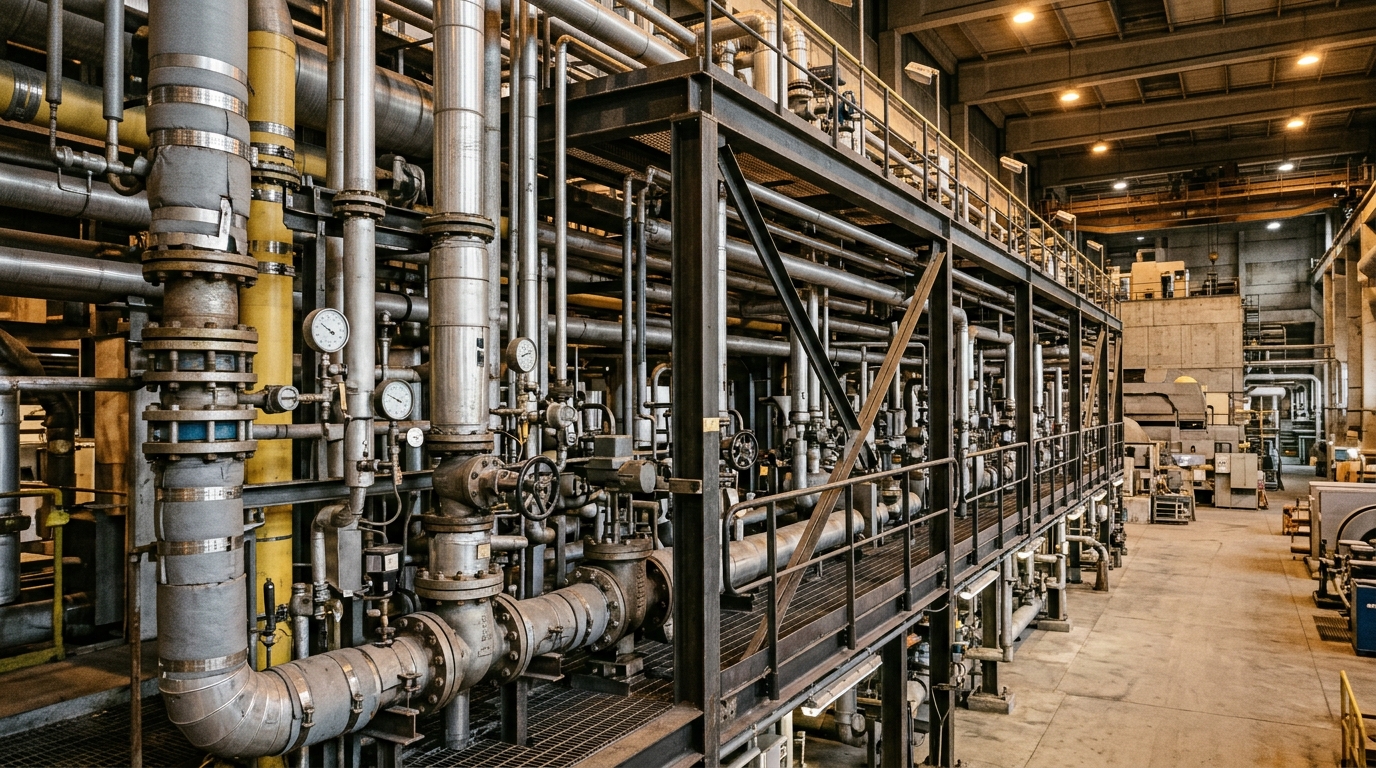
Piping is the circulatory system of an industrial plant. It transports water, steam, fuel, chemicals, and gases between equipment and processes. A well-designed piping system ensures reliable flow, minimizes pressure loss, and operates safely for decades. A poorly designed system causes pressure drops, vibration, corrosion, and leaks that disrupt operations and create safety hazards.
At EPC Partners Inc., our support on piping engineering has been a core part of our work across a wide range of plant projects—from geothermal power plants in Kenya, Indonesia, and Iceland to large-scale desalination facilities in the UAE and Saudi Arabia, and from thermal power plants in Vietnam and Bangladesh to water treatment plants in Vietnam and Kuwait. Our piping engineering work has ranged from geothermal steam piping in Kenya and Indonesia, to main steam and reheat piping for 300 MW thermal units in Vietnam and Bangladesh, to high-pressure desalination piping in the Gulf. Each project has presented different piping challenges, and each has reinforced the same lesson: piping is not just about connecting equipment. It is about designing systems that handle the fluid, the pressure, the temperature, and the environment—reliably and safely for the life of the plant.
This article covers the key practices in plant piping engineering, drawing on our experience supporting projects across Asia, the Middle East, Africa, and Europe.
What Is Plant Piping Engineering?
Plant piping engineering is the discipline of designing, specifying, and constructing the piping systems required for an industrial plant.
It includes:
- Pipe and fittings: The conduit and connections for fluids.
- Valves: Control, isolation, and relief valves.
- Supports: Pipe supports, hangers, and anchors.
- Insulation: Thermal and personnel protection.
- Stress analysis: Ensuring piping can accommodate thermal expansion and other loads.
- Material selection: Choosing materials compatible with the fluid and environment.
- Layout and 3D modeling: Routing piping and coordinating it with equipment, structures, and other disciplines.
- Fabrication, welding, and installation: Building the piping to the design with controlled quality.
Piping engineering provides the systems that transport fluids throughout the plant.
Why Piping Engineering Matters
Piping engineering directly affects plant performance.
| Factor | Impact of Good Piping Engineering | Impact of Poor Piping Engineering |
|---|---|---|
| Safety | Piping contains hazardous fluids safely | Leaks, ruptures, safety incidents |
| Reliability | Piping operates without failure | Vibration, corrosion, leaks |
| Cost | Optimized material and installation costs | Higher costs from rework and failures |
| Schedule | Piping installed on time | Delays from design changes |
| Performance | Adequate flow and pressure | Pressure drop and flow restrictions |
| Compliance | Meets codes and standards | Non-compliance |
For small to medium-scale industrial plants, piping engineering determines whether the plant can operate safely and efficiently.
Codes and Standards
Piping design must follow recognized codes. The governing code is normally set by the type of plant and the owner’s requirements, and it should be fixed in the design basis at the start of the project.
| Code / Standard | Typical Scope |
|---|---|
| ASME B31.1 | Power piping (steam, feedwater, boiler external piping) |
| ASME B31.3 | Process piping (chemical, desalination, and general industrial plants) |
| ASME B16.5 / B16.47 | Flanges |
| ASME B16.34 | Valves |
| ASME B36.10M / B36.19M | Pipe dimensions |
| ASME Section IX | Welding and brazing qualifications |
| EN 13480, JIS, or other local codes | Where required by the project location or owner |
On international projects, the applicable code, any local regulatory requirements, and owner specifications should be reconciled early. Differences between codes (for example, in allowable stress, testing, and examination requirements) are much cheaper to resolve in the design basis than during construction.
Design Basis and Piping Classes
Good piping engineering starts with clear documents.
- Piping design basis: Codes, design conditions, corrosion allowances, and design philosophy.
- P&IDs (piping and instrumentation diagrams): Define lines, valves, instruments, and protective devices.
- Line list: Records the fluid, design and operating pressure and temperature, material, and insulation for each line.
- Piping class specifications (piping material specifications): Define pipe, fittings, flanges, gaskets, bolting, and valves for each service, so that materials are standardized across the plant.
Using piping classes reduces errors, simplifies procurement, and keeps material take-offs consistent.
Piping Materials
Material selection is one of the most important decisions in piping design.
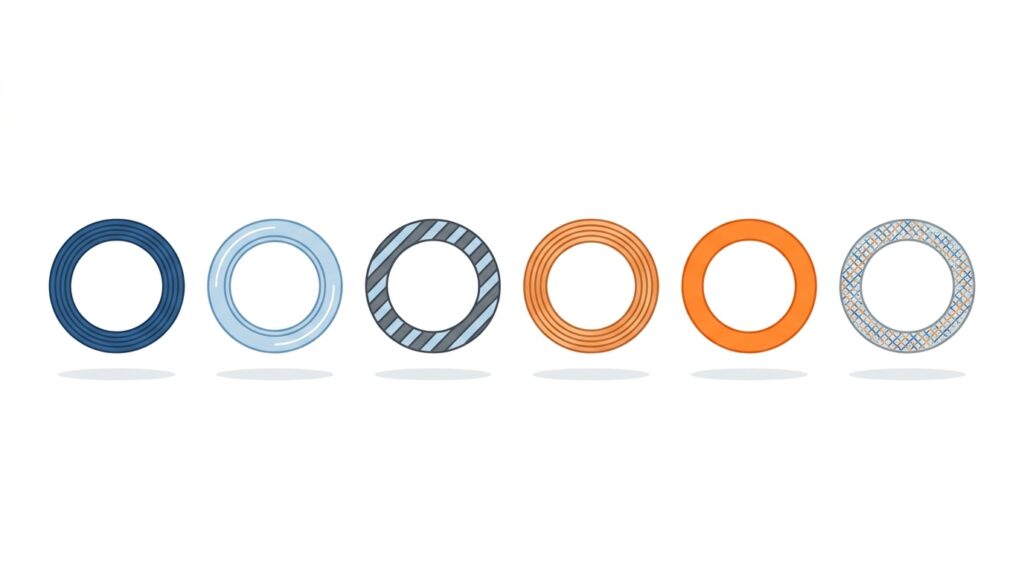
Common piping materials:
| Material | Typical Use | Key Characteristics |
|---|---|---|
| Carbon steel | Steam, water, oil, gas | Strong, economical, but corrodes |
| Stainless steel | Corrosive fluids, high temperature | Corrosion-resistant, expensive |
| Duplex / super duplex stainless steel | Seawater, brine, high-pressure desalination service | High strength and chloride resistance, higher cost, needs controlled welding |
| Alloy steel | High-temperature, high-pressure service | Retains strength at high temperature |
| Copper | Instrument air, potable water | Corrosion-resistant, limited temperature range |
| Plastic (PVC, CPVC, HDPE) | Water, chemicals | Corrosion-resistant, limited temperature and pressure |
| FRP / GRP (fiberglass reinforced plastic) | Seawater, corrosive chemicals | Corrosion-resistant, lightweight |
Material selection depends on fluid composition, temperature, pressure, environment, and cost.
At our geothermal projects in Kenya (Olkaria I Unit 6, 83 MW) and Indonesia (Muara Laboh, 85.2 MW), the geothermal steam piping required materials resistant to hydrogen sulfide and other corrosive gases. In Iceland (Theistareykir, 2×45 MW), the piping was designed for the specific steam chemistry and environmental conditions of the site. In the Gulf, desalination projects bring a different challenge: seawater and brine call for materials and linings selected for chloride corrosion, with attention to high-pressure service.
Corrosion allowance, internal linings, and external coatings should be set in the piping classes, and corrosion under insulation should be considered at the same time.
Pipe Sizing
Pipe size affects pressure drop, flow velocity, and cost.
Key sizing considerations:
- Flow rate: The required flow rate determines the minimum pipe size.
- Velocity: Velocity must be high enough to prevent settling but low enough to avoid erosion and noise.
- Pressure drop: Pressure drop must be within acceptable limits.
- Future capacity: Consider whether future flow increases are likely.
- Two-phase flow: Where steam and liquid flow together, as in some geothermal lines, sizing must account for flow regime, erosion, and vibration.
Typical velocity guidelines:
| Fluid | Recommended Velocity |
|---|---|
| Water (pump discharge) | 2–4 m/s |
| Water (suction) | 0.5–1.5 m/s |
| Steam (saturated) | 20–40 m/s |
| Compressed air | 10–20 m/s |
| Viscous fluids | 0.5–2 m/s |
These are general guidelines. Specific limits depend on the fluid, material, and application.
Piping Layout
Layout determines how piping is routed through the plant.
Key layout considerations:
- Route directly: Shorter routes reduce pressure drop and material cost.
- Avoid unnecessary bends: Every bend adds pressure drop and cost.
- Allow for expansion: Piping expands and contracts with temperature changes.
- Provide access: Valves, instruments, and flanges must be accessible.
- Avoid interference: Piping must not interfere with equipment access, maintenance space, or other systems.
- Slope for drainage: Piping that carries liquids should slope to drain points, and steam lines need drain pots and traps at low points.
- Consider pipe racks: Grouping pipes in racks saves space and simplifies support.
- Provide vents and drains: High-point vents and low-point drains are needed for testing, start-up, and maintenance.
3D Modeling and Design Reviews
Modern plant piping is normally designed in a 3D model. The model supports clash detection, material take-offs, and isometric generation, and it allows the owner and operations team to review the design before construction. Model reviews at defined stages (for example, 30%, 60%, and 90%) catch interferences, access problems, and operability issues while changes are still cheap.
Pipe Supports
Pipe supports carry the weight of piping and control movement.
Types of supports:
- Rigid supports: Fixed supports that prevent movement.
- Spring supports: Variable or constant spring supports that allow vertical movement while supporting weight.
- Guide supports: Allow axial movement while preventing lateral movement.
- Anchors: Prevent all movement at a specific point.
- Snubbers: Allow slow movement but resist rapid movement.
Support spacing depends on pipe size, material, and contents. Support design must also consider the loads that piping imposes on connected equipment, and on the structures that carry the supports.
Valves
Valves control flow and allow isolation.
Common valve types:
| Valve Type | Function | Typical Use |
|---|---|---|
| Gate valve | On/off isolation | Fully open or closed service |
| Globe valve | Throttling | Flow regulation |
| Ball valve | On/off isolation | Quick operation |
| Butterfly valve | On/off or throttling | Large diameter, low pressure |
| Check valve | Prevent backflow | Pump discharge, critical lines |
| Control valve | Modulate flow | Process control |
| Relief valve | Protect against overpressure | Pressure vessels, piping systems |
Valve selection should consider pressure class, material, sealing, actuation, and fail-safe position. Relief valve discharge piping needs its own design attention, including back pressure and safe discharge location.
Piping Stress Analysis
Stress analysis ensures that piping can accommodate thermal expansion and other loads.
Stress analysis considerations:
- Thermal expansion: Piping expands and contracts with temperature changes.
- Weight: Piping must support its own weight and the weight of contents.
- Pressure: Internal pressure creates stresses in the pipe wall.
- Dynamic loads: Vibration, water hammer, and seismic loads.
- Support reactions: Forces and moments at supports.
- Equipment nozzle loads: Loads on turbine, pump, compressor, and vessel nozzles must stay within the equipment vendor’s allowable limits.
Stress analysis is typically performed using specialized software such as CAESAR II or AutoPIPE. Critical lines (high temperature, high pressure, or connected to sensitive equipment) are analyzed in detail, while lower-risk lines may be checked by simpler methods and engineering judgment.
Flexibility is usually achieved through routing (loops and offsets) and appropriate support selection. Expansion joints are used where routing cannot provide enough flexibility, but they add cost, maintenance, and a potential leak point.
Project Experience
For thermal power projects in Vietnam (Thai Binh 1, 2×300 MW) and Bangladesh (Bibiyana-III, 400 MW CCGT), main steam and reheat piping required careful stress analysis to accommodate the high temperature and pressure of the steam cycle.
At one thermal power project in Vietnam, the main steam piping required careful stress analysis to accommodate the high temperature and pressure of the 300 MW unit. At another project in Bangladesh, the reheat piping was designed to handle the specific steam conditions of the combined cycle plant.
Water Hammer and Surge
Water hammer is a pressure surge caused by sudden changes in flow, such as pump trips or rapid valve closure. It can damage piping, supports, and equipment.
Where the risk is significant (long pump discharge lines, large water systems such as desalination and water treatment plants), a surge analysis should be performed. Mitigation measures include slower valve closing times, surge vessels, relief devices, and non-slam check valves. Steam systems face a related risk, steam hammer from condensate, which is addressed through proper drainage and warm-up procedures.
Insulation
Insulation reduces heat loss or gain and protects personnel.
Insulation considerations:
- Thermal performance: Insulation thickness depends on temperature and desired performance.
- Personnel protection: Surfaces above about 60°C or below 0°C typically require insulation or guarding.
- Corrosion under insulation (CUI): Insulation can trap moisture and cause corrosion.
- Heat tracing: Electric or steam tracing maintains temperature in pipes that would otherwise cool.
Welding, Fabrication, and Inspection
The quality of piping depends on the quality of its welds.
- Welding procedures and welder qualification: Welding procedure specifications (WPS), procedure qualification records (PQR), and welder qualifications must be in place before production welding.
- Non-destructive examination (NDE): Radiographic, ultrasonic, magnetic particle, or liquid penetrant examination at the extent required by the code and piping class.
- Post-weld heat treatment (PWHT): Required for certain materials and thicknesses, especially in alloy steel for high-temperature service.
- Material traceability and positive material identification (PMI): Prevents wrong-material installation, which is especially important for alloy and stainless steel lines.
- Shop versus field fabrication: Shop fabrication generally gives better quality control, while field welding is unavoidable for closure joints and tie-ins.
Piping Testing and Commissioning
Piping systems must be tested before operation.
Common tests and preparation steps:
- Hydrostatic test: Fills the system with water and pressurizes to test strength and leak tightness, typically at 1.5 times design pressure, subject to the applicable code.
- Pneumatic test: Uses air or inert gas instead of water, where water cannot be used. It carries greater stored-energy risk and needs additional safety precautions.
- Flushing: Removes debris and contaminants from the system.
- Cleaning: Removes scale, rust, and other deposits, including chemical cleaning where required.
- Steam blowing: Removes debris from main steam, reheat, and other steam lines before they are connected to the turbine.
- Leak test: Verifies that joints and connections do not leak.
Testing must be documented and witnessed where required. Temporary supports, blinds, and test connections should be planned in advance and removed or restored after testing. Hydrotest and flushing requirements should be considered during design, so that vents, drains, and supports are adequate.
Piping Engineering in Small Plants
Small plants face particular challenges with piping engineering.
Challenges:
- Fewer resources for piping engineering.
- Less expertise.
- Less access to vendor information.
- Competing priorities.
Practical approaches:
- Focus on critical lines: Prioritize lines that carry hazardous fluids or operate at high pressure.
- Use standard designs: Standard piping designs can save time and cost.
- Use vendor information: Leverage vendor data and references.
- Seek expert advice: Get advice from consultants or experienced colleagues.
- Visit operating plants: See piping in operation.
- Involve operations and maintenance: Use the experience of the people who will run the plant.
- Document decisions: Record the basis for decisions.
- Consider lifecycle cost: Look beyond capital cost.
Piping engineering does not need to be complex. It needs to be thorough and practical.
Common Mistakes in Piping Engineering
Even experienced organizations make mistakes. Common ones include:
- Undersizing pipes: Causing excessive pressure drop and poor performance.
- Ignoring thermal expansion: Leading to stress, deformation, or failure.
- Inadequate support spacing: Causing sagging, vibration, or failure.
- Poor access to valves and instruments: Making maintenance difficult.
- Incompatible materials: Causing corrosion or contamination.
- Missing relief protection: Creating a safety hazard.
- Exceeding equipment nozzle loads: Causing misalignment or damage to turbines, pumps, and other equipment.
- Insufficient documentation: Making maintenance and troubleshooting difficult.
- Ignoring water hammer: Allowing pressure surges to damage piping.
- Late design changes: Changing piping after procurement or fabrication has started, causing rework and delay.
These mistakes are costly to correct. They are much cheaper to avoid through disciplined piping engineering.
How EPC Partners Inc. Approaches Piping Engineering
At EPC Partners Inc., we bring practical experience from projects across Asia, the Middle East, Africa, and Europe to piping engineering.
Our approach includes:
- Thorough stress analysis: Critical lines are analyzed carefully for thermal and mechanical stress.
- Conservative material selection: Materials are selected with adequate margin for corrosion and temperature.
- Detailed support design: Supports are designed for all expected loads and movements.
- Early interface coordination: Piping is coordinated with equipment vendors, civil and structural, electrical, and instrumentation disciplines.
- Comprehensive documentation: Piping drawings, isometrics, and test records are carefully maintained.
- Long-term reliability focus: Designs prioritize reliability and maintainability over lowest initial cost.
Our experience includes supporting geothermal projects in Kenya, Ethiopia, Indonesia, Iceland, and Japan; desalination projects in the UAE, Saudi Arabia, Oman, and Qatar; thermal power projects in Vietnam, Bangladesh, and Japan; and water treatment projects in Vietnam, Kuwait, and Qatar.
We have also supported clients including Marubeni Corporation, Fuji Electric Co., Ltd., and Toyota Tsusho Corporation on piping engineering aspects of their projects.
How to Evaluate Piping Engineering Readiness
When reviewing piping engineering, ask:
| Question | Why It Matters |
|---|---|
| Is the governing code defined in the design basis? | Avoids conflicts between codes and specifications |
| Are pipes sized for actual flow and pressure drop? | Ensures proper performance |
| Are materials compatible with the fluid and environment? | Prevents corrosion and failure |
| Is thermal expansion accommodated? | Prevents stress and deformation |
| Are equipment nozzle loads within vendor limits? | Protects turbines, pumps, and other equipment |
| Are supports designed for all loads? | Prevents sagging and vibration |
| Has surge or water hammer been assessed where needed? | Prevents pressure surge damage |
| Are valves and instruments accessible? | Enables operation and maintenance |
| Is relief protection provided? | Prevents overpressure failure |
| Are welding, NDE, and test requirements defined? | Ensures construction quality |
| Is documentation complete? | Supports maintenance and troubleshooting |
A plant that addresses these questions is ready for sound piping engineering.
Conclusion
Piping engineering is critical to plant success. For small to medium-scale industrial plants, it determines whether the plant can operate safely and efficiently.
By focusing on codes and design basis, material selection, sizing, layout, supports, valves, stress analysis, insulation, welding and inspection, and testing, owners and project teams can ensure that the piping systems support the plant throughout its life.
If you are planning a plant project and need support with piping engineering or EPC project delivery, contact us to discuss how we can help.
EPC Partners Inc. is a Japanese EPC support firm with experience supporting power, water, and industrial plant projects across Asia, the Middle East, Africa, and Europe. For more information, visit our project list.