By EPC Partners Inc. Engineering Team
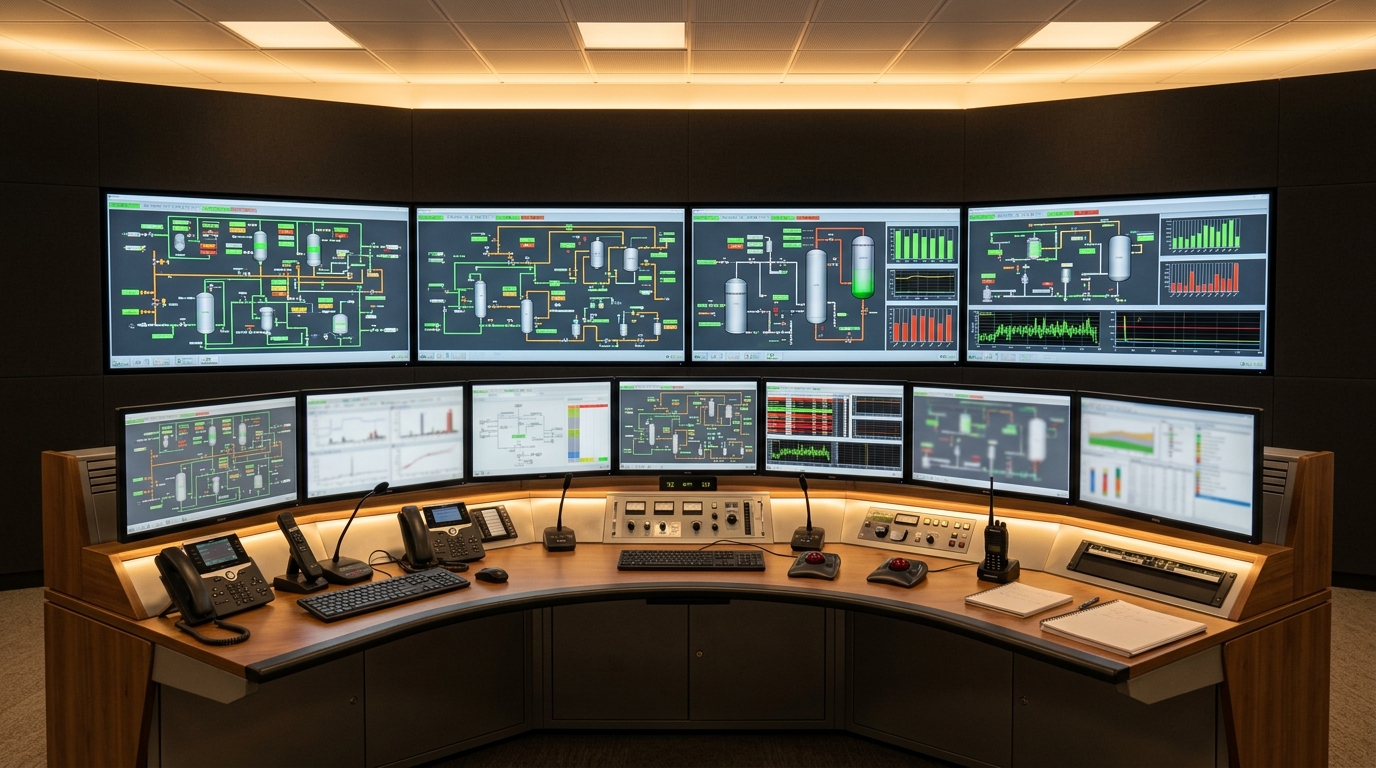
Instrumentation and control (I&C) is the intelligence of an industrial plant. It measures what is happening in the process, decides what to do about it, and adjusts equipment to keep the plant running safely and efficiently. Without reliable instrumentation and control, operators are blind to the process, and the plant cannot be operated consistently, safely, or efficiently.
At EPC Partners Inc., our support on instrumentation and control engineering has been a core part of our work across a wide range of plant projects: from geothermal power plants in Kenya, Indonesia, and Iceland to large-scale desalination facilities in the UAE and Saudi Arabia, and from thermal power plants in Vietnam and Bangladesh to water treatment plants in Vietnam and Kuwait. Each project has presented different I&C challenges, and each has reinforced the same lesson: instrumentation and control is not just about sensors and controllers. It is about designing systems that give operators the information they need, when they need it, and that respond correctly to every condition the plant will face.
This article covers the key practices in plant instrumentation and control engineering, drawing on our experience supporting projects across Asia, the Middle East, Africa, and Europe.
What Is Instrumentation and Control Engineering?
Instrumentation and control engineering is the discipline of designing, specifying, procuring, installing, and commissioning the systems that measure and control an industrial process.
It includes:
- Field instrumentation: Sensors, transmitters, and final elements.
- Control systems: PLC, DCS, and SCADA.
- Safety instrumented systems: Independent systems that bring the plant to a safe state.
- Human-machine interface (HMI): How operators interact with the control system.
- Control valves and actuators: Final elements that adjust the process.
- Analyzers: Instruments that measure chemical properties.
- Fire and gas detection: Systems that detect fire and hazardous gas releases and initiate protective action.
Instrumentation and control provides the eyes, ears, and hands of the plant.
Why Instrumentation and Control Engineering Matters
I&C directly affects plant performance.
| Factor | Impact of Good I&C Engineering | Impact of Poor I&C Engineering |
|---|---|---|
| Safety | Hazards detected and controlled | Safety incidents |
| Reliability | Equipment operates within limits | Failures and downtime |
| Efficiency | Plant operates at design efficiency | Performance below design |
| Cost | Optimized operating and maintenance costs | Higher costs from inefficiency |
| Compliance | Regulatory requirements met | Non-compliance |
| Operability | Operators have the information they need | Operators are blind to the process |
For small to medium-scale industrial plants, I&C determines whether the plant can be operated safely and efficiently.
Applicable Codes and Standards
I&C design should be based on recognized standards agreed with the owner at the start of the project. Commonly used references include:
| Area | Typical Standards |
|---|---|
| Functional safety | IEC 61508, IEC 61511 (ISA-84) |
| Hazardous areas | IEC 60079 series (IECEx/ATEX), NEC/NFPA 70 |
| Cybersecurity | IEC 62443 |
| Alarm management | ISA-18.2 / IEC 62682 |
| HMI design | ISA-101 |
| Instrument symbols and diagrams | ISA-5.1 |
| Fire and gas detection | NFPA 72, NFPA 72-related project specifications, local regulations |
The applicable list depends on the project location, the owner’s specifications, and local regulations, so it should be confirmed early.
Field Instrumentation
Field instrumentation measures process variables and transmits signals to the control system.
| Instrument Type | Measured Variable | Examples |
|---|---|---|
| Temperature | Temperature | Thermocouples, RTDs, thermistors |
| Pressure | Pressure | Pressure transmitters, gauges, switches |
| Flow | Flow rate | Orifice plates, Coriolis meters, ultrasonic meters |
| Level | Level | Radar, ultrasonic, differential pressure |
| Analytical | Chemical properties | pH, conductivity, oxygen, gas analyzers |
| Position | Valve or equipment position | Limit switches, encoders, proximity sensors |
Key considerations:
- Accuracy: Is the instrument accurate enough for the application?
- Range: Does the instrument cover the expected range?
- Process conditions: Is the instrument suitable for the temperature, pressure, and corrosion exposure?
- Materials: Are wetted parts compatible with the process fluid?
- Response time: Does the instrument respond fast enough?
- Certification: Is the instrument certified for hazardous areas?
- Installation: Are instruments accessible for calibration and maintenance, and protected from vibration, heat, and weather?
At our geothermal projects in Kenya (Olkaria I Unit 6, 83 MW) and Indonesia (Muara Laboh, 85.2 MW), instrumentation was designed to handle the specific conditions of geothermal steam: high temperature, corrosive gases, and non-condensable gases. In Iceland (Theistareykir, 2×45 MW), the instrumentation was designed for the specific steam chemistry and environmental conditions of the site.
Project Experience: Instrumentation in Geothermal Conditions
At one geothermal site in Indonesia, the instruments were designed to handle the corrosive effects of hydrogen sulfide in the steam, with special materials and regular calibration. At another site in Kenya, the instrumentation was designed to accommodate the high non-condensable gas content of the geothermal fluid.
The lesson from both: instrument selection must start from the real process fluid, not from a generic catalog choice.
Control Systems
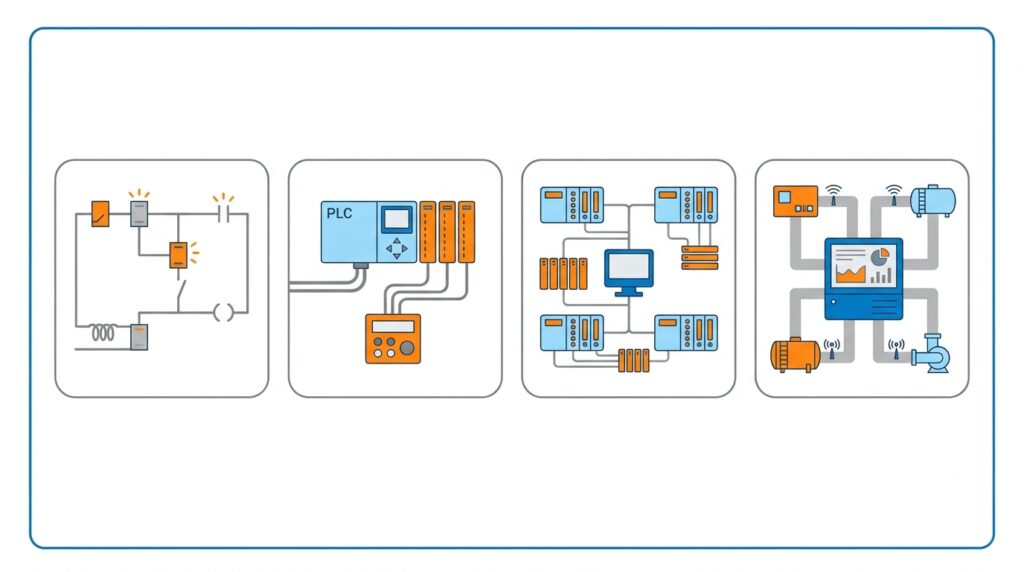
Control systems receive signals from instruments and send commands to final elements.
| Type | Description | Typical Use |
|---|---|---|
| Relay logic | Simple, hardwired | Small plants, simple processes |
| PLC | Programmable logic controller | Most industrial plants |
| DCS | Distributed control system | Large, complex plants |
| SCADA | Supervisory control and data acquisition; a supervisory layer, often used on top of PLCs or other controllers | Plants requiring remote monitoring |
Key considerations:
- Scalability: Can the system be expanded?
- Redundancy: Is redundancy required for critical loops, controllers, power supplies, and networks?
- Integration: Does the system integrate with other plant systems?
- Cybersecurity: Is the system protected from cyber threats?
- Vendor support: Is vendor support available throughout the plant life?
- Spare capacity: Is spare I/O, memory, and cabinet space provided for future needs?
For thermal power projects in Vietnam (Thai Binh 1, 2×300 MW) and Bangladesh (Bibiyana-III, 400 MW CCGT), DCS systems were used to monitor and control the plant, with integration to the grid dispatch system and plant safety systems.
Safety Instrumented Systems (SIS)
Safety instrumented systems are independent systems that bring the plant to a safe state when abnormal conditions occur.
SIS components:
- Sensors: Detect abnormal conditions.
- Logic solver: Evaluates sensor signals and decides when to act.
- Final elements: Carry out the safety action (valves, trips).
Key considerations:
- Safety integrity level (SIL): What SIL is required for each safety function, as determined by hazard and risk assessment (for example HAZOP and LOPA)?
- Independence: Is the SIS independent of the basic process control system?
- Proof testing: How often is the SIS tested, and can testing be done without shutting down the plant?
- Bypass management: Are bypasses controlled, authorized, and recorded?
- Documentation: Is the SIS documented, including the safety requirements specification and SIL verification?
For desalination projects in the Gulf (Taweelah, 909,200 m³/day; Jubail 3A, 600,000 m³/day), safety instrumented systems were designed to protect high-pressure equipment and to bring the plant to a safe state during abnormal conditions.
Control Valves and Actuators
Control valves and actuators are the final elements that adjust the process.
| Valve Type | Description | Application |
|---|---|---|
| Globe valve | Throttling control | Flow regulation |
| Ball valve | On/off or throttling | Isolation, quick operation |
| Butterfly valve | On/off or throttling | Large diameter, low pressure |
| Segmented (V-notch) ball valve | Modulating control with high capacity | Slurries and fluids with solids |
Key considerations:
- Sizing: Is the valve sized correctly for the flow and pressure drop?
- Characteristic: What flow characteristic is required?
- Actuator: Is the actuator adequate for the valve, including the required shutoff force and speed?
- Fail-safe: Does the valve fail to a safe position on loss of air, power, or signal?
- Leakage class: Is the required shutoff tightness specified?
- Utilities: Is the instrument air or power supply adequate, with a defined fail-safe response?
Human-Machine Interface (HMI)
The HMI is how operators interact with the control system.
HMI considerations:
- Clarity: Are displays clear and uncluttered?
- Consistency: Is information presented consistently across screens?
- Alarm management: Are alarms prioritized, rationalized, and actionable, so operators are not overwhelmed during upsets?
- Trending: Are historical trends available?
- Accessibility: Are displays readable from normal operating positions?
- Operator input: Have operators reviewed the graphics before finalization?
Control System Integration
Control systems must integrate with other plant systems.
Integration considerations:
- Electrical systems: Integration with switchgear, motor control, and protection relays.
- Safety systems: Integration with fire and gas detection and emergency shutdown.
- Package equipment: Integration of vendor-supplied packages (turbines, compressors, water treatment skids) and their local controllers.
- Business systems: Integration with maintenance and production planning.
- Grid systems: Integration with grid dispatch and metering.
Interface responsibilities, communication protocols, and signal lists should be defined early and recorded in an interface register.
Cybersecurity
Modern control systems are networked, and cybersecurity has become a core part of I&C design rather than an afterthought.
Practical measures:
- Separate control networks from business networks using firewalls and defined zones.
- Control remote access, including vendor access, with authentication and logging.
- Manage user accounts and passwords, and remove default credentials.
- Plan for patching, backups, and malware protection.
- Include cybersecurity requirements in vendor specifications and acceptance testing.
I&C Engineering Through the EPC Project Lifecycle
I&C engineering follows a sequence of deliverables and checks during an EPC project.
| Stage | Typical I&C Activities |
|---|---|
| Basic design | Control philosophy, I&C design basis, system architecture, standards selection |
| Detailed design | P&IDs, instrument index, datasheets, I/O lists, loop diagrams, cause and effect charts, cable schedules, hook-ups |
| Procurement | Vendor evaluation, technical clarifications, inspection and expediting |
| Factory testing | Factory acceptance test (FAT) of control system and key instruments |
| Construction | Installation of instruments, cables, junction boxes, and panels; installation inspection |
| Commissioning | Loop checks, calibration, functional tests, site acceptance test (SAT), interlock and trip testing |
| Handover | As-built documents, spare parts, training, configuration backups |
Good coordination with process, mechanical, piping, and electrical disciplines is essential, because most I&C problems originate at interfaces.
Calibration, Maintenance, and Spare Parts
I&C performance over the plant life depends on maintenance as much as on design.
- Calibration: Define calibration intervals and procedures, and record calibration results.
- Spare parts: Provide commissioning and operating spares for critical instruments, I/O cards, and controllers.
- Obsolescence: Ask vendors about product lifecycle and long-term support.
- Training: Train maintenance and operations staff on the actual installed systems.
- Change control: Manage changes to logic, setpoints, and alarms through a formal process.
Instrumentation and Control in Small Plants
Small plants face particular challenges with I&C engineering.
Challenges:
- Fewer resources for I&C engineering.
- Less expertise.
- Less access to vendor information.
- Competing priorities.
Practical approaches:
- Focus on critical instruments: Prioritize instruments that are essential for safe operation.
- Use proven technology: Reduce risk by using proven control systems.
- Use vendor information: Leverage vendor data and references.
- Seek expert advice: Get advice from consultants or experienced colleagues.
- Visit operating plants: See systems in operation.
- Involve operations and maintenance: Use the experience of the people who will run the plant.
- Document decisions: Record the basis for decisions.
- Consider lifecycle cost: Look beyond capital cost.
I&C engineering does not need to be complex. It needs to be thorough and practical.
Common Mistakes in Instrumentation and Control Engineering
Even experienced organizations make mistakes. Common ones include:
- Underspecifying instruments: Leading to poor accuracy or premature failure.
- Ignoring process conditions: Instruments that cannot handle actual temperature, pressure, or corrosion.
- Inadequate redundancy: Critical measurements without backup.
- Poor HMI design: Confusing displays that increase operator error.
- Poor alarm management: Too many alarms, hiding the ones that matter.
- Neglecting cybersecurity: Control systems exposed to network threats.
- Insufficient documentation: Making maintenance and troubleshooting difficult.
- No spare capacity: Requiring costly upgrades for future expansion.
- Ignoring integration: Systems that do not communicate with each other.
- Skipping or rushing testing: FAT, loop checks, and SAT shortened to recover schedule, leaving defects for the operating phase.
These mistakes are costly to correct. They are much cheaper to avoid through disciplined I&C engineering.
How EPC Partners Inc. Approaches Instrumentation and Control Engineering
At EPC Partners Inc., we bring practical experience from projects across Asia, the Middle East, Africa, and Europe to I&C engineering.
Our approach includes:
- Thorough specification: Instruments are specified carefully, with attention to accuracy, range, and process conditions.
- Proven technology: Proven control systems are preferred over unproven ones.
- Integration focus: Systems are evaluated for how well they integrate with other plant systems.
- Operations and maintenance input: The people who will run the plant are involved in decisions.
- Vendor evaluation: Vendors are evaluated for experience, support, and spare parts availability.
- Detailed documentation: The I&C design and selection process is documented.
- Long-term focus: Systems are selected for long-term reliability.
Our experience includes supporting geothermal projects in Kenya, Ethiopia, Indonesia, Iceland, and Japan; desalination projects in the UAE, Saudi Arabia, Oman, and Qatar; thermal power projects in Vietnam, Bangladesh, and Japan; and water treatment projects in Vietnam, Kuwait, and Qatar.
We have also supported clients including Marubeni Corporation, Fuji Electric Co., Ltd., and Toyota Tsusho Corporation on instrumentation and control aspects of their projects.
How to Evaluate Instrumentation and Control Engineering Readiness
When reviewing I&C engineering, ask:
| Question | Why It Matters |
|---|---|
| Are instruments specified for actual process conditions? | Ensures reliable measurement |
| Is redundancy provided for critical measurements? | Ensures continued operation during faults |
| Is the control system scalable? | Avoids costly upgrades later |
| Is the HMI designed for operator effectiveness? | Reduces operator error |
| Are alarms rationalized and prioritized? | Prevents alarm floods during upsets |
| Is the SIS independent, with SIL requirements verified? | Ensures protection works when needed |
| Is cybersecurity addressed? | Protects against network threats |
| Is documentation complete? | Supports maintenance and troubleshooting |
| Does the design comply with applicable codes? | Ensures safety and legal operation |
| Is integration with other systems addressed? | Ensures systems work together |
| Are FAT, loop check, and SAT plans in place? | Ensures defects are found before operation |
A plant that addresses these questions is ready for sound I&C engineering.
Conclusion
Instrumentation and control engineering is the intelligence of every industrial plant. For small to medium-scale industrial plants, it determines whether the plant can be operated safely and efficiently.
By focusing on field instrumentation, control systems, safety instrumented systems, control valves, HMI, cybersecurity, integration, and thorough testing, owners and project teams can ensure that the I&C systems support the plant throughout its life.
If you are planning a plant project and need support with instrumentation and control engineering or EPC project delivery, contact us to discuss how we can help.
EPC Partners Inc. is a Japanese EPC support firm with experience supporting power, water, and industrial plant projects across Asia, the Middle East, Africa, and Europe. For more information, visit our project list.