
Contracts define the rules of an EPC project. They set out what is to be built, how much it will cost, when it will be delivered, and who bears which risks. But a contract is only as good as its administration. Contract administration is the day-to-day discipline of managing the contract—tracking obligations, managing correspondence, processing payments, handling changes, and resolving issues—to ensure that the project is delivered according to the agreed terms.
At EPC Partners Inc., contract administration has been a core part of our work across a wide range of plant projects—from geothermal power plants in Kenya, Indonesia, and Iceland to large-scale desalination facilities in the UAE and Saudi Arabia, and from thermal power plants in Vietnam and Bangladesh to water treatment plants in Vietnam and Kuwait. Our contract administration work has ranged from geothermal projects in Kenya and Indonesia, where performance guarantees and liquidated damages were key issues, to desalination projects in the Gulf, where claims related to design changes and site conditions required careful negotiation. Each project has presented different contractual challenges, and each has reinforced the same lesson: good contract administration is not just about paperwork. It is about protecting the project’s commercial position and maintaining a constructive relationship between the parties.
This article covers the key practices in plant contract administration, drawing on our experience supporting projects across Asia, the Middle East, Africa, and Europe.
What Is Contract Administration?
Contract administration is the process of managing a contract from award to closeout.
It includes:
- Contract familiarization: Understanding the contract terms and obligations.
- Obligation tracking: Tracking contractual obligations and deadlines.
- Correspondence management: Managing letters, emails, and notices.
- Payment administration: Processing payments and managing cash flow.
- Change management: Managing changes to the contract.
- Claims management: Managing claims and disputes.
- Reporting: Reporting contract status to management.
- Closeout: Closing out the contract and its financial and legal obligations.
Contract administration ensures that the contract is managed professionally and that the project’s commercial interests are protected.
Contract Administration vs. Contract Management
The two terms are often used interchangeably, but they are not identical. Contract management is the broader activity, covering strategy, contract formation, risk allocation, and performance. Contract administration is the operational part: the routine tasks that keep the contract running day to day, such as logging correspondence, issuing notices, verifying milestones, and processing payments. The two work together. Strong management with weak administration leaves rights unprotected, and strong administration without management direction can miss the bigger commercial picture.
Why Contract Administration Matters
Contract administration directly affects project success.
| Factor | Impact of Good Contract Administration | Impact of Poor Contract Administration |
|---|---|---|
| Cost | Costs controlled; disputes avoided | Cost overruns; claims |
| Schedule | Schedule protected; delays managed | Delays; disputes over time |
| Quality | Quality requirements met | Quality disputes |
| Risk | Risks allocated clearly | Risks disputed |
| Relationship | Constructive relationship | Adversarial relationship |
| Closeout | Smooth closeout | Litigation |
For small to medium-scale industrial plants, contract administration determines whether the project is delivered without disputes.
Roles and Responsibilities
Contract administration works best when responsibilities are clear.
- Contract administrator: Maintains the obligation register, correspondence log, and notice calendar.
- Project manager: Owns delivery and ensures the project team acts in line with the contract.
- Commercial/cost manager: Verifies milestones, reviews invoices, and assesses the cost of changes.
- Technical leads: Identify changes and delays early and provide technical input to notices and claims.
- Legal adviser: Advises on interpretation, notices, claims, and disputes.
- Senior management: Receives regular reports and decides on significant commercial issues.
On smaller projects, one person may hold several of these roles. What matters is that each responsibility is assigned to someone.
Contract Familiarization
Contract familiarization is the first step in contract administration.
Contract familiarization activities:
- Read the contract: Understand all terms and conditions.
- Understand the contract documents: Know which documents make up the contract and their order of precedence (for example, agreement, general conditions, particular conditions, employer’s requirements, schedules, and drawings).
- Identify obligations: What must each party do?
- Identify deadlines: What are the key dates and milestones?
- Identify risks: What risks does the contract allocate?
- Identify interfaces: Where do contracts interact?
- Brief the team: Ensure the project team understands the contract.
Contract familiarization should be completed before work begins.
At our geothermal projects in Kenya (Olkaria I Unit 6, 83 MW) and Indonesia (Muara Laboh, 85.2 MW), contract familiarization included a detailed review of the EPC contract terms, with particular attention to the performance guarantees, liquidated damages, and change procedures. In Iceland (Theistareykir, 2×45 MW), familiarization considered the specific regulatory and environmental requirements of the Icelandic contract.
Obligation Tracking
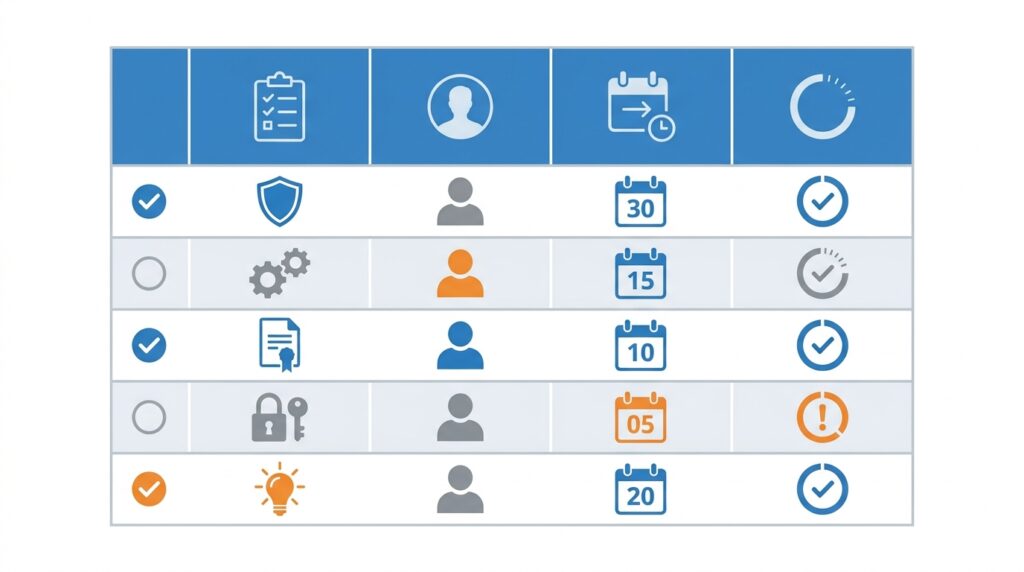
Obligation tracking ensures that contractual obligations are met.
Obligation tracking activities:
- Create an obligation register: List all contractual obligations.
- Assign responsibility: Assign responsibility for each obligation.
- Set deadlines: Set deadlines for each obligation.
- Track completion: Track completion of each obligation.
- Report status: Report obligation status to management.
Obligations are not limited to the main works. Typical examples that are easy to overlook include:
- Securities and guarantees: advance payment guarantee, performance bond, and retention bond, including validity and renewal dates.
- Insurance policies: required cover, evidence of insurance, and renewal dates.
- Permits, licences, and approvals: who is responsible, and by when.
- Submittals: drawings, documents, and procedures that require review within set periods.
- Employer obligations: site access, free-issue materials, information, and payments.
Obligation tracking ensures that no obligation is missed, by either party.
Correspondence Management
Correspondence management ensures that formal communication is managed properly.
Correspondence management activities:
- Log correspondence: Record all incoming and outgoing correspondence.
- Track responses: Track required responses and deadlines.
- File correspondence: File correspondence in an accessible system.
- Review correspondence: Review correspondence for contractual implications.
- Confirm verbal instructions: Confirm important verbal instructions and meeting agreements in writing.
Correspondence should be professional, timely, and consistent with the contract. Clear references, consistent numbering, and plain factual language make correspondence much more useful if a claim or dispute later arises.
Notices
Notices are formal communications required by the contract.
Common notices:
- Delay notices: Notifying the other party of delays.
- Change notices: Notifying the other party of changes.
- Claim notices: Notifying the other party of claims.
- Default notices: Notifying the other party of default.
Notices must be given within the time limits specified in the contract. Failure to give notice can result in loss of rights.
Good notice practice:
- Maintain a notice calendar showing triggers and time limits.
- Check the required form, recipient, and delivery method (for example, formal letter, registered mail, or a specified email address).
- State the facts, the contract clause relied upon, and the potential impact.
- Reserve rights where the full impact is not yet known, and follow up with detailed particulars.
- Keep proof of delivery.
From Practice: Notices in Action
At one thermal power project in Vietnam, a delay notice was issued within the contractual time limit when the steam turbine delivery slipped, preserving the owner’s right to claim an extension of time. At another project in Bangladesh, a change notice was issued when the foundation design required adjustment due to site conditions, with the cost and schedule impact agreed before work proceeded.
Both cases show the same principle: timely notice protects the position, and early agreement on impact avoids disputes later.
Payment Administration
Payment administration ensures that payments are made correctly and on time.
Payment administration activities:
- Payment schedule: What payments are due, and when?
- Milestone verification: Confirming that milestones are met.
- Invoice review: Reviewing invoices for accuracy.
- Payment approval: Approving payments.
- Payment processing: Processing payments.
- Payment records: Recording payments.
Payment administration should be based on the contract terms and accurate records. Points that deserve particular attention include:
- Advance payment and its recovery.
- Retention, and the conditions for its release.
- Currency, exchange rate, and tax provisions.
- Deductions, including liquidated damages and set-off rights.
- Payment periods and any interest on late payment.
For thermal power projects in Vietnam (Thai Binh 1, 2×300 MW) and Bangladesh (Bibiyana-III, 400 MW CCGT), payment administration included milestone-based payments tied to construction progress, with careful verification of milestones before payment approval.
Change Management
Change management ensures that changes to the contract are managed formally.
Change management activities:
- Change identification: Recognizing when a change is required.
- Change assessment: Evaluating the impact on scope, cost, schedule, and quality.
- Change approval: Approving or rejecting the change.
- Change implementation: Implementing the change.
- Documentation: Recording the change and its impact.
Changes should be managed formally, with clear documentation and approval. Verbal instructions to proceed should be confirmed in writing, and the change log should show the status of every change: potential, notified, priced, agreed, and implemented. Where work must start before the price is agreed, the basis for valuation and any cap should be recorded.
Delay and Extension of Time
Delay is one of the most common sources of dispute, and it is closely linked to notices and claims.
Good practice includes:
- Recording delay events as they happen, with dates and affected activities.
- Linking each event to the contract schedule and assessing the effect on the critical path.
- Giving notice of delay within the required time.
- Submitting extension of time claims with supporting evidence.
- Mitigating delay, as most contracts require.
Contemporaneous records (daily reports, meeting minutes, progress photos, and updated schedules) are far more persuasive than reconstructions made after the event.
Claims Management
Claims management ensures that claims are managed proactively.
Claims management activities:
- Claim identification: Identifying potential claims.
- Claim notification: Notifying the other party of claims.
- Claim preparation: Preparing claim documentation.
- Claim evaluation: Evaluating claims.
- Claim resolution: Resolving claims.
Claims should be managed proactively, not left to accumulate. A well-prepared claim sets out the contractual basis, the facts, the effect on cost and time, and the supporting records.
For desalination projects in the Gulf (Taweelah, 909,200 m³/day; Jubail 3A, 600,000 m³/day), claims management included the resolution of claims related to design changes and site conditions, with careful documentation and negotiation to reach fair settlements.
Dispute Resolution
Dispute resolution ensures that disputes are resolved effectively.
Dispute resolution methods:
| Method | Description |
|---|---|
| Negotiation | Parties negotiate directly |
| Mediation | Neutral third party helps resolve |
| Adjudication | Neutral third party decides |
| Arbitration | Arbitrator decides |
| Litigation | Court decides |
Dispute resolution should be planned in the contract, with clear procedures. Many EPC contracts use a tiered approach: negotiation first, then mediation or a dispute board, and arbitration as a last resort. Early, informal resolution is almost always cheaper and faster than formal proceedings, and it protects the working relationship.
Contract Reporting
Contract reporting keeps management informed of contract status.
Contract report contents:
- Contract status: Current status of the contract.
- Obligations: Status of contractual obligations.
- Correspondence: Status of key correspondence.
- Payments: Status of payments.
- Changes: Status of changes.
- Claims: Status of claims.
- Risks: Contractual risks.
Reports should be accurate, timely, and clear.
Record Keeping and Document Control
Good records are the foundation of every other activity in contract administration.
- Use a single, controlled system for contract documents and correspondence.
- Apply consistent naming, numbering, and version control.
- Keep contemporaneous records of instructions, meetings, site conditions, and progress.
- Define retention periods and access rights, and protect confidential information.
- Back up records and keep them accessible after project completion.
Contract Closeout
Contract administration does not end at mechanical completion. Closeout activities include:
- Confirming completion, performance test results, and takeover.
- Settling outstanding changes and claims.
- Reconciling final accounts and releasing retention and securities in line with the contract.
- Tracking the defects liability (warranty) period and the return of guarantees.
- Handing over documentation and archiving the contract file.
- Capturing lessons learned for future projects.
A disciplined closeout prevents “loose ends” from turning into disputes after the project team has dispersed.
Contract Administration in Small Plants
Small plants face particular challenges with contract administration.
Challenges:
- Fewer resources for contract administration.
- Less expertise.
- Less access to legal and commercial advice.
- Competing priorities.
Practical approaches:
- Focus on key obligations: Prioritize tracking of key obligations and deadlines.
- Use simple tools: Simple registers and logs can be sufficient.
- Seek expert advice: Get advice from legal and commercial experts when needed.
- Document everything: Good records support claims and disputes.
- Train staff: Ensure staff understand contract requirements.
- Learn from others: Apply lessons from other projects.
Contract administration does not need to be complex. It needs to be thorough and consistent.
Common Mistakes in Contract Administration
Even experienced organizations make mistakes. Common ones include:
- Not reading the contract: Missing key obligations and deadlines.
- Missing notices: Failing to give required notices.
- Poor correspondence management: Correspondence not logged or filed.
- Delayed payments: Payments not made on time.
- Uncontrolled changes: Changes not managed formally.
- Unresolved claims: Claims left to accumulate.
- Escalating disputes: Disputes not resolved early.
- Incomplete documentation: Records missing or incomplete.
- Ignoring securities and insurance: Bonds, guarantees, or policies lapsing unnoticed.
- No reporting: Management not informed of contract status.
These mistakes are costly to correct. They are much cheaper to avoid through disciplined contract administration.
How EPC Partners Inc. Approaches Contract Administration
At EPC Partners Inc., we bring practical experience from projects across Asia, the Middle East, Africa, and Europe to contract administration.
Our approach includes:
- Thorough familiarization: Contracts are reviewed carefully, with obligations and deadlines identified.
- Disciplined tracking: Obligations, correspondence, payments, and changes are tracked systematically.
- Timely notices: Notices are given within contractual time limits.
- Proactive claims management: Claims are identified and managed proactively.
- Detailed documentation: Records are complete and accurate.
- Constructive relationships: Parties work together to resolve issues.
- Continuous improvement: Lessons are captured and applied.
Our experience includes supporting geothermal projects in Kenya, Ethiopia, Indonesia, Iceland, and Japan; desalination projects in the UAE, Saudi Arabia, Oman, and Qatar; thermal power projects in Vietnam, Bangladesh, and Japan; and water treatment projects in Vietnam, Kuwait, and Qatar.
We have also supported clients including Marubeni Corporation, Fuji Electric Co., Ltd., and Toyota Tsusho Corporation on contract administration aspects of their projects.
How to Evaluate Contract Administration Readiness
When reviewing contract administration, ask:
| Question | Why It Matters |
|---|---|
| Is the contract understood? | Ensures obligations are known |
| Are obligations tracked? | Ensures obligations are met |
| Is correspondence managed? | Ensures formal communication is recorded |
| Are notices given on time? | Prevents loss of rights |
| Are payments made on time? | Maintains relationship |
| Are changes managed formally? | Prevents disputes |
| Are delays recorded and notified? | Protects time entitlements |
| Are claims managed proactively? | Prevents escalation |
| Are disputes resolved early? | Prevents litigation |
| Are securities and insurances monitored? | Prevents lapses in protection |
| Is reporting timely? | Enables early corrective action |
A project that addresses these questions is ready for effective contract administration.
Key Takeaways
- Read and understand the contract before work begins.
- Track every obligation, including securities, insurance, and approvals.
- Give notices on time, in the required form.
- Manage changes and delays formally, with records made at the time.
- Manage claims early and resolve disputes at the lowest level possible.
- Keep complete, organized records and report status regularly.
- Close out the contract properly and capture lessons learned.
Conclusion
Contract administration is critical to plant success. For small to medium-scale industrial plants, it determines whether the project is delivered without disputes.
By focusing on contract familiarization, obligation tracking, correspondence management, notices, payment administration, change management, claims management, dispute resolution, and reporting, owners and project teams can ensure that the contract supports the project rather than hindering it.
If you are planning a plant project and need support with contract administration or EPC project delivery, contact us to discuss how we can help.
EPC Partners Inc. is a Japanese EPC support firm with experience supporting power, water, and industrial plant projects across Asia, the Middle East, Africa, and Europe. For more information, visit our project list.