By EPC Partners Inc. Engineering Team
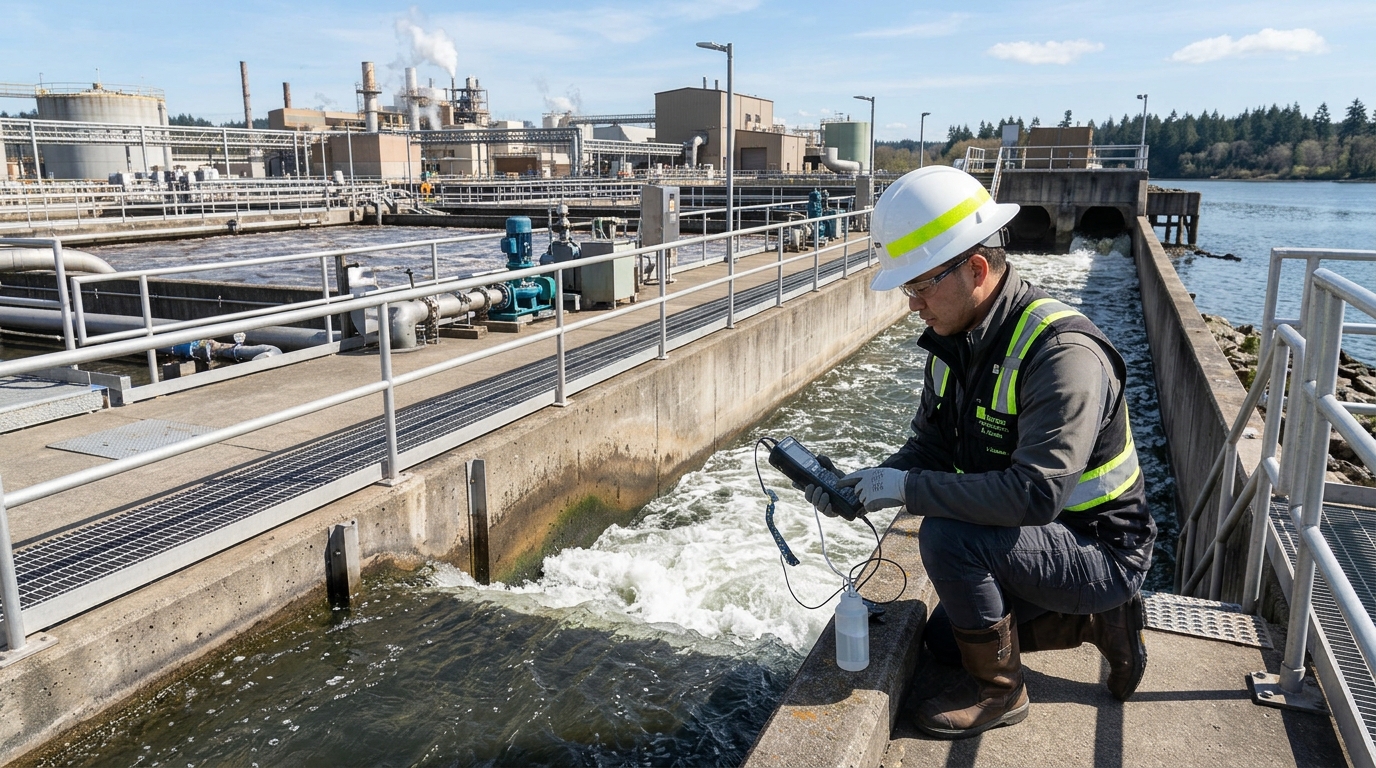
Environmental engineering is the discipline of minimizing a plant’s impact on the environment (air, water, land, and ecosystems) while meeting regulatory requirements and community expectations. It is not an afterthought to plant design. It is a core requirement that shapes every decision, from site selection and technology choice to emissions control, water management, and waste handling.
At EPC Partners Inc., environmental engineering has been a part of our work across a wide range of plant projects: geothermal power plants in Kenya, Indonesia, and Iceland; large-scale desalination facilities in the UAE and Saudi Arabia; thermal power plants in Vietnam and Bangladesh; and water treatment plants in Vietnam and Kuwait. Our environmental engineering consideration has ranged from H₂S abatement for geothermal plants in Kenya and Indonesia, to brine discharge management for large-scale desalination plants in the Gulf, to emissions monitoring for thermal power plants in Vietnam and Bangladesh. Each project has presented different environmental challenges, and each has reinforced the same lesson: environmental performance is not just about compliance. It is about responsible operation and long-term sustainability.
This article covers the key practices in plant environmental engineering, drawing on our experience supporting projects across Asia, the Middle East, Africa, and Europe.
What Is Environmental Engineering?
Environmental engineering is the discipline of managing a plant’s interactions with the environment. It includes:
- Environmental assessment: Identifying and evaluating a project’s impacts before decisions are locked in.
- Air emissions control: Controlling emissions of pollutants and greenhouse gases.
- Water management: Managing water use, treatment, and discharge.
- Waste management: Managing solid, liquid, and hazardous waste.
- Noise control: Controlling noise from equipment and operations.
- Soil and groundwater protection: Preventing contamination of soil and groundwater.
- Environmental monitoring: Monitoring environmental performance.
- Regulatory compliance: Meeting environmental permits and regulations.
Environmental engineering ensures that the plant operates responsibly and sustainably.
Why Environmental Engineering Matters
Environmental engineering directly affects plant viability.
| Factor | Impact of Good Environmental Engineering | Impact of Poor Environmental Engineering |
|---|---|---|
| Compliance | Regulatory requirements met | Fines, penalties, shutdowns |
| Community | Community supports the plant | Community opposition |
| Cost | Resources used efficiently | Waste and inefficiency |
| Reputation | Positive reputation | Reputation damaged |
| Financing | Access to financing | Financing restricted |
| Sustainability | Long-term viability | Long-term risk |
For plants of every size, environmental engineering determines whether the plant can operate sustainably and maintain its social license.
Environmental and Social Impact Assessment
An environmental and social impact assessment (ESIA) is where environmental engineering starts. It identifies the project’s likely impacts, evaluates alternatives, and defines the measures needed to avoid, reduce, or manage them.
A typical ESIA covers:
- Baseline studies: Existing air quality, water quality, noise, ecology, soil, and social conditions.
- Impact prediction: Air dispersion modeling, marine dispersion modeling, noise modeling, and similar studies.
- Mitigation measures: Design features and operating controls to reduce impacts.
- Environmental management plan: How mitigation and monitoring will be carried out during construction and operation.
- Public consultation: Engagement with affected communities and authorities.
For projects financed by international lenders, the ESIA is usually expected to meet recognized standards such as the IFC Performance Standards or the Equator Principles, in addition to local law. Meeting these early avoids delays at financial close. ESIA findings should flow directly into the design basis, so that environmental requirements are built into the plant rather than added later.
Air Emissions Control
Air emissions are a major environmental concern for industrial plants.
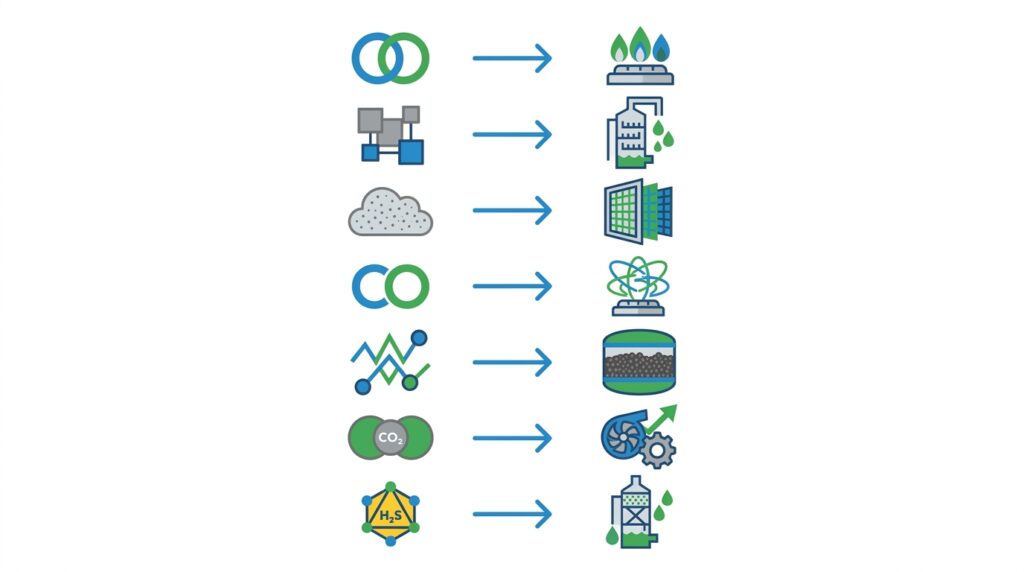
Common air emissions:
| Emission | Source | Control |
|---|---|---|
| NOx | Combustion | Low-NOx burners, SCR, SNCR |
| SOx | Fuel combustion | Fuel desulfurization, scrubbers |
| Particulate matter | Combustion, material handling | Filters, ESPs, baghouses |
| CO | Incomplete combustion | Combustion optimization |
| VOCs | Process emissions | Recovery, incineration, adsorption |
| CO₂ | Fuel combustion | Efficiency, fuel switching, CCS |
| H₂S | Geothermal steam, process | Scrubbers, incineration, abatement |
Emissions must comply with regulatory limits and may be subject to monitoring and reporting requirements. Many projects must also meet ambient air quality standards at the plant boundary or at nearby receptors, which is verified through dispersion modeling during design (including stack height selection).
At our geothermal projects in Kenya (Olkaria I Unit 6, 83 MW) and Indonesia (Muara Laboh, 85.2 MW), hydrogen sulfide (H₂S) abatement was a key environmental consideration. The geothermal steam contains H₂S, which must be controlled to meet ambient air quality standards and protect the health of workers and nearby communities.
At one geothermal project in Indonesia, the H₂S abatement system was designed to handle the specific concentration and flow of the geothermal steam, with continuous monitoring to ensure compliance with ambient air quality standards. At another project in Kenya, the abatement system was integrated with the plant control system to ensure reliable operation.
In Iceland (Theistareykir, 2×45 MW), the environmental design considered the pristine surroundings and strict Icelandic regulations, with careful attention to H₂S and other emissions.
Greenhouse gases. Beyond local pollutants, owners and lenders increasingly expect greenhouse gas emissions to be quantified and managed. Efficiency, fuel choice, and (where applicable) carbon capture readiness are decided at the design stage, which is when they are cheapest to address.
Water Management
Water is used in many industrial processes and must be managed carefully.
Water management activities:
- Water sourcing: Where does water come from?
- Water treatment: How is water treated for use?
- Water use: How is water used efficiently?
- Wastewater treatment: How is wastewater treated?
- Discharge: Where and how is wastewater discharged?
- Water recycling: Can water be recycled?
Water management should minimize water use and minimize the environmental impact of discharge.
For desalination projects in the Gulf (Taweelah, 909,200 m³/day; Jubail 3A, 600,000 m³/day), water management focused on the desalination process itself: seawater intake, pre-treatment, reverse osmosis, and brine discharge. Brine discharge management was a key environmental consideration, with outfall design and dispersion modeling to minimize impacts on the marine environment.
Thermal discharge and cooling water. For thermal power plants, cooling water intake and warm water discharge can affect marine and river ecosystems. Intake design (to limit entrainment and impingement of aquatic life), discharge temperature limits, and mixing zone modeling should be addressed during design. Closed-cycle cooling, such as cooling towers, can reduce water withdrawal and thermal discharge, though it brings its own considerations, such as makeup water, blowdown, and drift.
Geothermal considerations. For geothermal plants, reinjection of separated brine and condensate is a key practice for protecting surface water and groundwater and for supporting reservoir sustainability.
Waste Management
Industrial plants generate various types of waste.
Waste categories:
| Category | Examples | Management |
|---|---|---|
| Hazardous waste | Chemicals, contaminated materials | Licensed disposal |
| Non-hazardous waste | Packaging, general waste | Recycling or landfill |
| Recyclable materials | Metals, plastics, paper | Recycling |
| Process waste | By-products, residues | Reuse, recycling, or disposal |
Waste management should prioritize waste reduction, reuse, and recycling before disposal. A waste management plan should define segregation, storage, labeling, transport, and the licensed contractors used for disposal, with records kept to show where waste went.
Noise Control
Noise from industrial plants can affect workers and nearby communities.
Noise control measures:
- Equipment selection: Selecting low-noise equipment.
- Acoustic enclosures: Enclosing noisy equipment.
- Silencers: Reducing noise from vents and stacks.
- Barriers: Using barriers to block noise.
- Layout: Locating noisy equipment away from sensitive areas.
Noise control should be considered during design, not after construction. Noise limits should be written into equipment specifications, and noise modeling should confirm that limits at the plant boundary and at nearby receptors will be met.
Soil and Groundwater Protection
Industrial plants can contaminate soil and groundwater if hazardous materials are not managed properly.
Protection measures:
- Containment: Secondary containment for tanks and chemical storage.
- Spill prevention: Procedures and equipment to prevent spills.
- Leak detection: Systems to detect leaks from tanks and piping.
- Monitoring: Groundwater monitoring wells to detect contamination.
- Remediation: Procedures to remediate contamination if it occurs.
Soil and groundwater protection is especially important for plants that handle hazardous chemicals or fuels. A baseline soil and groundwater survey before construction is valuable, since it establishes what was present before the plant and protects the owner against disputes later.
Environmental Monitoring
Environmental monitoring verifies that the plant is meeting environmental requirements.
Monitoring types:
| Type | Description |
|---|---|
| Emissions monitoring | Continuous or periodic monitoring of air emissions |
| Ambient air monitoring | Monitoring of air quality at the boundary and nearby receptors |
| Water monitoring | Monitoring of water quality and discharge |
| Groundwater monitoring | Monitoring of groundwater quality |
| Noise monitoring | Monitoring of noise levels |
| Soil monitoring | Monitoring of soil contamination |
Monitoring data should be recorded, reported, and used to improve performance. Monitoring equipment (such as continuous emissions monitoring systems) should be specified, calibrated, and maintained so that the data stands up to regulatory scrutiny.
Environmental Permits and Compliance
Environmental permits are required for many industrial activities.
Common permits:
- Air permits: For emissions.
- Water permits: For water use and discharge.
- Waste permits: For waste management.
- Operating permits: For plant operation.
Compliance with permits is mandatory. Non-compliance can result in fines, penalties, or shutdown. Permit conditions often drive design (emission limits, discharge limits, monitoring requirements), so permit requirements should be understood before design is finalized.
For thermal power projects in Vietnam (Thai Binh 1, 2×300 MW) and Bangladesh (Bibiyana-III, 400 MW CCGT), environmental permitting and compliance were critical, with emissions monitoring and reporting requirements defined by local regulations.
Environmental Engineering Across the EPC Project Stages
Environmental requirements need to be managed through every stage of an EPC project, not only at design.
| Stage | Key Environmental Activities |
|---|---|
| Feasibility and site selection | Screening of environmental constraints, early consultation, ESIA scoping |
| Engineering | Design basis from ESIA and permits, emissions, effluent, and noise requirements in specifications |
| Procurement | Environmental performance requirements in equipment specifications and vendor evaluation |
| Construction | Construction environmental management plan, dust, erosion, waste, and spill control |
| Commissioning and testing | Emissions and effluent performance tests, permit-required compliance testing |
| Handover | Monitoring program, records, and operating procedures handed to the owner |
Responsibilities in the contract. Environmental responsibilities should be clearly allocated in the EPC contract: who obtains which permits, who carries the burden of permit conditions, which environmental performance guarantees apply, and who is responsible for pre-existing contamination. Unclear allocation is a common source of disputes.
Construction phase. Construction can have significant environmental impacts of its own, including dust, runoff and erosion, noise, waste, and fuel and chemical spills. A construction environmental management plan, with contractor obligations and regular inspections, keeps these under control.
Environmental Management Systems
An environmental management system (EMS) provides a structured approach to environmental management.
EMS elements:
- Environmental policy: Commitment to environmental management.
- Planning: Identifying environmental aspects and impacts.
- Implementation: Implementing environmental management programs.
- Checking: Monitoring and measuring environmental performance.
- Review: Reviewing and improving the EMS.
ISO 14001 is the most widely recognized EMS standard.
Community Engagement
Community engagement is important for environmental management.
Community engagement activities:
- Information sharing: Informing the community about environmental performance.
- Feedback mechanisms: Providing ways for the community to give feedback.
- Grievance mechanisms: Providing a way to address grievances.
- Community benefits: Considering community benefits programs.
Community engagement builds trust and reduces opposition. It should start during the ESIA and continue through construction and operation.
Environmental Engineering in Small Plants
Small plants face particular challenges with environmental engineering.
Challenges:
- Fewer resources for environmental engineering.
- Less expertise.
- Less access to specialist support.
- Competing priorities.
Practical approaches:
- Focus on compliance: Ensure compliance with environmental permits.
- Prioritize significant impacts: Focus on the most significant environmental impacts.
- Use simple tools: A simple environmental register and monitoring program are sufficient.
- Seek advice: Get advice from environmental consultants when needed.
- Build awareness: Train staff on environmental responsibilities.
- Learn from others: Apply lessons from other plants.
Environmental engineering does not need to be complex. It needs to be thorough and practical.
Plant End of Life
Environmental responsibilities do not end when operations stop. Decommissioning planning, including site restoration, equipment and waste handling, and any remediation obligations, is best considered during design and kept in view over the plant’s life. Many lenders and regulators now expect it.
Common Mistakes in Environmental Engineering
Even experienced organizations make mistakes. Common ones include:
- No environmental assessment: Environmental impacts not assessed.
- Ignoring permits: Operating without required permits, or designing without understanding permit conditions.
- Poor monitoring: Environmental performance not monitored.
- No EMS: No structured approach to environmental management.
- Ignoring community: Community concerns not addressed.
- No reporting: Environmental performance not reported.
- Unclear contract responsibilities: Permits and environmental obligations not allocated in the EPC contract.
- Neglecting construction impacts: Environmental controls applied only to the operating plant.
- Reactive approach: Responding to problems instead of preventing them.
- No training: Staff not trained on environmental responsibilities.
- No continuous improvement: Environmental performance not improved.
These mistakes are costly to correct. They are much cheaper to avoid through disciplined environmental engineering.
How EPC Partners Inc. Approaches Environmental Engineering
At EPC Partners Inc., we bring practical experience from projects across Asia, the Middle East, Africa, and Europe to environmental engineering.
Our approach includes:
- Thorough assessment: Environmental impacts are assessed carefully.
- Detailed planning: Environmental management is planned from the beginning.
- Compliance focus: Regulatory requirements are met.
- Efficiency focus: Resources are used efficiently.
- Community engagement: Communities are engaged constructively.
- Detailed documentation: Environmental records are complete and accurate.
- Continuous improvement: Lessons are captured and applied.
Our experience includes supporting geothermal projects in Kenya, Ethiopia, Indonesia, Iceland, and Japan; desalination projects in the UAE, Saudi Arabia, Oman, and Qatar; thermal power projects in Vietnam, Bangladesh, and Japan; and water treatment projects in Vietnam, Kuwait, and Qatar.
We have also supported clients including Marubeni Corporation, Fuji Electric Co., Ltd., and Toyota Tsusho Corporation on environmental engineering aspects of their projects.
How to Evaluate Environmental Engineering Readiness
When reviewing environmental engineering, ask:
| Question | Why It Matters |
|---|---|
| Has an environmental and social impact assessment been performed? | Identifies environmental impacts |
| Are environmental permits in place, and are their conditions reflected in the design? | Ensures legal operation |
| Are emissions controlled? | Reduces air pollution |
| Is water managed, including cooling water and discharge? | Reduces water use and discharge impacts |
| Is waste managed? | Reduces waste and environmental impact |
| Is noise controlled? | Reduces noise impacts |
| Is soil and groundwater protected? | Prevents contamination |
| Is environmental performance monitored? | Verifies compliance and performance |
| Are environmental responsibilities clear in the EPC contract? | Prevents disputes |
| Is the community engaged? | Builds trust and reduces opposition |
| Is there an EMS? | Provides a structured approach |
A plant that addresses these questions is ready for effective environmental management.
Conclusion
Environmental engineering is critical to plant success. For plants of every size, it determines whether the plant can operate responsibly and sustainably.
By focusing on impact assessment, air emissions control, water management, waste management, noise control, soil and groundwater protection, environmental monitoring, permits, EMS, and community engagement, owners and project teams can ensure that the plant is environmentally responsible and sustainable.
If you are planning a plant project and need support with environmental engineering or EPC project delivery, contact us to discuss how we can help.
EPC Partners Inc. is a Japanese EPC support firm with experience supporting power, water, and industrial plant projects across Asia, the Middle East, Africa, and Europe. For more information, visit our project list.