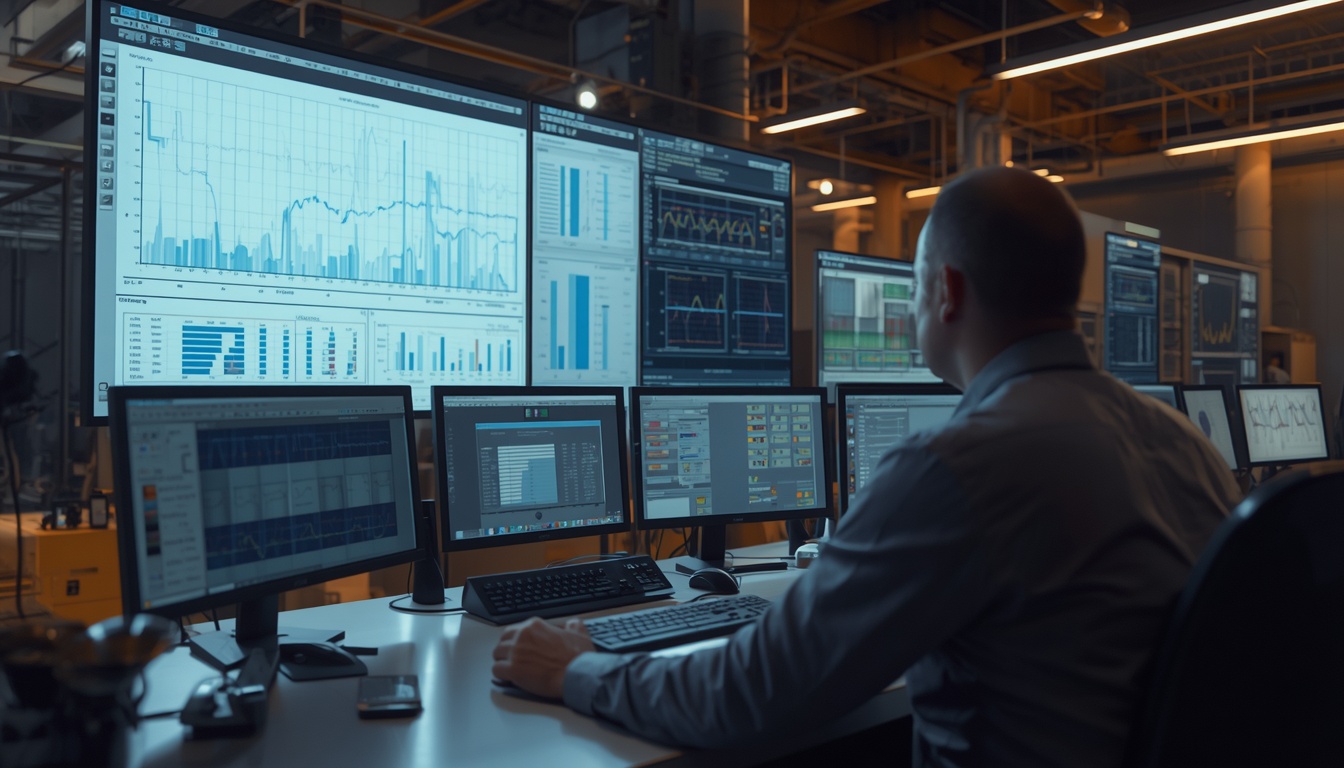
Instrumentation and control systems are the eyes, ears, and hands of an industrial plant. They measure process variables, transmit data to control systems, and adjust equipment to maintain safe and efficient operation. Without reliable instrumentation and control, a plant cannot operate consistently, safely, or efficiently.
For small to medium-scale industrial plants, instrumentation and control design is especially critical because there is less redundancy and fewer resources to manage complexity. The right design ensures reliable measurement, accurate control, and safe operation.
This article covers the key considerations in instrumentation and control system design for industrial plants, from sensor selection to control system architecture.
The Role of Instrumentation and Control
Instrumentation and control systems perform several essential functions:
- Measurement: Sensors measure temperature, pressure, flow, level, and other process variables.
- Transmission: Signals are transmitted from field instruments to control systems.
- Control: Control systems adjust valves, motors, and other actuators to maintain desired conditions.
- Monitoring: Operators monitor process conditions through displays and alarms.
- Safety: Safety instrumented systems (SIS) protect the plant during abnormal conditions.
- Data logging: Historical data supports troubleshooting, optimization, and compliance.
Without reliable instrumentation and control, operators cannot know what is happening in the process, and equipment cannot respond to changing conditions.
Key Instrumentation Types
Different process variables require different types of instruments.
| Variable | Common Instrument Types |
|---|---|
| Temperature | Thermocouples, RTDs, thermistors |
| Pressure | Pressure gauges, transmitters, switches |
| Flow | Orifice plates, vortex meters, Coriolis meters, ultrasonic meters |
| Level | Float switches, radar, ultrasonic, differential pressure |
| Analytical | pH, conductivity, oxygen, gas analyzers |
| Position | Limit switches, encoders, proximity sensors |
Each instrument type has advantages and limitations. Selection depends on accuracy requirements, process conditions, and cost.
Instrument Selection Considerations
Choosing the right instrument is critical for reliable measurement.
1. Accuracy and Range
Instruments must be accurate enough for the application and cover the expected range of process conditions. Over-specifying accuracy adds cost; under-specifying leads to poor control.
2. Process Conditions
Temperature, pressure, corrosion, vibration, and humidity all affect instrument performance. Instruments must be rated for the conditions they will experience.
3. Response Time
Some processes require fast-responding instruments; others do not. Response time affects control loop performance.
4. Installation, Calibration, and Maintenance
Instruments must be accessible for calibration and maintenance. Installation must comply with manufacturer requirements and applicable standards. Instruments must be calibrated periodically to maintain accuracy. Calibration intervals depend on the instrument type, process conditions, and criticality of the measurement.
5. Signal Type
Instruments can transmit analog signals (4–20 mA), hybrid signals such as HART, or fully digital fieldbus communications. The choice affects wiring, control system compatibility, and diagnostic capability. Fieldbus and digital communications protocols (such as HART, Profibus, or Foundation Fieldbus) allow instruments to transmit diagnostic data in addition to process measurements. This enables predictive maintenance and faster troubleshooting.
6. Certification
In hazardous areas, instruments must be certified for the applicable area classification (e.g., ATEX, IECEx, or NEC/CEC).
Control System Types
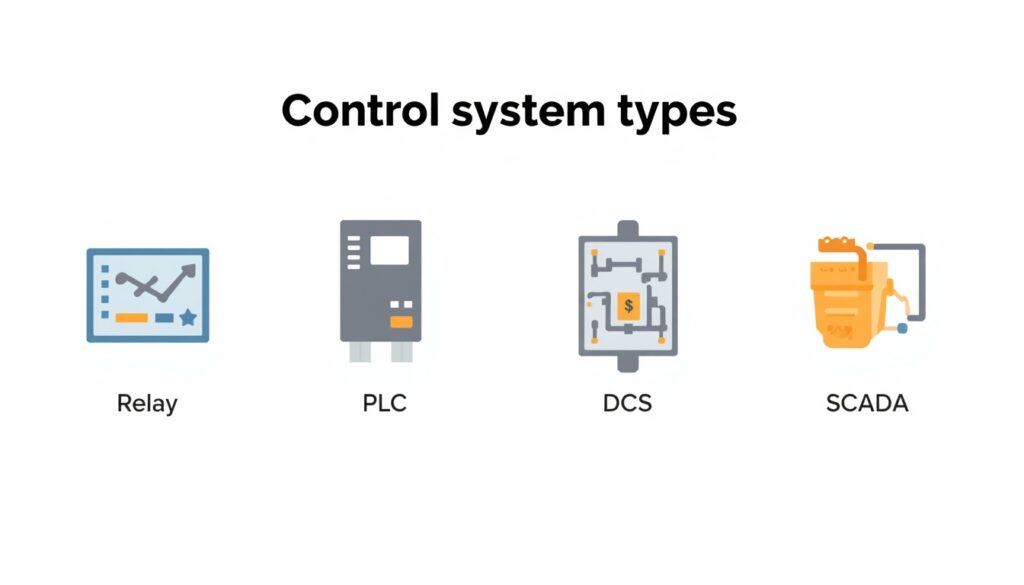
The control system receives signals from instruments and sends commands to actuators.
| Type | Characteristics | Typical Use |
|---|---|---|
| Relay logic | Simple, hardwired | Small plants, simple processes |
| PLC | Programmable, flexible, widely supported | Most industrial plants |
| DCS | Distributed, integrated, scalable | Large, complex plants |
| SCADA | Supervisory layer for data acquisition, monitoring, and remote access across PLCs or RTUs | Plants requiring remote or centralized monitoring |
For small to medium-scale plants, PLC-based control is common. It offers flexibility, is well-supported by vendors, and can be expanded as the plant grows.
Control Loop Design
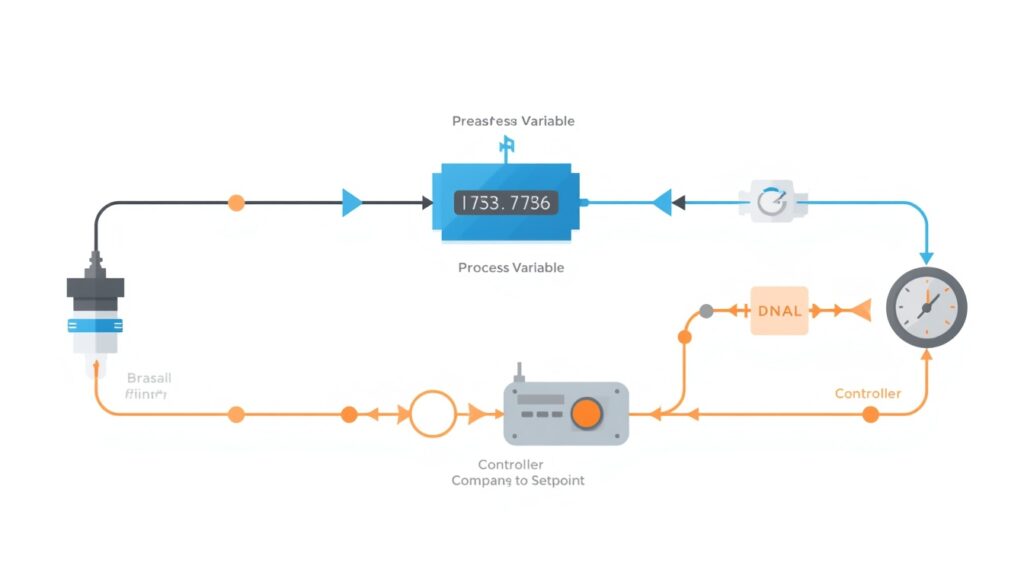
A control loop consists of a sensor, a controller, and a final control element (such as a valve or motor). The controller compares the measured value to a setpoint and adjusts the final control element to reduce the difference.
Key control loop considerations:
- Loop tuning: Controllers must be tuned for stable, responsive control.
- Loop interaction: Multiple control loops can interact, requiring careful design.
- Redundancy: Critical loops may require redundant sensors or controllers.
- Fail-safe positions: Valves and actuators should fail to a safe position on loss of signal or power.
Safety Instrumented Systems (SIS)
Safety instrumented systems are independent of the basic process control system and are designed to bring the plant to a safe state during abnormal conditions.
Key SIS considerations:
- Safety integrity level (SIL): Determines the required reliability of the SIS.
- Independence: SIS must be independent of the basic control system.
- Testing: SIS components must be tested periodically to verify functionality.
- Documentation: SIS design, testing, and maintenance must be documented.
Whether a formal SIL-rated SIS is required depends on a hazard and risk assessment, not on plant size alone. For small plants, a full SIS may not be required, but safety interlocks and shutdown systems are still essential.
Human-Machine Interface (HMI)
The HMI is how operators interact with the control system. A well-designed HMI improves situational awareness and reduces operator error.
Key HMI considerations:
- Clarity: Displays should be clear and uncluttered.
- Consistency: Similar information should be presented in similar ways.
- Alarm management: Alarms should be prioritized and actionable.
- Trending: Historical trends help operators understand process behavior.
- Accessibility: Displays should be readable from normal operating positions.
Alarm rationalization is the process of reviewing and prioritizing alarms to ensure they are actionable and meaningful. Too many alarms can overwhelm operators and lead to critical alarms being missed.
Integration with Other Plant Systems
Control systems often integrate with other plant systems, including electrical systems, safety systems, and business networks. Integration requires careful planning to avoid conflicts and security risks.
Cybersecurity for Control Systems
Control systems are increasingly connected to networks, creating cybersecurity risks. A cyberattack on a control system could disrupt operations or cause safety incidents.
Key cybersecurity considerations:
- Network segmentation: Control networks should be separated from business networks.
- Access control: Only authorized personnel should access control systems.
- Monitoring: Network traffic and system logs should be monitored for unusual activity.
- Updates: Control system software and firmware should be kept up to date.
- Training: Personnel should be trained on cybersecurity awareness.
Key Design Considerations
1. Reliability
Instruments and control systems must be reliable. Critical measurements may require redundant instruments or controllers.
2. Maintainability
Instruments must be accessible for calibration, testing, and replacement. Documentation must be clear and complete.
3. Scalability
Control systems should be designed with spare capacity for future expansion. This includes spare I/O, spare network capacity, and spare panel space.
4. Standardization
Standardizing on common instrument types and control system platforms reduces training, spare parts, and maintenance complexity.
5. Environmental Conditions
Instruments and control equipment must be rated for the environmental conditions they will experience, including temperature, humidity, vibration, and corrosion.
6. Regulatory Compliance
Instrumentation and control systems must comply with applicable codes and standards, including those for hazardous areas, safety systems, and environmental monitoring.
Common Mistakes in Instrumentation and Control Design
Even experienced designers make mistakes. Common ones include:
- Underspecifying instruments: Leading to poor accuracy or premature failure.
- Ignoring process conditions: Instruments that cannot handle actual temperature, pressure, or corrosion.
- Inadequate redundancy: Critical measurements without backup.
- Poor HMI design: Confusing displays that increase operator error.
- Neglecting cybersecurity: Control systems exposed to network threats.
- Insufficient documentation: Making maintenance and troubleshooting difficult.
- No spare capacity: Requiring costly upgrades for future expansion.
These mistakes are costly to fix after construction. They are much cheaper to avoid during design.
How Japanese EPC Firms Approach Instrumentation and Control
Japanese engineering firms are known for their disciplined approach to instrumentation and control design. Common characteristics include:
- Thorough specification: Instruments are specified carefully, with attention to accuracy, range, and process conditions.
- Conservative design margins: Redundancy and spare capacity are provided where justified.
- Detailed documentation: Loop diagrams, instrument schedules, and test records are carefully maintained.
- Comprehensive testing: Control loops and safety systems are tested thoroughly before startup.
- Long-term reliability focus: Designs prioritize reliability and maintainability over lowest initial cost.
For plant owners, this often means an instrumentation and control system with a long service life and fewer unplanned outages.
How to Evaluate Instrumentation and Control Design
When reviewing instrumentation and control design, ask:
| Question | Why It Matters |
|---|---|
| Are instruments specified for actual process conditions? | Ensures reliable measurement |
| Is redundancy provided for critical measurements? | Ensures continued operation during faults |
| Is the control system scalable? | Avoids costly upgrades later |
| Is the HMI designed for operator effectiveness? | Reduces operator error |
| Is cybersecurity addressed? | Protects against network threats |
| Is documentation complete? | Supports maintenance and troubleshooting |
| Does the design comply with applicable codes? | Ensures safety and legal operation |
A design that addresses these questions is likely to perform well over the plant’s life.
Conclusion
Instrumentation and control systems are essential to plant reliability, safety, and efficiency. For small to medium-scale industrial plants, instrumentation and control design deserves careful attention from the earliest stages of design. By focusing on instrument selection, control system architecture, safety systems, and cybersecurity, owners and designers can ensure reliable measurement, accurate control, and safe operation for many years.
Key Takeaways
- Instrumentation and control systems measure, transmit, control, monitor, and protect
- Instrument selection depends on accuracy, process conditions, and response time
- Control system types include relay logic, PLC, DCS, and SCADA
- Safety instrumented systems (SIS) protect the plant during abnormal conditions
- HMI design and alarm management affect operator effectiveness
- Cybersecurity is an increasing concern for control systems
- Japanese EPC firms emphasize thorough specification and comprehensive testing