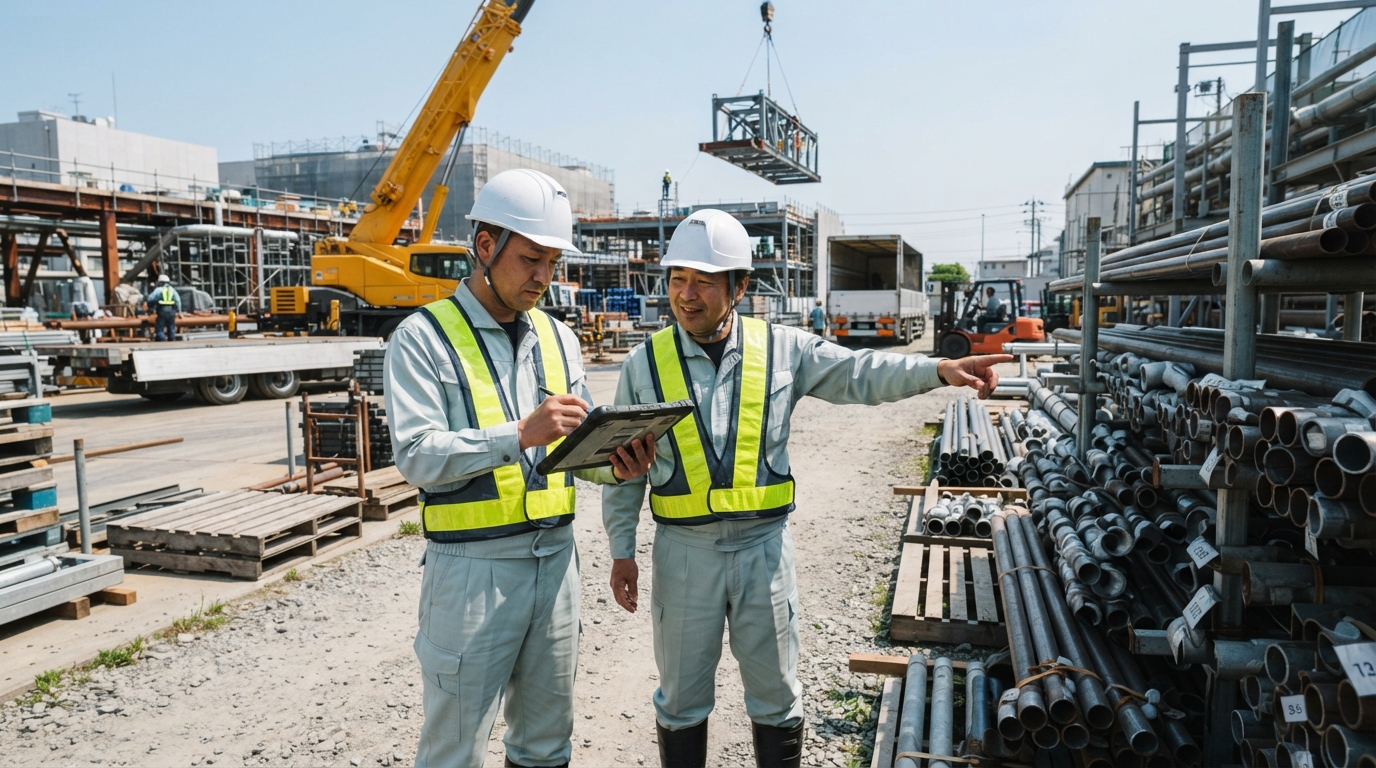
Every industrial plant project depends on materials arriving at the right place, at the right time, and in the right condition. Steel, pipe, valves, cable, equipment, and instruments must be sourced, shipped, received, stored, and issued to construction, often across international borders and remote sites. Logistics and materials management is the discipline of making this happen efficiently and reliably.
At EPC Partners Inc., logistics and materials management have been a core part of our work across a wide range of plant projects. They include geothermal power plants in Kenya, Indonesia, and Iceland, large-scale desalination facilities in the UAE and Saudi Arabia, thermal power plants in Vietnam and Bangladesh, and water treatment plants in Vietnam and Kuwait. Our logistics work has ranged from remote geothermal sites in Kenya and Indonesia, where road access was limited and materials had to be stockpiled before the rainy season, to large-scale desalination projects in the Gulf, where sea freight and customs clearance required careful coordination. Each project has reinforced the same lesson: logistics is not just about moving materials. It is about anticipating problems, planning ahead, and ensuring that construction is never held up by missing materials.
This article covers the key practices in plant logistics and materials management, drawing on our experience supporting projects across Asia, the Middle East, Africa, and Europe.
What Is Logistics and Materials Management?
Logistics and materials management is the discipline of planning, sourcing, shipping, receiving, storing, and issuing materials for a project. It includes:
- Procurement logistics: Sourcing and shipping materials from vendors.
- Inbound logistics: Receiving materials at site or warehouse.
- Materials management: Storing, preserving, and issuing materials.
- Site logistics: Moving materials around the site.
- Outbound logistics: Removing surplus, waste, and equipment.
Together these ensure that materials are available when needed and in good condition.
Why Logistics and Materials Management Matter
| Factor | Impact of Good Logistics | Impact of Poor Logistics |
|---|---|---|
| Schedule | Materials available when needed | Construction delayed by missing materials |
| Cost | Efficient logistics; lower costs | Higher costs from delays, demurrage, and emergency purchases |
| Quality | Materials stored and preserved correctly | Materials damaged or degraded |
| Safety | Materials handled and stored safely | Safety incidents |
| Space | Efficient use of site space | Congested site; inefficient operations |
| Documentation | Complete records of materials | Missing or incomplete records |
For small to medium-scale industrial plants, logistics and materials management often determine whether construction proceeds smoothly.
Logistics Planning
Logistics planning defines how materials will be sourced, shipped, received, stored, and issued. Key planning activities:
- Define logistics scope: What materials and equipment are involved, including heavy, oversized, hazardous, and sensitive items?
- Define logistics routes: How will materials be shipped, and through which ports and roads?
- Define logistics schedule: When must materials arrive? Work back from the construction schedule using required-on-site (ROS) dates.
- Define storage requirements: What storage and laydown areas are needed?
- Define handling requirements: What cranes, lifting equipment, and permits are needed?
- Define responsibilities: Who is responsible for each activity, including the freight forwarder, vendors, and site team?
- Define contingencies: What if materials are delayed or damaged?
Logistics planning should be integrated into the overall project schedule and aligned with procurement and construction sequencing.
At our geothermal projects in Kenya (Olkaria I Unit 6, 83 MW) and Indonesia (Muara Laboh, 85.2 MW), logistics planning considered the remote site locations, limited road access, and the need to coordinate deliveries with construction progress. In Iceland (Theistareykir, 2×45 MW), it considered the short construction season and the need to stockpile materials before winter.
Procurement Logistics
Procurement logistics is the process of sourcing and shipping materials from vendors. Key activities:
- Vendor coordination: Agreeing delivery schedules, packing requirements, and shipping documents with vendors. This links closely to vendor inspection and expediting.
- Delivery terms: Defining the responsibilities of buyer and seller. Incoterms (for example FOB, CIF, DAP) should be chosen deliberately, because they determine who bears cost, risk, and insurance at each stage.
- Shipping arrangements: Arranging transport from vendor to site, often through a freight forwarder.
- Customs clearance: Managing import and export procedures.
- Insurance: Insuring goods during transport.
- Tracking: Monitoring shipment progress against the schedule.
- Documentation: Preparing shipping documents.
Procurement logistics should be planned to avoid delays and damage.
Shipping and Transport
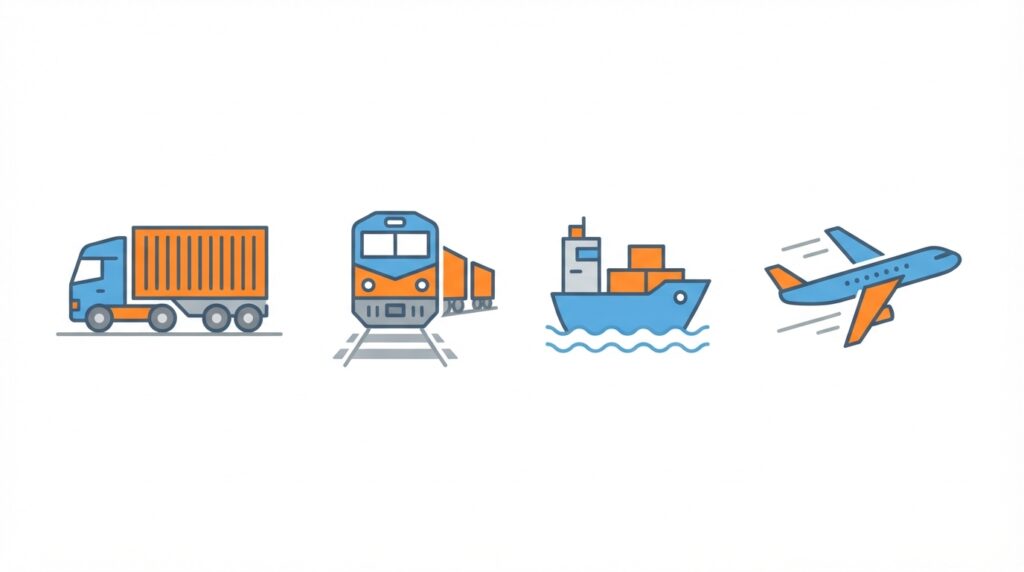
Shipping and transport move materials from vendors to site.
| Mode | Description | When to Use |
|---|---|---|
| Road | Trucks and trailers | Most materials, short to medium distances |
| Rail | Trains | Bulk materials, long distances |
| Sea | Ships and barges | Heavy equipment, international shipments |
| Air | Aircraft | Urgent or high-value items |
The choice of mode depends on the material, distance, cost, and urgency.
Heavy and oversized equipment such as turbines, generators, transformers, and large vessels needs special attention. A route survey should confirm that roads, bridges, ports, and site access can carry the loads, and that permits, escorts, and lifting equipment are arranged. Packing and marking should follow vendor and project requirements, and dangerous goods must be classified, packed, and documented according to applicable regulations.
For desalination projects in the Gulf (Taweelah, 909,200 m³/day; Jubail 3A, 600,000 m³/day), shipping included sea freight for high-pressure pumps, membrane skids, and energy recovery devices.
Project anecdotes
At one desalination project in the Gulf, sea freight for high-pressure pumps and membrane skids required careful coordination of port arrival, customs clearance, and transport to site, with all deliveries sequenced to match the construction schedule.
At one geothermal project in Kenya, the remote site location required stockpiling materials before the rainy season, with a dedicated laydown area and materials tracking system.
Customs Clearance
Customs clearance is the process of clearing materials through customs. Key activities:
- Documentation: Preparing customs documents (invoices, packing lists, certificates of origin, and, where needed, permits and certificates).
- Classification: Using correct tariff codes and accurate descriptions. Errors here are a common cause of hold-ups.
- Duties and taxes: Paying applicable duties and taxes, and applying any available exemptions.
- Inspection: Customs inspection of materials.
- Release: Release of materials from customs.
Customs clearance can be a significant source of delay, especially for international shipments. Start the process early and make sure vendor documents are complete and consistent before the shipment leaves.
Receiving and Inspection
Receiving and inspection ensure that materials arrive in good condition. Key activities:
- Receiving: Receiving materials at site or warehouse against purchase orders and packing lists.
- Inspection: Checking for damage, shortages, and correct identification, including a visual check of packing and shock or tilt indicators where fitted.
- Documentation: Recording receipt and inspection results, for example in a material receiving report.
- Discrepancy reporting: Reporting overages, shortages, and damage (OS&D) to the vendor, forwarder, and insurer promptly, because claim deadlines are often short.
Receiving and inspection should be documented and followed up promptly.
Storage and Preservation
Storage and preservation ensure that materials remain in good condition until needed. Key activities:
- Storage areas: Designated areas for different material types, including laydown yards, covered storage, and warehouses.
- Storage methods: Racking, stacking, and shelving, with a location system so that items can be found quickly.
- Preservation: Protection from moisture, corrosion, and damage, following vendor preservation instructions.
- Environmental control: Temperature and humidity control where required.
- Security: Protection from theft and vandalism.
For thermal power projects in Vietnam (Thai Binh 1, 2×300 MW) and Bangladesh (Bibiyana-III, 400 MW CCGT), storage and preservation included covered storage for sensitive equipment, climate-controlled storage for instruments, and preservation of rotating equipment with periodic rotation and lubrication.
Materials Handling
Materials handling is the process of moving materials around the site. Typical equipment:
- Cranes: For lifting heavy equipment.
- Forklifts: For moving pallets and materials.
- Trucks: For transporting materials around site.
- Conveyors: For moving bulk materials.
Handling should be planned for safety and efficiency, with lifting plans for heavy lifts, trained and certified operators, and traffic management on congested sites.
Materials Tracking and Control
Good tracking is what turns a delivery schedule into a reliable plan. A materials register, or a materials management system for larger projects, should link purchase orders, shipments, receipts, storage locations, and issues. It should be updated promptly, and it should compare forecast delivery dates with ROS dates so that risks are visible early.
Materials Issue
Materials issue is the process of delivering materials to construction. Key activities:
- Requisition: Construction requests materials.
- Picking: Materials are picked from storage.
- Issue: Materials are issued to construction.
- Documentation: Issue is recorded.
Materials issue should be controlled to prevent loss and ensure traceability, including material certificates where required for quality records.
Surplus and Waste Management
Surplus and waste management is the process of managing excess materials and waste, and forms the project’s outbound logistics. Key activities:
- Surplus identification: Identifying surplus materials, ideally before project completion.
- Disposition: Returning, reselling, transferring to the owner as spares, or disposing of surplus.
- Waste management: Managing construction waste, including hazardous waste, in line with project and regulatory requirements.
- Recycling: Recycling materials where possible.
- Demobilization: Removing temporary facilities and construction equipment.
Logistics and Materials Management in Small Plants
Small plants face particular challenges: fewer resources for logistics, less expertise, less access to logistics infrastructure, and competing priorities. Practical approaches include:
- Focus on critical materials: Prioritize logistics for long-lead and critical items.
- Use simple tools: Simple materials registers and logs can be sufficient.
- Use local suppliers: Local suppliers reduce logistics complexity.
- Plan ahead: Plan logistics well in advance to avoid delays.
- Document everything: Good records support claims and disputes.
- Learn from others: Apply lessons from other projects.
Logistics and materials management do not need to be complex. They need to be thorough and consistent.
Measuring Logistics Performance
Simple indicators help teams spot problems early:
- Percentage of deliveries on time against ROS dates
- Number and value of OS&D reports
- Customs clearance time
- Inventory accuracy
- Time from requisition to issue
- Storage damage or loss incidents
Reviewing these regularly allows corrective action before construction is affected.
Common Mistakes in Logistics and Materials Management
- No logistics plan: Logistics left to chance.
- Late deliveries: Materials arrive too late for construction.
- Unclear delivery terms: Responsibility and risk not defined.
- Incomplete shipping or customs documents: Delays at ports.
- Poor storage: Materials damaged or degraded.
- Inadequate handling: Safety incidents or damage.
- No materials traceability: Materials cannot be traced to their source.
- Poor documentation: Records missing or incomplete.
- No surplus management: Surplus materials accumulate.
- No waste management: Waste accumulates and becomes a problem.
These mistakes are costly to correct and much cheaper to avoid through disciplined logistics and materials management.
How EPC Partners Inc. Approaches Logistics and Materials Management
We bring practical experience from projects across Asia, the Middle East, Africa, and Europe. Our approach includes:
- Thorough planning: Logistics is planned from the beginning, with clear schedules and contingencies.
- Disciplined tracking: Materials are tracked through a materials register.
- Quality focus: Materials are inspected on receipt and stored correctly.
- Safety focus: Materials are handled and stored safely.
- Detailed documentation: Records are complete and accurate.
- Continuous improvement: Lessons are captured and applied.
Our experience includes supporting geothermal projects in Kenya, Ethiopia, Indonesia, Iceland, and Japan; desalination projects in the UAE, Saudi Arabia, Oman, and Qatar; thermal power projects in Vietnam, Bangladesh, and Japan; and water treatment projects in Vietnam, Kuwait, and Qatar. We have also supported clients including Marubeni Corporation, Fuji Electric Co., Ltd., and Toyota Tsusho Corporation on logistics and materials management aspects of their projects.
How to Evaluate Logistics and Materials Management Readiness
| Question | Why It Matters |
|---|---|
| Is there a logistics plan with ROS dates? | Provides a roadmap for logistics |
| Are delivery terms and responsibilities defined? | Clarifies risk, cost, and insurance |
| Are materials tracked? | Ensures materials are available when needed |
| Are shipping and customs documents complete? | Prevents delays at ports |
| Are materials inspected on receipt? | Ensures materials are in good condition |
| Are materials stored correctly? | Keeps materials in good condition |
| Are materials handled safely? | Prevents safety incidents |
| Is documentation complete? | Supports traceability and claims |
| Is surplus and waste managed? | Minimizes waste and reduces costs |
A project that addresses these questions is ready for effective logistics and materials management.
Conclusion
Logistics and materials management are critical to plant success. For small to medium-scale industrial plants, they determine whether materials arrive on time and in good condition.
By focusing on logistics planning, procurement logistics, shipping and transport, customs clearance, receiving and inspection, storage and preservation, materials handling, tracking, materials issue, and surplus and waste management, owners and project teams can ensure that logistics supports the project throughout its life.
EPC Partners Inc. is a Japanese EPC support firm with experience supporting power, water, and industrial plant projects across Asia, the Middle East, Africa, and Europe. If you are planning a plant project and need support with logistics or EPC project delivery, contact us to discuss how we can help. For more information, visit our project list.