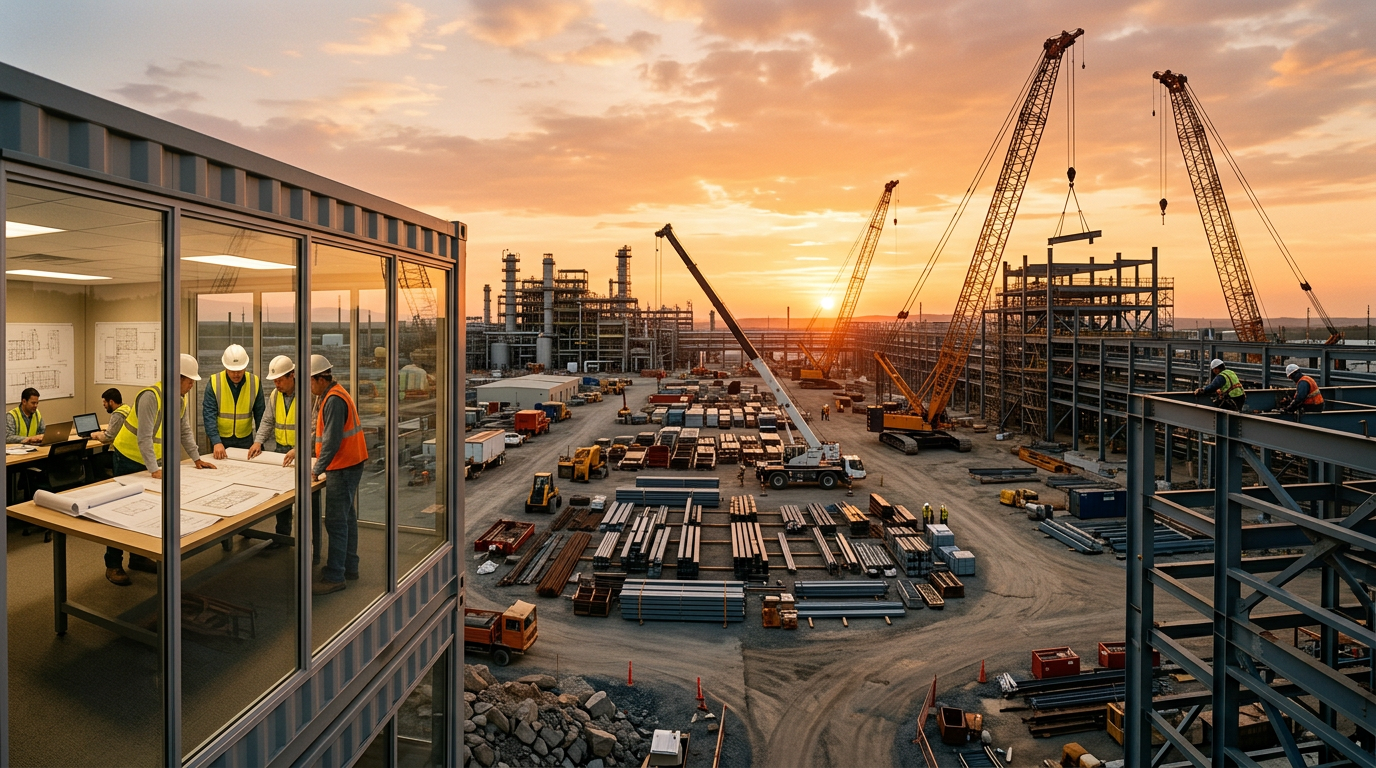
An EPC contract is often described as a single, unified delivery method. But behind that single contract are three distinct stages, each with its own activities, risks, and deliverables. Understanding how these stages fit together helps plant owners know what to expect at each phase and where problems are most likely to arise.
This article walks through the three stages of EPC project delivery, explains what happens in each, and highlights the key points where owners should pay close attention.
Stage 1: Engineering
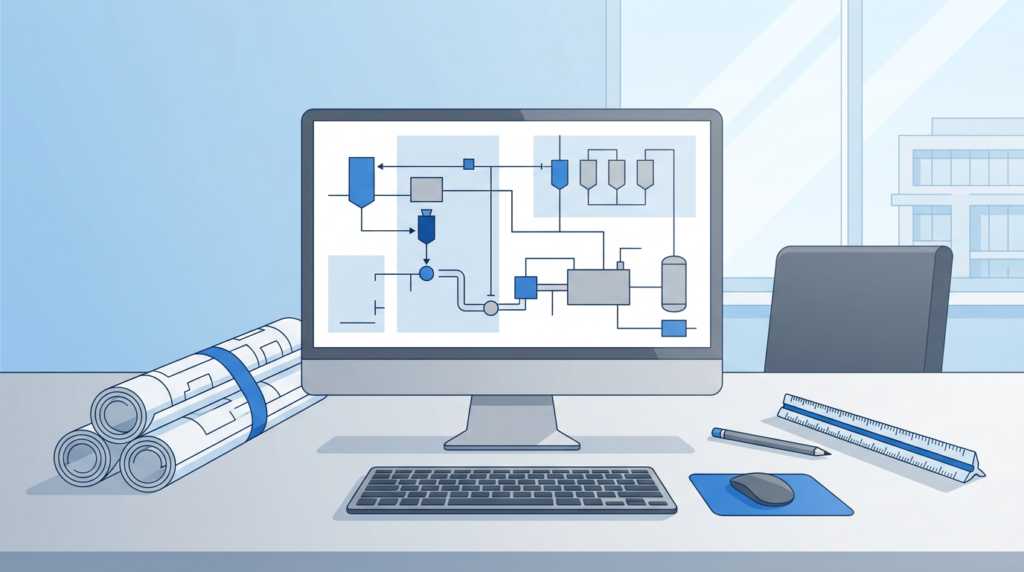
The engineering stage is where the plant is designed. Under the EPC contract, it begins after the contract is signed and continues until the design is complete enough to support procurement and construction. Engineering support typically continues through construction to handle field changes and prepare as-built documentation.
A note on FEED: In many projects, a front-end engineering design (FEED) phase precedes the EPC contract. FEED defines the basic design, cost estimate, and schedule that form the basis for the EPC bid. A well-executed FEED reduces the risk of scope changes during detailed engineering.
Engineering typically includes:
- Basic design: Process flow diagrams, heat and mass balances, and overall plant layout.
- Detailed design: Equipment specifications, piping and instrumentation diagrams (P&IDs), electrical drawings, and civil/structural drawings.
- Engineering calculations: Equipment sizing, pipe sizing, structural analysis, and control system logic.
- Technical documentation: Datasheets, equipment lists, and operating manuals.
Why Engineering Matters Most
The engineering stage has an outsized influence on the project’s success. Decisions made here determine:
- Capital cost: Equipment selection and layout decisions set most of the project’s capital cost before a single item is purchased.
- Operating cost: Efficiency, fuel consumption, and maintenance requirements are set during design.
- Schedule: Delays in engineering cascade into procurement and construction.
- Performance: Whether the plant meets its output and efficiency guarantees depends on design choices made at this stage.
For plant owners, the engineering stage is where you have the most influence. Once construction begins, changes become expensive and slow.
Key Owner Touchpoints in Engineering
Owners should be actively involved in:
| Touchpoint | Why It Matters |
|---|---|
| Design reviews | Catch errors before they become costly changes |
| Equipment selection | Ensure vendor choices match your reliability and maintenance preferences |
| HAZOP studies | Identify safety risks in the design before construction |
| Interface definition | Clarify what the owner supplies vs. what the contractor supplies |
| Documentation review | Ensure drawings and manuals meet your operational needs |
Owner-supplied equipment: Some projects include owner-supplied equipment, where the owner procures certain items directly. This can reduce cost but increases coordination complexity, since the contractor must integrate owner-supplied items into the overall design and schedule.
Stage 2: Procurement
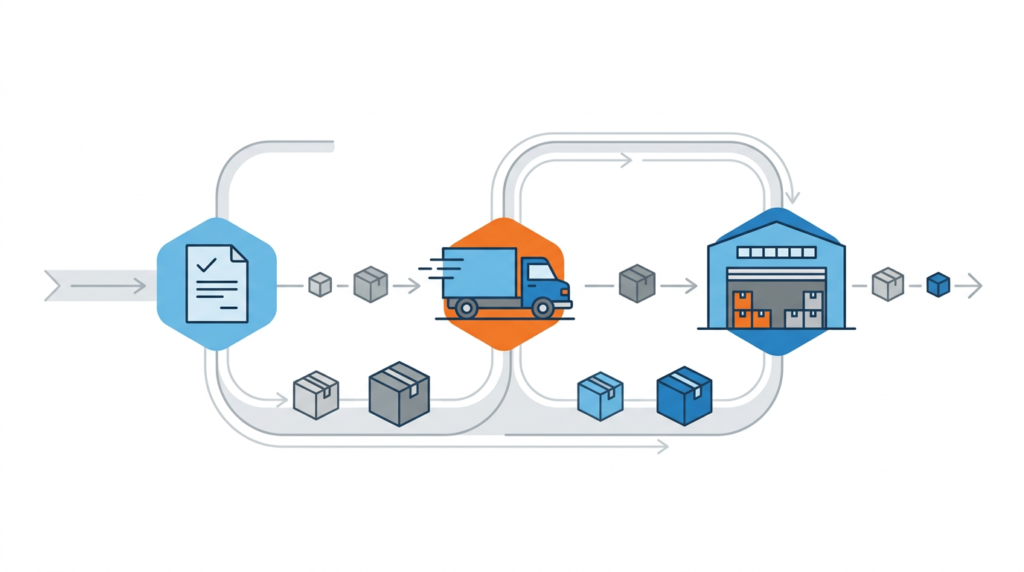
Procurement is the process of sourcing and purchasing all equipment, materials, and services required for the plant. It overlaps with engineering and often extends into construction.
Procurement activities include:
- Vendor identification and qualification: Finding suppliers capable of meeting technical and delivery requirements.
- Request for quotation (RFQ): Issuing specifications and soliciting bids.
- Bid evaluation: Comparing technical compliance and commercial terms.
- Purchase orders and contracts: Placing orders and managing supplier agreements.
- Expediting: Monitoring supplier progress to ensure on-time delivery.
- Inspection and testing: Verifying equipment meets specifications before shipment.
- Logistics: Managing shipping, customs, and delivery to site.
Why Procurement Is a Common Source of Delays
Procurement is frequently the stage where projects fall behind. Common causes include:
- Long lead times: Items like turbines, generators, and large vessels can take 12 to 24 months or more to manufacture.
- Vendor capacity constraints: Popular vendors may be booked out for months.
- Supply chain disruptions: Material shortages, shipping delays, and customs issues.
- Quality issues: Equipment that fails inspection must be reworked or replaced.
- Currency and price volatility: Commodity prices can shift between quotation and order.
For owners, the lesson is simple: the earlier procurement starts, the better. Long-lead items should be identified during engineering and ordered as soon as the design is firm enough.
Key Owner Touchpoints in Procurement
| Touchpoint | Why It Matters |
|---|---|
| Vendor list approval | Ensure the contractor is not using unqualified suppliers |
| Critical equipment review | Verify specifications for major items |
| Inspection witness points | Attend or send a representative for key factory tests |
| Delivery schedule review | Confirm long-lead items are on track |
| Change order review | Approve any scope changes that affect cost or schedule |
Stage 3: Construction
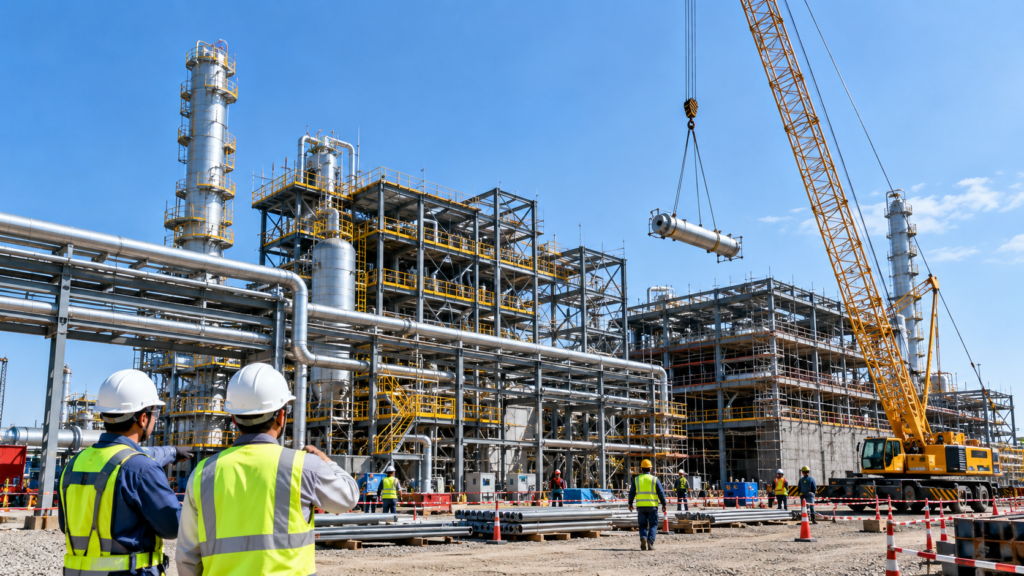
Construction is the physical execution of the project. It includes civil works, structural erection, equipment installation, piping, electrical and instrumentation, and commissioning.
Construction activities include:
- Site preparation: Earthworks, foundations, and access roads.
- Civil and structural works: Buildings, structures, and support systems.
- Mechanical erection: Installation of equipment, piping, and valves.
- Electrical and instrumentation: Cable trays, wiring, control systems, and instruments.
- Testing and commissioning: Pressure tests, loop checks, commissioning, and performance testing.
- Handover: Documentation, training, and final acceptance.
The importance of commissioning: Commissioning is where the plant is tested under actual operating conditions. This is when performance guarantees are verified through commissioning and performance testing, and when any deficiencies must be corrected before acceptance.
What good handover looks like: Good handover includes complete as-built drawings, equipment manuals, operating procedures, maintenance schedules, and training for the owner’s team. Incomplete handover documentation is a common source of problems during the first years of operation.
Why Construction Is the Most Visible Stage
Construction is where the project becomes tangible. It is also where:
- Safety risks are highest: Heavy lifting, working at height, and live electrical work.
- Coordination is most complex: Multiple subcontractors must work in sequence.
- Schedule pressure is most intense: Every delay compounds.
- Quality issues surface: Installation errors, misalignment, and missing components.
For owners, construction is a period of high activity and high risk. Regular site visits and progress meetings help catch problems early.
Key Owner Touchpoints in Construction
| Touchpoint | Why It Matters |
|---|---|
| Site progress meetings | Track actual vs. planned progress |
| Safety audits | Ensure contractor is maintaining safety standards |
| Quality inspections | Verify installation meets specifications |
| Witness testing | Observe pressure tests and loop checks |
| Punch list review | Ensure outstanding items are completed before handover |
| Commissioning attendance | Verify the plant operates as designed |
How the Three Stages Overlap
While it is convenient to describe engineering, procurement, and construction as sequential stages, in practice they overlap significantly.
| Stage | Typical Overlap |
|---|---|
| Engineering → Procurement | Procurement of long-lead items begins before detailed design is complete |
| Procurement → Construction | Early construction (civil works) starts while equipment is still being manufactured |
| Engineering → Construction | Design changes during construction are common but costly |
This overlap is one reason EPC delivery is complex. The contractor must manage multiple activities simultaneously while maintaining schedule and budget.
Managing the interfaces: The overlap between stages is a common source of disputes. If engineering is not sufficiently advanced, procurement may order equipment that later needs modification. If procurement is delayed, construction may start before key equipment is available. Managing these interfaces is one of the contractor’s most important responsibilities.
Why Japanese EPC Firms Excel at This
Japanese EPC firms are known for managing the three stages with particular discipline. Key characteristics include:
- Front-loaded engineering: More time spent on design before construction begins, reducing costly changes later.
- Careful procurement planning: Long-lead items identified early and ordered promptly.
- Strong site management: Detailed construction planning, safety focus, and quality control.
- Integrated communication: Engineering, procurement, and construction teams work closely together.
For plant owners, this often translates into a smoother project with fewer surprises, even if the initial schedule appears slower.
What Owners Should Focus On
Across all three stages, owners should prioritize:
- Clear scope definition before the contract is signed.
- Active participation in design reviews and key decisions.
- Regular progress monitoring during procurement and construction.
- Documentation of all changes, approvals, and decisions.
- Commissioning involvement to ensure the plant meets its guarantees.
Conclusion
The three stages of EPC project delivery (engineering, procurement, and construction) form the backbone of any plant project. Each stage has its own activities, risks, and owner touchpoints. Understanding how they fit together helps owners anticipate problems, ask the right questions, and keep the project on track.
Whether you are building a small biomass plant or a medium-scale thermal facility, the principles are the same: good engineering drives good procurement, and good procurement enables good construction.
Key Takeaways
- EPC delivery has three stages: engineering, procurement, and construction.
- Engineering has the greatest influence on cost, schedule, and performance.
- Procurement is a common source of delays, especially for long-lead items.
- Construction is the most visible stage and carries the highest safety and coordination risk.
- The stages overlap significantly, and managing interfaces is critical.
- Japanese EPC firms emphasize front-loaded engineering and careful procurement planning.
Leave a Reply