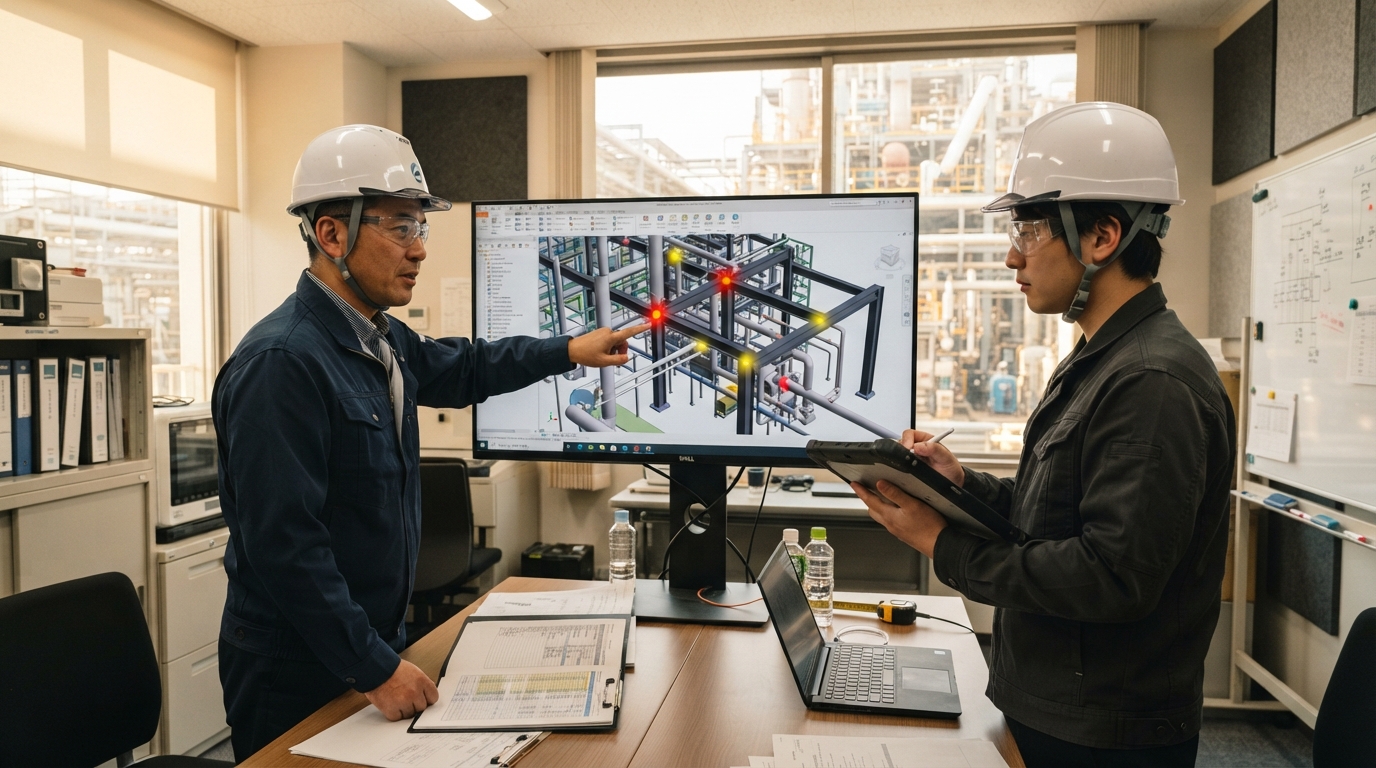
Most project problems do not come from any single discipline doing its job badly. They come from the gaps between disciplines. Piping is designed correctly. Structural steel is designed correctly. But the pipe does not fit through the opening in the steel. The electrical cable tray clashes with the ductwork. The vendor’s equipment arrives with connections that do not match the site’s utilities. Interface coordination is the discipline of managing these gaps.
At EPC Partners Inc., interface coordination has been a core part of our work across a wide range of plant projects: geothermal power plants in Kenya, Indonesia, and Iceland; large-scale desalination facilities in the UAE and Saudi Arabia; thermal power plants in Vietnam and Bangladesh; and water treatment plants in Vietnam and Kuwait. Each project has presented different interface challenges, and each has reinforced the same lesson: interface coordination is not just about avoiding clashes. It is about ensuring that disciplines, contractors, and systems work together as a whole.
Our interface coordination work has ranged from geothermal projects in Kenya and Indonesia, where steam gathering and power plant interfaces were critical, to desalination projects in the Gulf, where coordination between marine, process, and electrical contractors was essential.
This article covers the key practices in plant interface coordination, drawing on our experience supporting projects across Asia, the Middle East, Africa, and Europe.
What Is Interface Coordination?
Interface coordination is the discipline of identifying, defining, and controlling the points of interaction between different parts of a project.
An interface is any point where:
- Two disciplines meet (e.g., mechanical and electrical).
- Two contractors meet (e.g., civil contractor and mechanical contractor).
- Two systems meet (e.g., process and control systems).
- Two organizations meet (e.g., owner and EPC contractor).
- Two phases meet (e.g., construction and commissioning).
- New works meet existing facilities (e.g., tie-ins to live plant systems).
- The plant meets external parties (e.g., grid operators, utilities, port authorities, and regulators).
Interface coordination ensures that these points are defined, documented, and controlled.
Interface coordination is closely related to interface management, which covers the wider framework of registers, agreements, and governance. In practice the two overlap: management sets the framework, and coordination is the day-to-day work of making interfaces function across disciplines and contractors.
Why Interface Coordination Matters
Interface failures are among the most common causes of project problems.
| Factor | Impact of Good Interface Coordination | Impact of Poor Interface Coordination |
|---|---|---|
| Schedule | Work proceeds without clashes | Work stops at interfaces |
| Cost | Rework avoided | Rework and added cost |
| Quality | Interfaces correctly designed and built | Misalignment, leaks, failures |
| Safety | Interfaces assessed for safety | Safety hazards at interfaces |
| Coordination | Disciplines work together | Disciplines blame each other |
| Disputes | Responsibilities clear | Disputes over responsibility |
For small to medium-scale industrial plants, interface coordination determines whether the project runs smoothly or gets bogged down in conflicts.
Interface Identification
Interface identification is the first step in interface coordination.
Interface identification methods:
- Review project scope: What scopes are involved, and where do they meet?
- Review contracts: What are the scope boundaries and responsibilities?
- Review drawings: Where do disciplines and systems connect? P&IDs, single-line diagrams, and general arrangement drawings are especially useful.
- Review the WBS: Where do work packages interface?
- Review vendor packages: Where does skid-mounted or packaged equipment connect to the plant?
- Workshops: Bring together disciplines and contractors to identify interfaces.
- Interface register: Document identified interfaces.
Interface identification should be comprehensive. Missing an interface is worse than identifying too many. It should also be repeated at key milestones, because new interfaces appear as design develops, vendors are selected, and contractors are appointed.
At our geothermal projects in Kenya (Olkaria I Unit 6, 83 MW) and Indonesia (Muara Laboh, 85.2 MW), interface identification focused on the points where the steam gathering system met the power plant, and where the drilling and civil works met the mechanical and electrical systems. In Iceland (Theistareykir, 2×45 MW), interface identification considered the seismic and environmental conditions of the site.
Interface Register
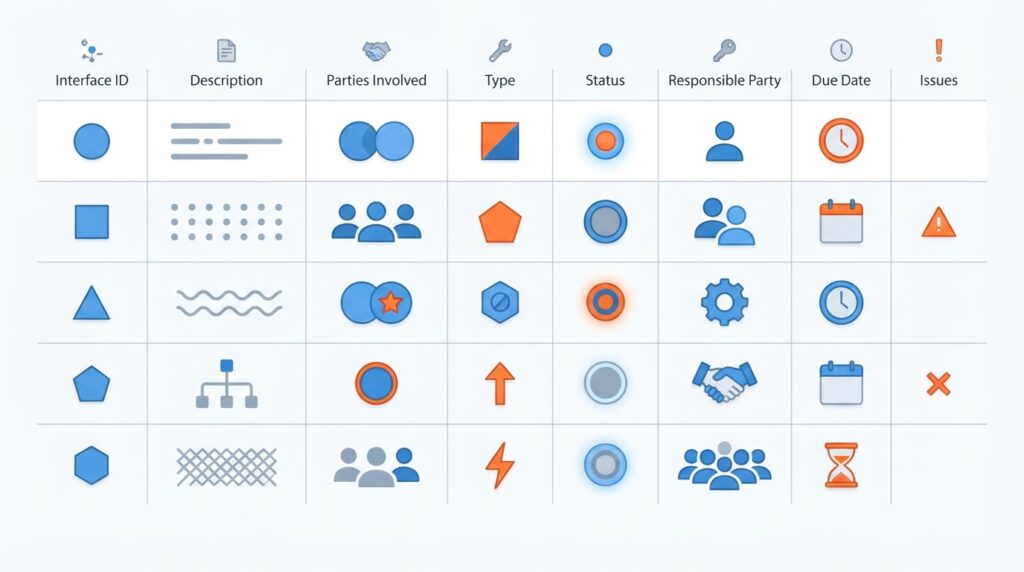
The interface register is the central document for interface coordination.
| Field | Description |
|---|---|
| Interface ID | Unique identifier |
| Description | What the interface is |
| Parties involved | Who is on each side of the interface |
| Type | Physical, functional, organizational, etc. |
| Status | Open, agreed, closed |
| Responsible party | Who owns the interface |
| Due date | When the interface must be resolved |
| Documents | Relevant drawings, specifications, agreements |
| Issues | Open issues or disagreements |
The interface register should be reviewed regularly and updated as the project progresses. Overdue and unresolved interfaces should be reported to project management, not left sitting in the register.
At one geothermal project in Kenya, the interface register identified the critical connection points between the steam gathering system and the power plant, with each interface assigned an owner and a due date. At one thermal power project in Vietnam, the interface register was used to track the resolution of clashes between the boiler and piping systems, with each clash closed before construction began.
Interface Responsibility Matrix
An interface responsibility matrix maps each interface to the party responsible for defining, providing, or resolving it.
- Interfaces: Listed down one axis.
- Parties: Listed across the other axis.
- Roles: Each cell shows the role of that party (defines, provides, installs, verifies, approves).
The matrix makes gaps (no one responsible) and overlaps (two parties both responsible) visible immediately.
Interface Agreements
An interface agreement documents how an interface will be managed.
- Scope: What is included on each side of the interface.
- Responsibilities: Who is responsible for what.
- Technical requirements: What each party must provide.
- Schedule: When each party must deliver.
- Documentation: What documents are exchanged.
- Change process: How changes are managed.
- Dispute resolution: How disputes are resolved.
Interface agreements should be signed by both parties and treated as contractual documents.
Interface Coordination in Design
Many interface issues originate in design.
- Discipline coordination: Ensuring that disciplines coordinate their designs.
- 3D modeling and clash detection: Detecting physical clashes before construction.
- Design reviews: Reviewing designs at discipline interfaces.
- Interface control documents: Documenting design interfaces.
- Vendor data integration: Ensuring vendor data is integrated into the design.
- Design freeze points: Agreeing when interface data (nozzle locations, loads, cable entries) becomes fixed, and controlling changes after that point.
- Safety reviews: Including interfaces in HAZOP and other safety studies, since hazards often arise at boundaries between systems.
Design interface coordination prevents problems before they reach the field.
For thermal power projects in Vietnam (Thai Binh 1, 2×300 MW) and Bangladesh (Bibiyana-III, 400 MW CCGT), design interface coordination included 3D modeling and clash detection between the boiler, turbine, piping, and electrical systems, with clashes resolved before construction began.
Interface Coordination in Procurement
Interfaces between equipment vendors and the rest of the plant are often overlooked.
- Vendor data requirements: Defining what data vendors must provide.
- Interface schedules: Ensuring vendor data is delivered in time for design.
- Connection details: Confirming how vendor equipment connects to the plant.
- Utility requirements: Confirming power, water, air, and other utilities.
- Control interfaces: Confirming control signals and protocols.
- Documentation: Ensuring vendor documentation is complete.
- Vendor-to-vendor interfaces: Confirming how equipment from different suppliers connects (for example, a turbine and its generator, or a package unit and the main control system).
Vendor interfaces should be defined in the purchase order and managed through the project.
Interface Coordination in Construction
Construction is where interface problems become visible.
- Interface register: Maintaining the register as construction progresses.
- Coordination meetings: Regular meetings between contractors.
- Area-based planning: Planning work by area to manage interfaces.
- Handover procedures: Defining how areas are handed over between contractors.
- Tie-in planning: Planning connections to existing or live systems, including shutdown windows, isolation, and permits.
- Inspection: Inspecting interfaces as work is completed.
- Punch lists: Addressing interface issues before handover.
Construction interface coordination prevents clashes, rework, and disputes.
For desalination projects in the Gulf (Taweelah, 909,200 m³/day; Jubail 3A, 600,000 m³/day), construction interface coordination included the interface between the marine works contractor, the process plant contractor, and the electrical and instrumentation contractor, with careful planning of tie-ins and handovers.
Interface Coordination in Commissioning
Commissioning involves interfaces between construction and operations.
- System handover: Defining how systems are handed over from construction to commissioning.
- Commissioning procedures: Defining how systems are commissioned.
- Interface testing: Testing interfaces between systems, including control and signal checks.
- Operations involvement: Involving operations in commissioning.
- Documentation: Documenting commissioning and handover.
Commissioning interfaces should be planned well before commissioning begins.
Resolving Interface Issues
Identifying interfaces is only half the job. Issues must also be resolved quickly.
- Raise: Any party can raise an interface issue, recorded in the register.
- Assign: The issue is assigned an owner and a target date.
- Resolve: The parties agree a solution and update drawings, specifications, or agreements as needed.
- Escalate: Issues that cannot be resolved between the parties go to a defined escalation path (for example, discipline lead, then project manager, then project director).
- Close: The issue is closed only when the resolution has been implemented and verified.
Unresolved interface issues should be visible in progress reports so they receive management attention before they affect the schedule.
Interface Changes
Changes in one area often affect another. A modified equipment size can change foundation loads, pipe routing, and cable lengths. Change control should therefore:
- Identify which interfaces a proposed change affects.
- Notify all parties on the other side of those interfaces.
- Update the interface register, agreements, and drawings.
- Assess the cost and schedule impact across all affected parties.
A change approved in one discipline without checking its interfaces simply moves the problem somewhere else.
Tools and Metrics
Useful tools:
- Interface register and responsibility matrix (a spreadsheet is often enough on smaller projects).
- 3D model and clash detection software.
- A common data environment where drawings and interface documents are shared and controlled.
Useful metrics:
- Number of interfaces open, agreed, and closed.
- Number of overdue interface actions.
- Number of clashes detected in design versus in the field.
- Time taken to close interface issues.
A rising number of field-detected clashes is a warning that design coordination needs attention.
Interface Coordination in Small Plants
Challenges: fewer resources, less expertise, less access to tools, and competing priorities.
Practical approaches:
- Focus on critical interfaces: Prioritize coordination of critical interfaces.
- Use simple tools: Simple interface registers and matrices can be sufficient.
- Use existing meetings: Leverage existing coordination meetings.
- Document everything: Good records support coordination and disputes.
- Train staff: Ensure staff understand interface coordination requirements.
- Learn from others: Apply lessons from other projects.
Interface coordination does not need to be complex. It needs to be thorough and consistent.
Common Mistakes in Interface Coordination
- No interface coordination process: Interfaces not identified or managed.
- Incomplete interface identification: Missing interfaces.
- No interface register: Interfaces not documented.
- No interface agreements: Responsibilities not defined.
- Poor discipline coordination: Disciplines work in isolation.
- Skipping clash detection: Physical clashes found in the field.
- Ignoring vendor interfaces: Vendor connections not defined.
- Poor contractor coordination: Contractors do not communicate.
- Ignoring interface impacts of changes: Changes approved without checking affected interfaces.
- No escalation path: Issues linger because no one has authority to decide.
These mistakes are costly to correct. They are much cheaper to avoid through disciplined interface coordination.
How EPC Partners Inc. Approaches Interface Coordination
At EPC Partners Inc., we bring practical experience from projects across Asia, the Middle East, Africa, and Europe to interface coordination.
- Thorough identification: Interfaces are identified systematically, with input from all disciplines.
- Detailed documentation: Interface registers and agreements are complete and accurate.
- Disciplined coordination: Regular meetings and coordination between disciplines and contractors.
- 3D modeling: Extensive use of 3D modeling and clash detection.
- Clear responsibilities: Scope and responsibilities are clearly defined.
- Early resolution: Interface issues are resolved early, before they affect construction.
- Continuous improvement: Lessons are captured and applied.
Our experience includes supporting geothermal projects in Kenya, Ethiopia, Indonesia, Iceland, and Japan; desalination projects in the UAE, Saudi Arabia, Oman, and Qatar; thermal power projects in Vietnam, Bangladesh, and Japan; and water treatment projects in Vietnam, Kuwait, and Qatar.
We have also supported clients including Marubeni Corporation, Fuji Electric Co., Ltd., and Toyota Tsusho Corporation on interface coordination aspects of their projects.
How to Evaluate Interface Coordination Readiness
| Question | Why It Matters |
|---|---|
| Is there an interface coordination process? | Provides a structured approach |
| Are interfaces identified comprehensively? | Missing interfaces cause problems |
| Is there an interface register? | Documents and tracks interfaces |
| Are interface agreements in place? | Defines responsibilities |
| Are disciplines coordinated? | Prevents design clashes |
| Is 3D modeling and clash detection used? | Catches physical clashes before construction |
| Are vendor interfaces defined? | Prevents connection problems |
| Are contractors coordinated? | Prevents construction conflicts |
| Is there an escalation path for unresolved issues? | Keeps issues from stalling the project |
| Are interface impacts checked in change control? | Prevents changes from creating new problems |
A project that addresses these questions is ready for effective interface coordination.
Key Takeaways
- Most project problems arise in the gaps between disciplines, contractors, and systems, not within them.
- Identify interfaces early and comprehensively, and keep identifying them as the project develops.
- Use an interface register, a responsibility matrix, and signed interface agreements to make ownership clear.
- Detect clashes in the 3D model, not in the field.
- Define vendor interfaces in purchase orders.
- Give every interface issue an owner, a due date, and an escalation path.
- Check interface impacts whenever changes are proposed.
Conclusion
Interface coordination is critical to plant success. For small to medium-scale industrial plants, it determines whether the project runs smoothly or gets bogged down in clashes, rework, and disputes.
By focusing on interface identification, registers, agreements, discipline coordination, 3D modeling, vendor interfaces, contractor coordination, and commissioning interfaces, owners and project teams can ensure that interfaces are managed proactively rather than discovered in the field.
If you are planning a plant project and need support with interface coordination or EPC project delivery, contact us to discuss how we can help.
EPC Partners Inc. is a Japanese EPC support firm with experience supporting power, water, and industrial plant projects across Asia, the Middle East, Africa, and Europe. For more information, visit our project list.