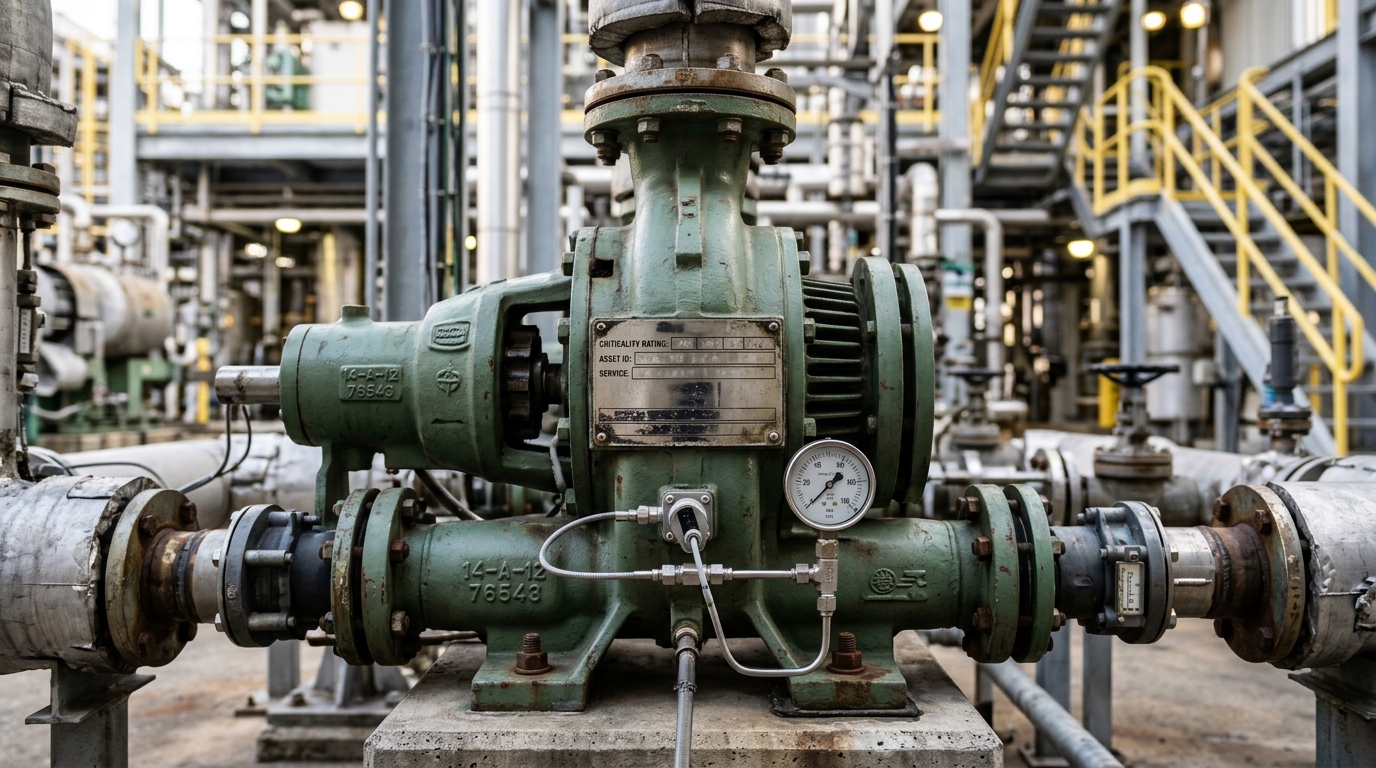
Every plant is a collection of assets. Pumps, turbines, boilers, transformers, piping, structures, and control systems are all assets that must be managed to deliver value over their life. Asset management is the discipline of managing these assets to achieve the organization’s objectives at the lowest lifecycle cost, while maintaining safety and reliability.
For EPC projects, asset management begins at the design stage and continues through construction, commissioning, handover, and operations. The decisions made during the project determine how well the assets perform over their entire life. These include what to buy, how to install it, what data to capture, and what maintenance strategy to adopt.
For small to medium-scale industrial plants, asset management is especially important. There is less redundancy and fewer resources to absorb the consequences of poor asset decisions. A plant with well-managed assets operates reliably and efficiently. A plant with poorly managed assets suffers failures, downtime, and rising costs.
This article covers the key practices in plant asset management, from asset strategy to asset information, performance monitoring, and handover.
What Is Asset Management?
Asset management is the coordinated activity of an organization to realize value from assets. This is the definition used in ISO 55000.
It includes:
- Asset strategy: What assets are needed, and how will they be managed?
- Asset lifecycle: How are assets managed from acquisition to disposal?
- Asset information: What data is needed to manage assets?
- Asset performance: How are assets performing?
- Asset risk: What risks do assets pose?
- Asset investment: When should assets be replaced or upgraded?
Asset management is not just about maintenance. It is about managing assets to deliver value over their entire life.
Asset Management and Maintenance
Asset management and maintenance are related but distinct. Asset management sets the strategy for how assets will be managed over their life. Maintenance executes the day-to-day activities that keep assets performing. Good asset management ensures that maintenance is focused on the right assets, at the right time, for the right reasons.
Why Asset Management Matters
Asset management directly affects plant performance.
| Factor | Impact of Good Asset Management | Impact of Poor Asset Management |
|---|---|---|
| Reliability | Assets perform as required | Failures and downtime |
| Cost | Lowest lifecycle cost | Higher operating and maintenance costs |
| Safety | Asset risks identified and controlled | Safety incidents |
| Compliance | Regulatory requirements met | Non-compliance |
| Value | Assets deliver value | Value lost |
| Sustainability | Assets managed for long-term viability | Premature replacement |
For small plants, where there is less margin for error, asset management determines whether the plant delivers value over its life.
Asset Management Standards
Asset management is guided by international standards.
| Standard | Description |
|---|---|
| ISO 55000 | Overview, principles, and terminology |
| ISO 55001 | Requirements for an asset management system |
| ISO 55002 | Guidelines for the application of ISO 55001 |
ISO 55001 provides the requirements for an asset management system. Organizations can use it to guide their practices or to seek certification. Other standards also support asset management, such as ISO 14224 for collecting and exchanging reliability and maintenance data, and ISO 14224-style equipment taxonomies for classifying assets.
Asset Management System
An asset management system provides a structured approach to managing assets. Its elements follow the structure of ISO 55001:
- Context: Understanding the organization, its stakeholders, and its objectives.
- Leadership: Commitment from top management, including the asset management policy and defined roles.
- Planning: Asset management objectives, strategy, and plans.
- Support: Resources, competence, awareness, communication, and information.
- Operation: Managing assets to achieve objectives, including management of change and outsourced activities.
- Performance evaluation: Monitoring, measurement, internal audit, and management review.
- Improvement: Corrective action and continual improvement of the system.
An asset management system ensures that assets are managed consistently and effectively.
Asset Management Policy
An asset management policy states the organization’s commitment to asset management, defines the scope of the system, and sets out the principles that guide asset management decisions. It is approved by top management and communicated throughout the organization.
Asset Management Plans
Asset management plans translate strategy into action. They define how assets will be managed to achieve the objectives. They cover the asset portfolio, maintenance strategies, investment plans, and performance targets. Plans should be reviewed and updated regularly.
Asset Strategy
Asset strategy defines how assets will be managed to achieve objectives.
Asset strategy elements:
- Objectives: What are we trying to achieve?
- Asset portfolio: What assets do we have?
- Criticality: Which assets are most important?
- Lifecycle approach: How will assets be managed over their life?
- Risk: What risks do assets pose?
- Investment: When and how will we invest?
Asset strategy should be aligned with the organization’s objectives. In ISO 55000 terms, the link between organizational objectives and asset management plans is often documented in a Strategic Asset Management Plan (SAMP).
Asset Criticality
Asset criticality determines which assets deserve the most attention.
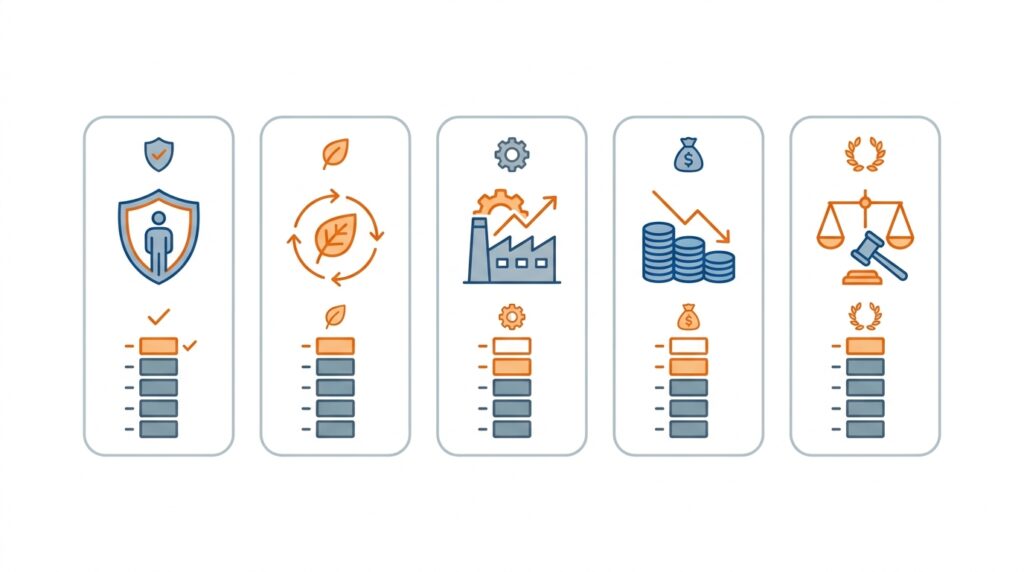
Criticality factors:
- Safety: Could failure cause injury?
- Environment: Could failure cause environmental damage?
- Production: Could failure cause lost production?
- Cost: What is the cost of failure?
- Regulatory: Could failure cause non-compliance?
Criticality is typically assessed by scoring each asset against these factors, using the same risk matrix the plant uses elsewhere. Criticality analysis helps prioritize asset management efforts, including maintenance strategy, spare parts, and inspection frequency. It should be done during design, so that it can influence decisions on redundancy and spares, and reviewed during operations.
Asset Lifecycle
Assets go through a lifecycle from acquisition to disposal.
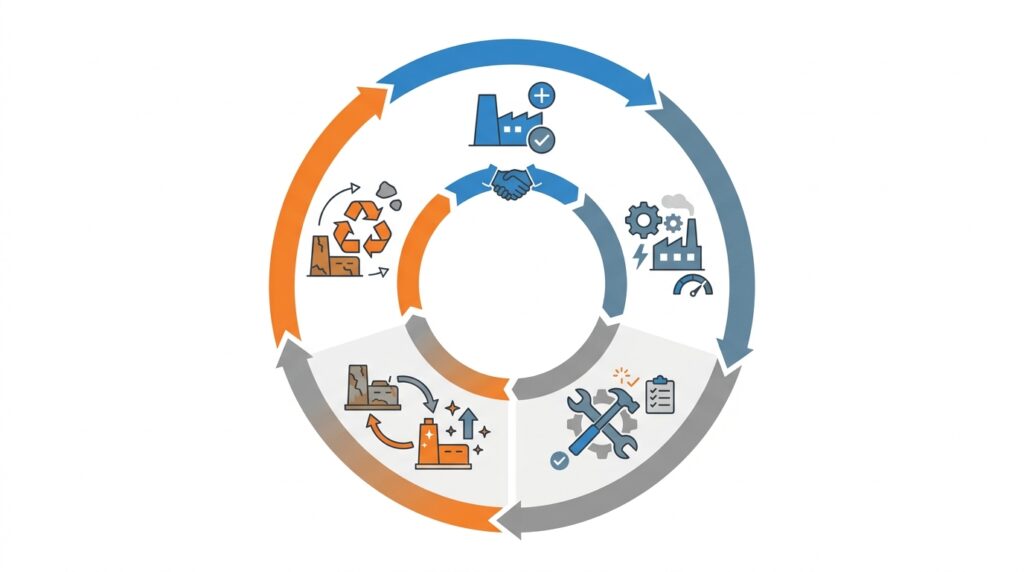
| Stage | Description |
|---|---|
| Acquisition | Design, procurement, and installation |
| Operation | Using the asset to deliver value |
| Maintenance | Maintaining the asset in good condition |
| Renewal | Replacing or upgrading the asset |
| Disposal | Decommissioning and disposing of the asset |
Asset management considers all stages of the lifecycle. Decisions made at the acquisition stage, such as equipment selection, materials, and design for maintainability, largely fix the cost and performance of the later stages. For this reason, lifecycle cost, not just purchase price, should guide decisions.
Asset Information
Asset information is the foundation of asset management.
Asset information types:
- Asset register: List of all assets.
- Technical data: Specifications, drawings, and manuals.
- Maintenance history: Records of maintenance and repairs.
- Performance data: Operating and performance data.
- Cost data: Acquisition, operating, and maintenance costs.
Asset information should be accurate, complete, and accessible. Poor data quality undermines every other asset management activity.
Asset Register
The asset register is the central record of all assets.
| Field | Description |
|---|---|
| Asset ID | Unique identifier (tag number) |
| Description | What the asset is |
| Location | Where the asset is |
| Parent/child relationship | Position in the asset hierarchy |
| Criticality | How critical the asset is |
| Manufacturer and model | Who made it and what it is |
| Acquisition date | When the asset was acquired |
| Cost | Acquisition cost |
| Expected life | Expected useful life |
| Maintenance strategy | How the asset is maintained |
| Warranty | Warranty terms and expiry |
The asset register should be maintained and updated throughout the asset’s life.
Asset Hierarchy and Tagging
The asset register works best when it is built on a clear asset hierarchy: plant, system, equipment, and component. A consistent tagging scheme links the asset register to the P&IDs, drawings, the maintenance system, and the control system. Agreeing the hierarchy and tagging convention early in the project avoids rework later.
Asset Management Systems and Software
Asset information is usually held in a computerized maintenance management system (CMMS) or enterprise asset management (EAM) system. For small plants, a simple CMMS is often enough. The key is that the system is configured with the asset register and maintenance plans before handover, so operations can use it from day one.
Asset Performance Monitoring
Asset performance monitoring tracks how assets are performing.
| Indicator | Description |
|---|---|
| Availability | Percentage of time the asset is available |
| Reliability | Frequency of failures (for example, mean time between failures) |
| Maintainability | Ease of maintenance (for example, mean time to repair) |
| Efficiency | How efficiently the asset operates |
| Cost | Operating and maintenance cost |
| Compliance | Compliance with regulations |
Performance monitoring identifies where improvement is needed. Condition monitoring techniques, such as vibration analysis, thermography, and oil analysis, provide early warning of deterioration on critical assets.
Maintenance Strategy
Maintenance strategy should be developed during the project, based on criticality. Common approaches include:
- Run to failure: Appropriate for non-critical, low-cost assets.
- Preventive maintenance: Time- or usage-based tasks.
- Condition-based or predictive maintenance: Tasks triggered by the measured condition of the asset.
- Reliability-centered maintenance (RCM): A structured method for selecting the right strategy for each asset, usually applied to critical assets.
Asset Risk Management
Asset risk management identifies and manages risks associated with assets.
| Risk | Description |
|---|---|
| Failure | Asset fails to perform |
| Safety | Asset poses safety risk |
| Environmental | Asset poses environmental risk |
| Regulatory | Asset does not meet regulatory requirements |
| Obsolescence | Asset or its spare parts become unavailable |
| Financial | Asset does not deliver expected value |
Risk management helps prioritize asset management efforts. Risks should be recorded, assessed, and linked to the controls in place, such as maintenance tasks, spares, or redundancy.
Asset Investment Planning
Asset investment planning determines when and how to invest in assets.
Investment planning considerations:
- Age: How old is the asset?
- Condition: What condition is the asset in?
- Performance: How is the asset performing?
- Risk: What risks does the asset pose?
- Cost: What is the cost of continuing versus replacing?
- Budget: What budget is available?
Investment planning ensures that assets are replaced or upgraded at the right time. Techniques such as lifecycle cost and net present value analysis support the decision between repair, refurbishment, and replacement.
Asset Management Maturity
Asset management maturity describes how developed an organization’s asset management practices are, from reactive and ad hoc to proactive and optimized. Assessing maturity helps identify where improvement is needed.
A simple view of maturity levels:
| Level | Description |
|---|---|
| Reactive | Assets are repaired after failure; little data or planning |
| Planned | Preventive maintenance and basic asset records are in place |
| Managed | Criticality, performance monitoring, and risk are used to guide decisions |
| Optimized | Lifecycle cost, condition data, and continual improvement drive decisions |
Small plants do not need to reach the highest level at once. A realistic target, reviewed periodically, is more valuable than an ambitious one that is never achieved.
Asset Management in EPC Projects
Asset management in EPC projects focuses on ensuring that assets are designed, built, and handed over in a way that supports long-term asset management.
EPC asset management activities:
- Asset data capture: Capturing asset data during design and construction.
- Asset register development: Developing the asset register.
- Criticality assessment: Identifying critical assets during design.
- Maintenance strategy development: Developing maintenance strategies.
- Spare parts planning: Planning spare parts requirements.
- Handover: Handing over asset information to operations.
Asset management should be considered from the beginning of the project. The owner should specify asset data requirements in the EPC contract, including the format, the tagging convention, the deliverables, and the timing. Requirements that are not in the contract are hard to obtain later.
Asset Data Capture
Asset data capture ensures that asset information is available for operations.
Asset data to capture:
- Asset identification: Asset ID and description.
- Technical data: Specifications, drawings, and manuals.
- Installation data: Installation date, location, and configuration.
- Test data: Factory acceptance test results, test results, and commissioning records.
- Maintenance data: Maintenance requirements and schedules.
- Warranty data: Warranty terms and conditions.
Asset data should be captured in a structured, accessible format. Collecting it as the project progresses, from vendor data through to as-built records, is far cheaper than reconstructing it afterwards.
Asset Handover
Asset handover transfers asset information from the project to operations.
Asset handover activities:
- Asset register handover: Providing the asset register to operations.
- Technical documentation handover: Providing manuals, as-built drawings, and specifications.
- Maintenance strategy handover: Providing maintenance strategies and plans.
- Spare parts handover: Providing spare parts and inventory.
- Warranty handover: Providing warranty information and contacts.
- Training: Training operations on asset management and the asset management system.
Asset handover ensures that operations has the information needed to manage assets. Handover should be verified, for example by checking a sample of assets against the register, before the project is closed out.
Asset Management in Small Plants
Small plants face particular challenges with asset management.
Challenges:
- Fewer resources for asset management.
- Less data on asset performance.
- Competing priorities.
- Limited expertise.
Practical approaches:
- Focus on critical assets: Prioritize management of critical assets.
- Use simple tools: A simple asset register and maintenance plan are sufficient.
- Use vendor data: Leverage vendor data and recommendations.
- Build capability gradually: Develop asset management skills over time.
- Learn from others: Learn from other plants’ experiences.
- Document decisions: Record asset management decisions and rationale.
Asset management does not need to be complex. It needs to be consistent.
Common Mistakes in Asset Management
Even experienced organizations make mistakes. Common ones include:
- No asset strategy: Assets not managed strategically.
- Poor asset data: Incomplete or inaccurate asset information.
- No asset register: Assets not recorded.
- Ignoring criticality: All assets treated the same.
- Reactive maintenance: Maintenance performed only after failure.
- No lifecycle approach: Assets managed without considering lifecycle.
- No investment planning: Assets replaced reactively.
- No performance monitoring: Asset performance not tracked.
- Poor handover: Asset information not transferred to operations.
- Data requirements missing from the contract: Asset data not specified, so not delivered.
- Treating asset management as a maintenance function: Strategy and decision-making not owned by management.
These mistakes are costly to correct. They are much cheaper to avoid through disciplined asset management.
How Japanese EPC Firms Approach Asset Management
Japanese engineering firms are known for their disciplined approach to asset management. Common characteristics include:
- Long-term focus: Assets are managed for their entire life.
- Thorough data capture: Asset data is captured comprehensively.
- Detailed planning: Maintenance and investment are planned carefully.
- Performance monitoring: Asset performance is tracked.
- Risk management: Asset risks are identified and managed.
- Continuous improvement: Lessons are captured and applied.
For plant owners, this often means assets that perform reliably and deliver value over their life.
How to Evaluate Asset Management Readiness
When reviewing asset management, ask:
| Question | Why It Matters |
|---|---|
| Is there an asset management policy? | Sets commitment and principles |
| Is there an asset strategy and plan? | Provides direction and action |
| Is there an asset register? | Records all assets |
| Are assets prioritized by criticality? | Focuses attention on the most important assets |
| Is asset data captured and specified in contracts? | Provides information for decision-making |
| Are maintenance strategies defined? | Ensures maintenance is focused and justified |
| Is asset performance monitored? | Identifies where improvement is needed |
| Is asset risk managed? | Identifies and manages risks |
| Is investment planned? | Ensures assets are replaced at the right time |
| Is asset information handed over? | Ensures operations can manage assets |
| Has maturity been assessed? | Shows where to improve |
A plant that addresses these questions is ready for effective asset management.
Key Takeaways
- Asset management is the coordinated activity of an organization to realize value from assets
- ISO 55001 provides a framework for an asset management system
- An asset management policy and asset management plans translate commitment into action
- Asset strategy defines how assets will be managed to achieve objectives
- Criticality analysis helps prioritize asset management efforts
- Asset lifecycle covers acquisition, operation, maintenance, renewal, and disposal
- Asset management sets the strategy; maintenance executes it
- Asset information, including the asset register, is the foundation of asset management
- Performance monitoring and risk management identify where improvement is needed
- Investment planning ensures assets are replaced at the right time
- Maturity assessment shows where improvement is needed
- EPC projects should specify, capture, and hand over asset data to operations
- Japanese EPC firms emphasize long-term focus and thorough data capture