By the EPC Partners Inc. Engineering Team
Technology selection is one of the most consequential decisions in an industrial plant project. The technology chosen determines how the plant works, how efficient it is, how reliable it is, and how much it costs to build and operate. A good choice can deliver decades of reliable, efficient operation. A poor one can lead to underperformance, high costs, and constant problems.
At EPC Partners Inc., we have supported technology evaluation and selection across a wide range of plant types: geothermal power plants in Kenya, Ethiopia, Indonesia, Iceland, and Japan; desalination facilities in the UAE, Saudi Arabia, Oman, and Qatar; thermal power plants in Vietnam, Bangladesh, and Japan; and water treatment plants in Vietnam, Kuwait, and Qatar. Each project has presented different options and different constraints, and each has reinforced the same lesson: the best technology is not the most advanced one. It is the one that best fits the plant, the site, and the owner’s long-term needs.
This matters most for small to medium-scale industrial plants, where there is less margin for error. A technology that is unsuitable for the plant’s scale, fuel, or operating conditions can be difficult and expensive to fix after construction.
This article explains the key practices in plant technology selection, from defining requirements to evaluating options and confirming the decision, drawing on our experience in Asia, the Middle East, Africa, and Europe.
What Is Technology Selection?
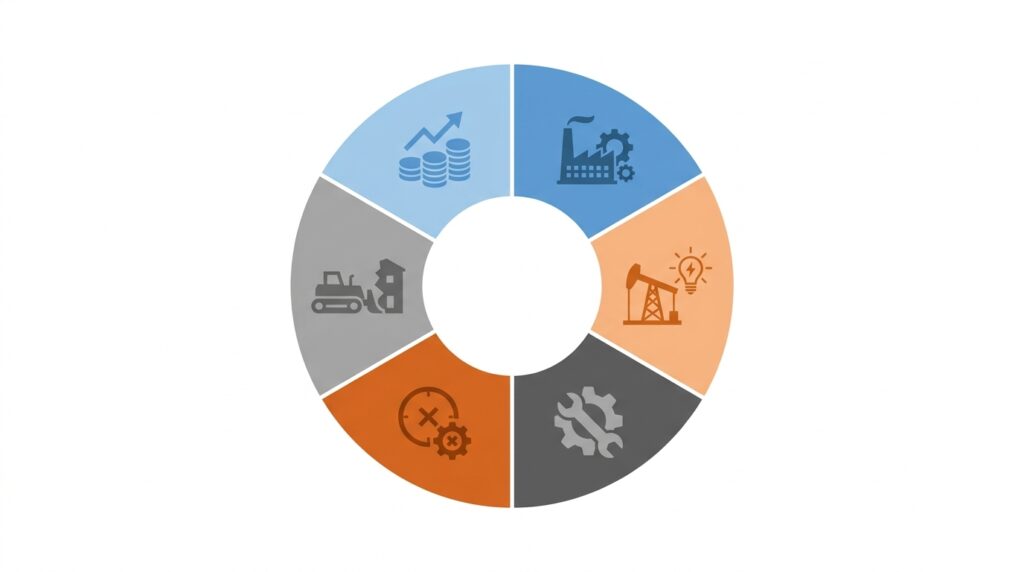
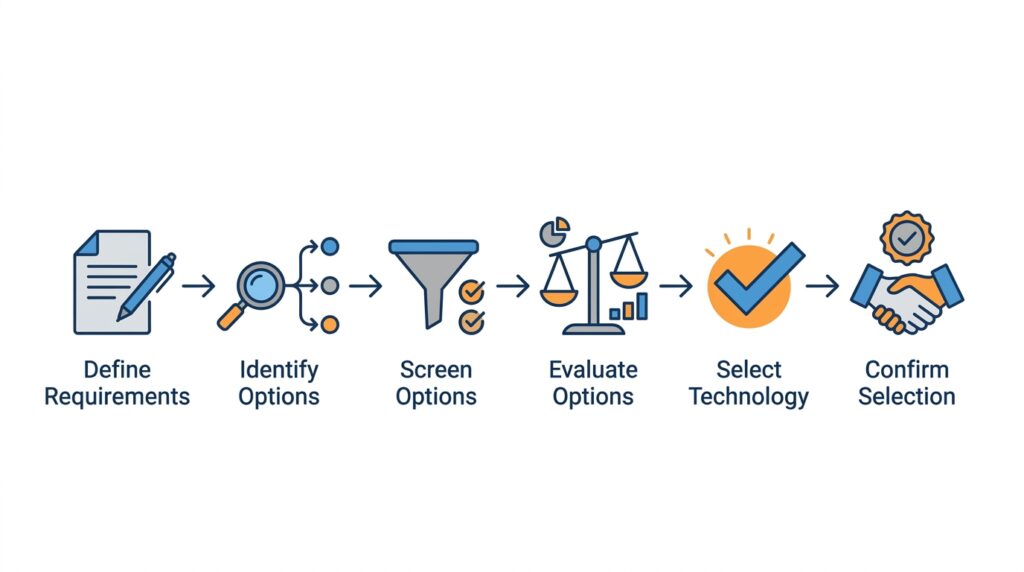
Technology selection is the structured process of choosing the technology a plant will use. It has six steps:
- Define requirements: what the technology must do.
- Identify options: which technologies are available.
- Screen options: which options meet the minimum requirements.
- Evaluate options: how the remaining options compare in detail.
- Select technology: which option is best overall.
- Confirm selection: whether the chosen technology is suitable once contract terms, risks, and stakeholder views are considered.
The process should be transparent and documented, so that anyone can later see why a technology was chosen.
Why Technology Selection Matters
Technology selection directly affects plant performance.
| Factor | Good Technology Selection | Poor Technology Selection |
|---|---|---|
| Performance | Technology meets requirements | Technology underperforms |
| Reliability | Technology proven and reliable | Frequent failures |
| Cost | Lowest lifecycle cost | Higher capital and operating costs |
| Schedule | Technology available and proven | Delays and rework |
| Compliance | Technology meets regulations | Non-compliance |
| Safety | Hazards understood and controlled | Unmanaged process and equipment hazards |
| Flexibility | Technology adapts to changing needs | Technology becomes obsolete |
For small plants, technology selection often decides whether the plant performs as required.
When Technology Selection Happens
Technology selection is not a single event. It progresses through project phases, with increasing detail and commitment.
| Phase | Technology Selection Activity |
|---|---|
| Feasibility study | Screen broad technology families; confirm that a viable option exists |
| Pre-FEED / FEED | Narrow to a preferred technology; define performance and interface basis |
| Bidding and contract award | Confirm vendor, guarantees, and technical scope |
| Detailed engineering | Confirm integration, design details, and final equipment data |
The earlier the decision, the greater its influence on cost and performance, and the more expensive it is to reverse. Time spent on selection in the early phases is among the best-value effort in the whole project.
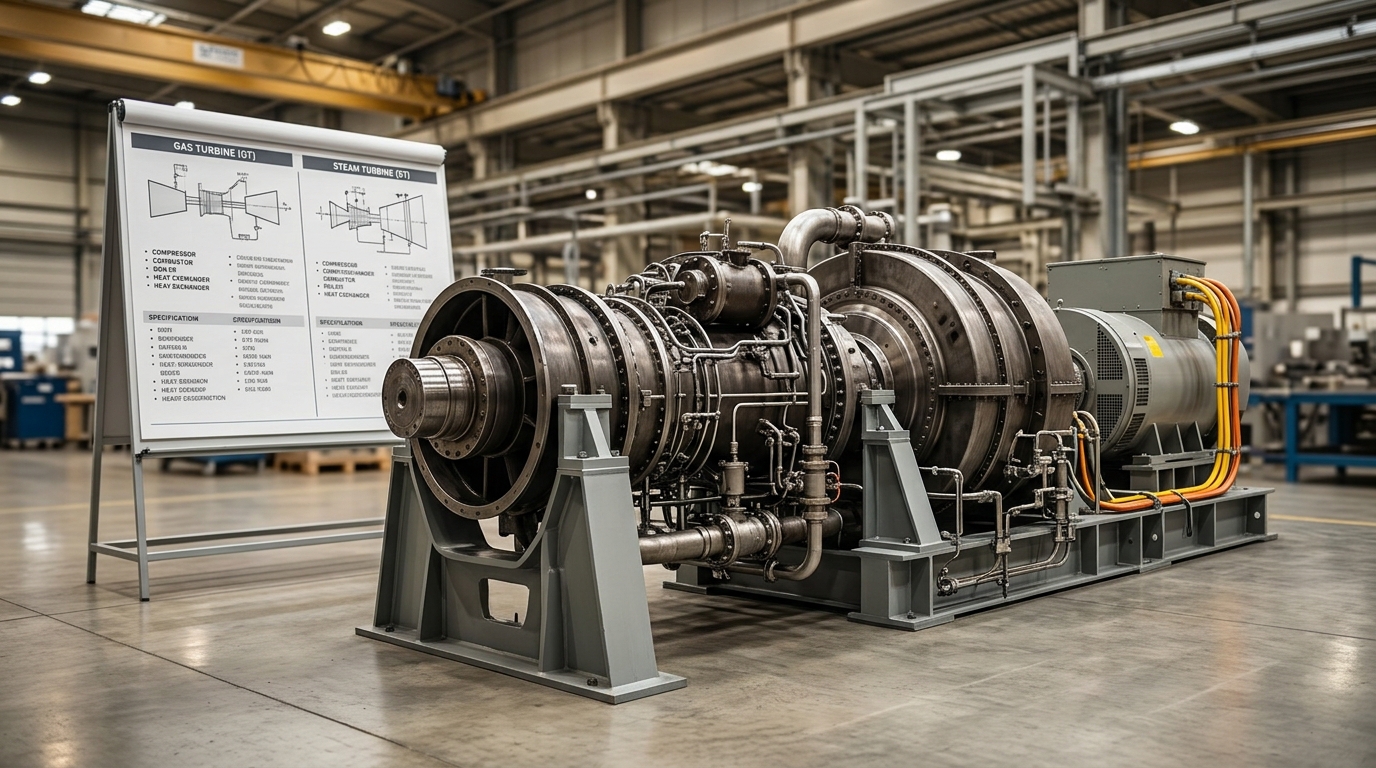
On geothermal projects such as Olkaria I Unit 6 in Kenya (83 MW) and Muara Laboh in Indonesia (85.2 MW), technology selection begins during feasibility and is refined through FEED. The characteristics of the geothermal resource, namely steam quality, pressure, and non-condensable gas content, drive the choice of turbine and surface equipment.
Step 1: Define Requirements
Requirements describe what the plant needs, before any technology is considered. They should be specific, measurable, and achievable.
| Category | Examples |
|---|---|
| Performance | Output, efficiency, emissions |
| Fuel or resource | Type, quality, availability |
| Operating conditions | Temperature, pressure, load profile |
| Reliability | Availability, maintenance requirements |
| Compliance | Regulatory and permit requirements |
| Site | Conditions, space, utilities |
| Safety and environment | Hazard exposure, environmental limits |
| Cost | Capital and operating cost |
| Schedule | Delivery and construction time |
It helps to separate mandatory requirements (must be met, or the option is eliminated) from desirable requirements (add value but are not essential). This distinction drives screening and evaluation later.
Technical Requirements
Technical requirements define what the technology must achieve: capacity, efficiency, emissions limits, the fuels or resources it must handle, the expected load profile, required turndown, reliability targets, and whether capacity must be expandable later. They should be based on the plant’s actual needs, not aspirational targets. A plant that will run at steady base load has very different needs from one that must follow a variable load.
Commercial Requirements
Commercial requirements set the financial and contractual limits: capital budget, acceptable operating cost, target lifecycle cost, available financing (and what lenders will require of the technology), the date the plant must be operating, and the level of risk the owner can accept. They should be realistic and aligned with the project’s objectives.
Step 2: Identify Technology Options
Options should be identified broadly before narrowing down. Useful sources include industry knowledge of similar plants, vendor information, technical literature, visits to operating plants, independent consultants, and trade shows. Using several sources reduces the risk of overlooking a good option or relying on a single vendor’s view of the market.
Step 3: Screen Options
Screening removes options that fail the mandatory requirements.
| Criterion | Question |
|---|---|
| Technical suitability | Does the technology meet technical requirements? |
| Commercial suitability | Does it meet commercial requirements? |
| Regulatory suitability | Does it meet regulatory requirements? |
| Availability | Can it actually be supplied for this project? |
| Maturity | Is it proven (see TRL below)? |
Screening should use objective criteria, not preference. Record each eliminated option together with the reason, so the decision can be explained later.
Technology Readiness Level (TRL)
Technology readiness level (TRL) is a scale from 1 to 9 that indicates how mature a technology is, from basic research (TRL 1) to proven in operation (TRL 9). For industrial plants, TRL 8 or 9 is generally preferred.
| TRL | Description |
|---|---|
| 1–2 | Basic principles observed; concept formulated |
| 3–4 | Proof of concept; laboratory validation |
| 5–6 | Validation and demonstration in a relevant environment (pilot or prototype) |
| 7 | Prototype demonstrated in an operational environment |
| 8 | System complete and qualified |
| 9 | System proven in successful operation |
A technology at TRL 5 or 6 may be promising, but it carries performance, schedule, and cost risks that a small plant is rarely positioned to absorb. TRL should be assessed for the technology at the scale and in the application proposed. A technology proven at large scale is not necessarily proven at small scale, and one proven on one fuel is not necessarily proven on another.
Reference Plants
Reference plants (operating plants using the same technology) provide valuable evidence of performance, reliability, and support. Visiting reference plants and speaking with their operators is one of the most effective ways to evaluate technology.
When assessing a reference plant, consider:
- Similarity: are the scale, fuel, and operating conditions comparable to the proposed plant?
- Operating history: how long has it operated, and what are its actual availability and efficiency?
- Problems and fixes: what issues have occurred, and how were they resolved?
- Vendor support: how did the vendor respond when problems arose?
- Independence: where possible, speak with operators without the vendor present.
Vendor reference lists naturally highlight the best installations. Asking for the complete list, including the oldest and least successful, gives a more balanced picture. In our experience on geothermal projects in Kenya, Indonesia, and Iceland, speaking directly with operators has often revealed practical issues that vendor literature does not mention.
Step 4: Evaluate Options
Evaluation compares the remaining options in detail.
| Criterion | Key Question |
|---|---|
| Technical performance | How well does it meet performance requirements? |
| Reliability and maturity | How proven and reliable is it? |
| Capital cost | What is the cost to acquire and install? |
| Operating cost | What are fuel, power, consumable, and labor costs? |
| Lifecycle cost | What is the total cost over the plant’s life? |
| Compliance | Does it meet regulations? |
| Safety and environment | What hazards and environmental impacts does it bring? |
| Schedule | Can it be delivered on time? |
| Integration | How well does it fit existing systems? |
| Flexibility | Can it adapt to changing needs? |
| Vendor support | Is support available over the plant’s life? |
The relative importance of each criterion depends on the project. Criteria and weights should be defined before evaluation begins and applied consistently. Defining them after seeing vendor proposals invites bias, whether intentional or not.
Evaluation Methods
| Method | Description | When to Use |
|---|---|---|
| Scoring matrix | Score options against weighted criteria | Most evaluations |
| Lifecycle costing | Compare lifecycle costs | When cost is a key criterion |
| Risk assessment | Assess risks of each option | When risk is significant |
| Sensitivity analysis | Test how results change | When uncertainty is high |
| Benchmarking | Compare against similar plants | When data is available |
In practice, methods are combined: a scoring matrix for the overall comparison, lifecycle costing for the cost criterion, and sensitivity analysis to test whether the ranking holds up.
Scoring Matrix
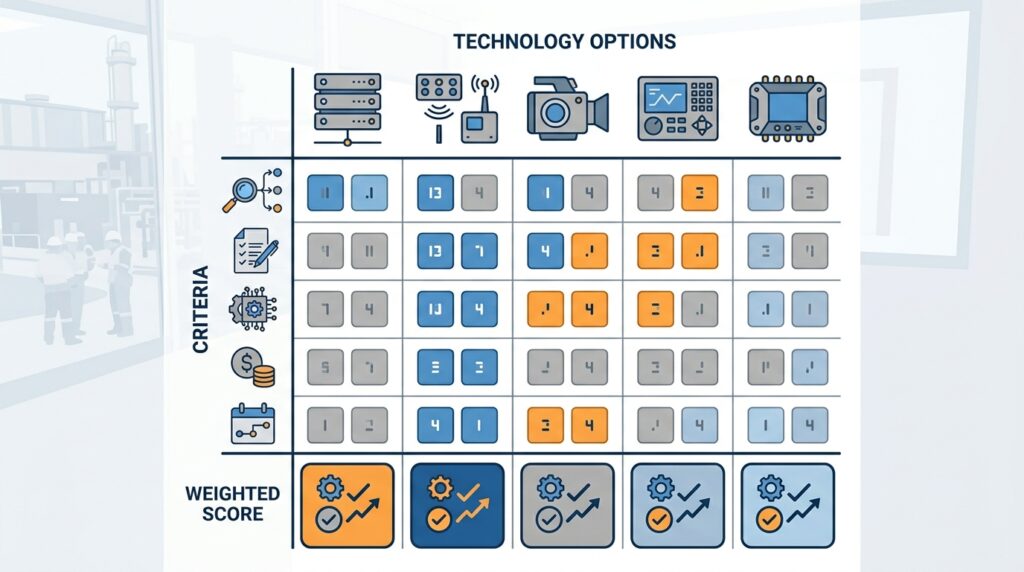
A scoring matrix is the most common evaluation method. The steps are:
- Define criteria: decide what will be assessed.
- Assign weights: reflect each criterion’s importance. Weights should total 100%.
- Score options: rate each option against each criterion (for example, 1 to 5).
- Calculate weighted scores: multiply each score by its weight and sum.
- Rank options: the highest total is the leading option.
- Test the result: check whether the ranking changes if weights or scores change.
An illustrative example (values are for demonstration only):
| Criterion | Weight | Option A | Option B | Option C |
|---|---|---|---|---|
| Technical performance | 25% | 4 | 5 | 3 |
| Reliability / maturity | 25% | 5 | 3 | 4 |
| Lifecycle cost | 25% | 3 | 4 | 4 |
| Compliance and safety | 10% | 4 | 4 | 4 |
| Vendor support | 10% | 5 | 3 | 3 |
| Schedule | 5% | 4 | 3 | 4 |
| Weighted score | 100% | 4.10 | 3.85 | 3.65 |
For Option A, the calculation is (0.25 × 4) + (0.25 × 5) + (0.25 × 3) + (0.10 × 4) + (0.10 × 5) + (0.05 × 4) = 4.10.
Scoring matrices make evaluation transparent and consistent. Their weakness is that a good average can hide a critical weakness, so mandatory requirements should be handled in screening (pass or fail), not traded off in the scores.
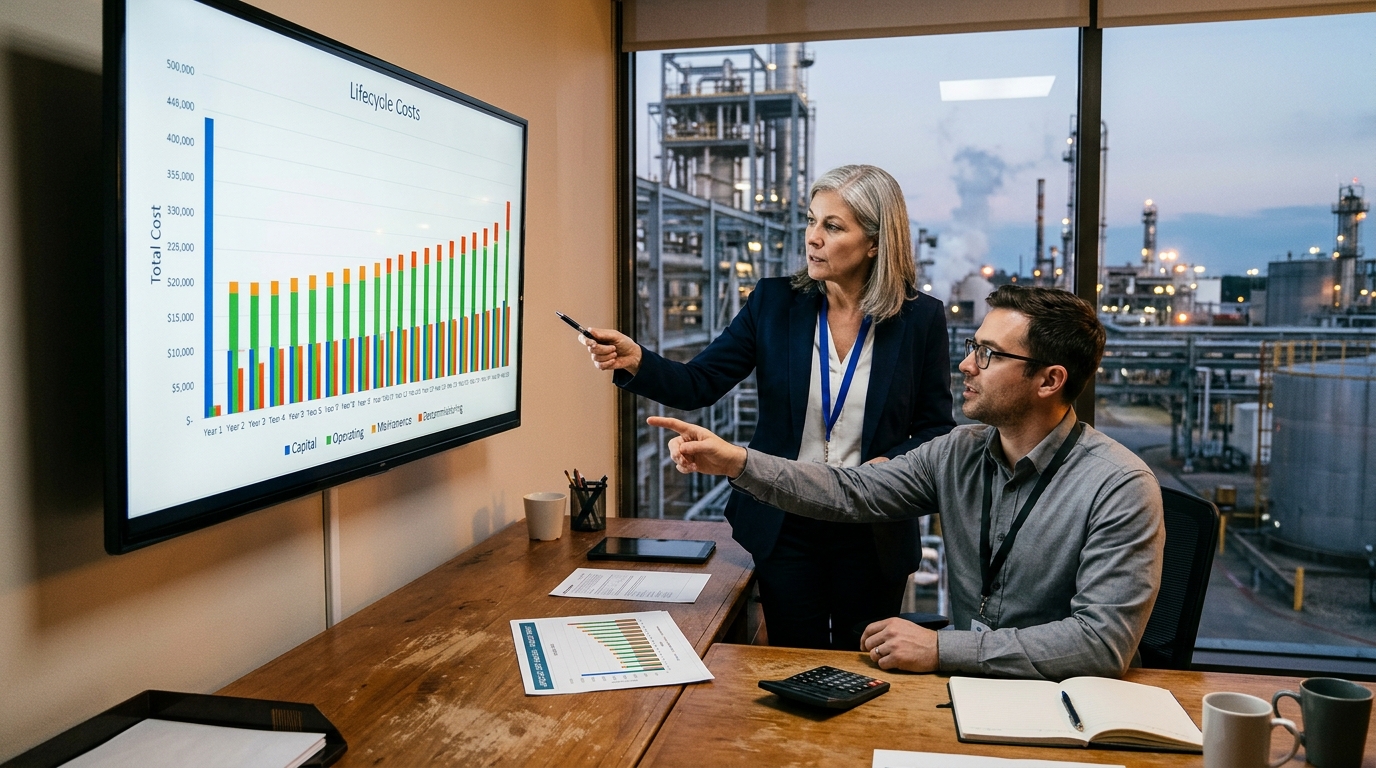
Lifecycle Costing
Lifecycle costing compares the total cost of each option over its life:
- Capital cost: acquisition and installation.
- Operating cost: fuel, power, and consumables.
- Maintenance cost: inspection, repair, and replacement.
- Downtime cost: lost production.
- Decommissioning cost: shutdown and disposal.
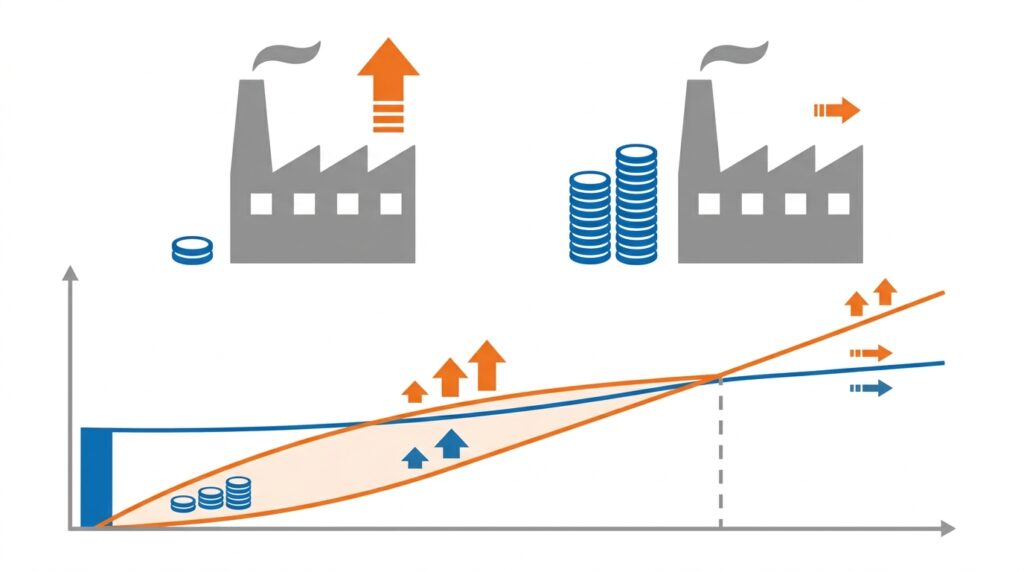
Fuel price, plant utilization, and discount rate are often the assumptions with the largest influence on the result. An option with higher capital cost frequently wins on lifecycle cost, which is why selecting on capital cost alone is a common mistake. Lifecycle cost estimates should use realistic assumptions and be tested with sensitivity analysis.
Sensitivity Analysis
Sensitivity analysis tests how robust the result is. If the preferred option changes when a key assumption (fuel price, efficiency, availability, or a criterion weight) moves within a realistic range, the decision is fragile and deserves more scrutiny. If the ranking stays the same, confidence in the decision is much higher.
Technology Risk Assessment
Risk assessment identifies and evaluates the risks of each technology, including their likelihood and impact, and identifies mitigation measures such as performance guarantees, pilot testing, or vendor support commitments.
| Risk | Description |
|---|---|
| Technical risk | Technology may not perform as expected |
| Maturity risk | Technology may be unproven |
| Scale-up risk | Performance proven at one scale may not hold at another |
| Vendor risk | Vendor may not deliver or support |
| Regulatory risk | Technology may not meet regulations |
| Obsolescence risk | Technology may become obsolete |
| Integration risk | Technology may not integrate with other systems |
| Operability risk | Technology may be too complex for available staff |
Technology Integration
Technology integration considers how the new technology will interface with existing systems: control systems, utilities, and infrastructure. Integration risks should be assessed as part of technology selection. Key questions:
- Control systems: is the technology compatible with the plant control system and communication protocols?
- Utilities: can existing utilities (power, water, steam, compressed air) supply it?
- Infrastructure: does the site have the space, foundations, and access it needs?
- Existing equipment: does it work with existing equipment in brownfield projects?
- Interfaces: who is responsible for each interface between suppliers?
A technology that performs well on its own but integrates poorly can still fail to deliver the plant’s required performance.
Role of Operations and Maintenance
Operations and maintenance personnel should be involved in technology selection. Their experience with existing equipment can identify practical issues (maintainability, spare parts, and operating complexity) that may not be visible to engineers. They can answer questions such as:
- Can equipment be accessed and repaired safely and quickly?
- Are spare parts available locally, and at what lead time and cost?
- Can the available staff operate the technology reliably?
- What training is needed, and is the necessary skill base available?
- What has worked or failed in similar equipment already on site?
The people who will run the plant for decades should have a voice in choosing it.
Proven Technology vs. Innovation
A key decision is whether to use proven or innovative technology.
| Aspect | Proven Technology | Innovative Technology |
|---|---|---|
| Risk | Lower | Higher |
| Performance | Known | Potentially better |
| Cost | Known | Uncertain |
| Support | Widely available | Limited |
| Schedule | Predictable | Uncertain |
| Financing | Easier to finance | May require extra guarantees or lender comfort |
For small plants, proven technology is often the safer choice. If innovative technology is considered, risk can be reduced through pilot or demonstration testing, strong performance guarantees, a fallback option, and contingency in cost and schedule.
An Illustrative Example: Choosing a Geothermal Power Conversion Technology
The following simplified example shows how requirements drive technology choice. It is illustrative, not a description of a specific project.
A geothermal developer must choose between a flash steam plant and a binary (organic Rankine cycle) plant. The requirements and resource data point in different directions:
- Resource temperature: high-temperature reservoirs generally suit flash steam plants, while lower-temperature resources often suit binary plants.
- Non-condensable gases: a high gas content increases the power needed to remove gas from the condenser in a flash plant, which reduces net output. A binary plant keeps the geothermal fluid in a closed loop, which can reduce emissions and gas-handling issues.
- Brine chemistry: scaling and corrosion tendencies affect heat exchanger and piping design.
- Cooling: water availability or ambient temperature affects cooling system choice and output.
- Reference plants: the team visits operating plants with similar resources to compare real availability and maintenance experience.
A scoring matrix and lifecycle cost comparison are then tested with sensitivity analysis on resource performance and gas content. The lesson is that resource data, not vendor preference, should lead the decision, and that measured field data should be available before the technology is fixed.
Vendor Evaluation
Vendor evaluation is an important part of technology selection. Assess:
- Experience: has the vendor supplied similar technology at similar scale?
- References: what do previous customers say?
- Financial strength: is the vendor stable enough to honor warranties?
- Support and spare parts: is service and parts supply available locally and over the plant’s life?
- Training: does the vendor train operators and maintenance staff?
- Guarantees: what performance guarantees and warranties will the vendor commit to?
On geothermal and thermal projects, we have seen that strong vendor support, particularly for specialized equipment such as turbines and control systems, can make the difference between a smooth project and a difficult one.
Performance Guarantees and Contract Terms
Technology selection should be linked to the contract. Claims made during evaluation (efficiency, availability, emissions, output) should become measurable guarantees with defined test methods and consequences, such as liquidated damages, for shortfalls. A technology advantage that is not backed by a guarantee is only a promise.
Confirming and Documenting the Decision
Before final approval, confirm the selection through five reviews:
- Technical review: does the technology meet all requirements?
- Commercial review: is the commercial case sound?
- Risk review: are the risks acceptable?
- Stakeholder review: do stakeholders agree?
- Contract review: are the contract terms acceptable?
Then document the decision in a technology selection report. It should capture the requirements, options considered, screening results, evaluation method and scores, risk assessment, assumptions, and the reasons for the final choice. This record protects the project when questions arise later, helps new team members understand the basis of design, and supports lessons learned on future projects.
Technology Selection in Small Plants
Small plants face particular challenges: fewer resources for evaluation, less in-house expertise, less access to vendor information, and competing priorities. Practical approaches include:
- Focus on proven technology to reduce risk.
- Use vendor data and references, but verify them independently.
- Seek expert advice from consultants or experienced colleagues.
- Visit operating plants to see the technology in service.
- Involve operations and maintenance early.
- Document decisions so the basis is on record.
- Consider lifecycle cost, not just capital cost.
Technology selection does not need to be complex. It needs to be thorough and honest.
Common Mistakes in Technology Selection
Even experienced organizations make mistakes. Common ones include:
- Selecting on capital cost alone, ignoring operating and lifecycle costs.
- Choosing unproven technology and taking excessive risk.
- Ignoring site conditions or fuel quality, so the technology does not suit the plant.
- Ignoring regulatory requirements, so the technology cannot meet them.
- Having no evaluation criteria, or setting criteria after seeing proposals.
- Ignoring scale, assuming performance at one scale applies at another.
- Ignoring integration with existing systems.
- Excluding operations and maintenance and missing practical issues.
- Not documenting the decision.
- Rushing the selection, leaving insufficient time for thorough evaluation.
- Ignoring vendor support.
These mistakes are costly to correct. They are much cheaper to avoid through disciplined technology selection.
How EPC Partners Inc. Approaches Technology Selection
Our approach is built on a few principles:
- Resource and site data first: requirements come from measured conditions, not assumptions.
- Clear criteria set in advance: weights are agreed before proposals are reviewed.
- Preference for proven technology where reliability is the priority.
- Lifecycle focus: operating, maintenance, and downtime costs are considered alongside capital cost.
- Evidence from operating plants: reference visits and operator interviews.
- Documented decisions: a selection report that others can review.
These principles reflect our work supporting power, water, and industrial plant projects across Asia, the Middle East, Africa, and Europe.
How to Evaluate Technology Selection Readiness
When reviewing a technology selection, ask:
| Question | Why It Matters |
|---|---|
| Are requirements clearly defined? | Defines what the technology must do |
| Have all options been identified? | Ensures none is overlooked |
| Is technology maturity (TRL) assessed? | Avoids unproven technology |
| Have reference plants been visited or consulted? | Provides evidence of real performance |
| Are options evaluated against criteria set in advance? | Ensures consistent evaluation |
| Is lifecycle cost considered? | Ensures total cost is understood |
| Is risk assessed, including integration? | Accounts for uncertainty |
| Have operations and maintenance been involved? | Captures practical experience |
| Is vendor support evaluated? | Ensures support is available |
| Are guarantees defined in the contract? | Turns claims into commitments |
| Is the selection documented and confirmed? | Ensures transparency and suitability |
A project that can answer these questions is ready for sound technology selection.
Frequently Asked Questions
What is the first step in selecting plant technology? Define the requirements: performance, fuel or resource, operating conditions, reliability, compliance, site, cost, and schedule. Without clear requirements, options cannot be compared fairly.
What TRL should an industrial plant technology have? TRL 8 or 9 is generally preferred, meaning the system is complete and qualified or proven in operation. Lower TRLs add risk that most plant owners, especially of small plants, are not positioned to absorb.
Should we choose the cheapest technology? Not on capital cost alone. Operating, maintenance, and downtime costs over the plant’s life often outweigh the initial price difference, so lifecycle cost should be compared.
How important are reference plants? Very. They show real availability, efficiency, and maintenance experience. Visit them and talk to operators where possible.
Who should be involved in the decision? Engineers, commercial and project staff, and the operations and maintenance personnel who will run the plant, with input from independent experts where in-house experience is limited.
Conclusion
Technology selection is critical to plant success. For small to medium-scale industrial plants, it determines whether the plant performs as required, reliably and economically.
By focusing on requirements definition, option identification, maturity assessment, evaluation, risk assessment, vendor evaluation, and confirmation, and by involving operations and maintenance along the way, owners and project teams can ensure that the technology selected is the best fit for the plant.
Key Takeaways
- Technology selection determines how the plant works, how efficient it is, and how much it costs
- The process includes requirements definition, option identification, screening, evaluation, selection, and confirmation
- Requirements cover performance, fuel, operating conditions, reliability, compliance, site, cost, and schedule
- Technology readiness level (TRL) indicates maturity; TRL 8 or 9 is generally preferred for industrial plants
- Reference plants provide evidence of performance, reliability, and support
- Evaluation methods include scoring matrices, lifecycle costing, risk assessment, and sensitivity analysis
- Integration with existing control systems, utilities, and infrastructure should be assessed as part of selection
- Operations and maintenance personnel should be involved in the decision
- Proven technology offers lower risk; innovative technology may offer better performance but higher risk
- Vendor evaluation and contract guarantees are part of technology selection
- Small plants should focus on proven technology and lifecycle cost
References and Further Reading
- ISO 16290:2013, Space systems — Definition of the Technology Readiness Levels (TRLs) and their criteria of assessment
- ISO 31000:2018, Risk management — Guidelines
- IEC 60300-3-3, Dependability management — Application guide — Life cycle costing
About the Author
EPC Partners Inc. is a Japanese EPC support firm with experience supporting power, water, and industrial plant projects across Asia, the Middle East, Africa, and Europe. For more information, visit our project list.
This article provides general information for educational purposes. Technology selection for a specific project should be based on project-specific data and qualified engineering advice.