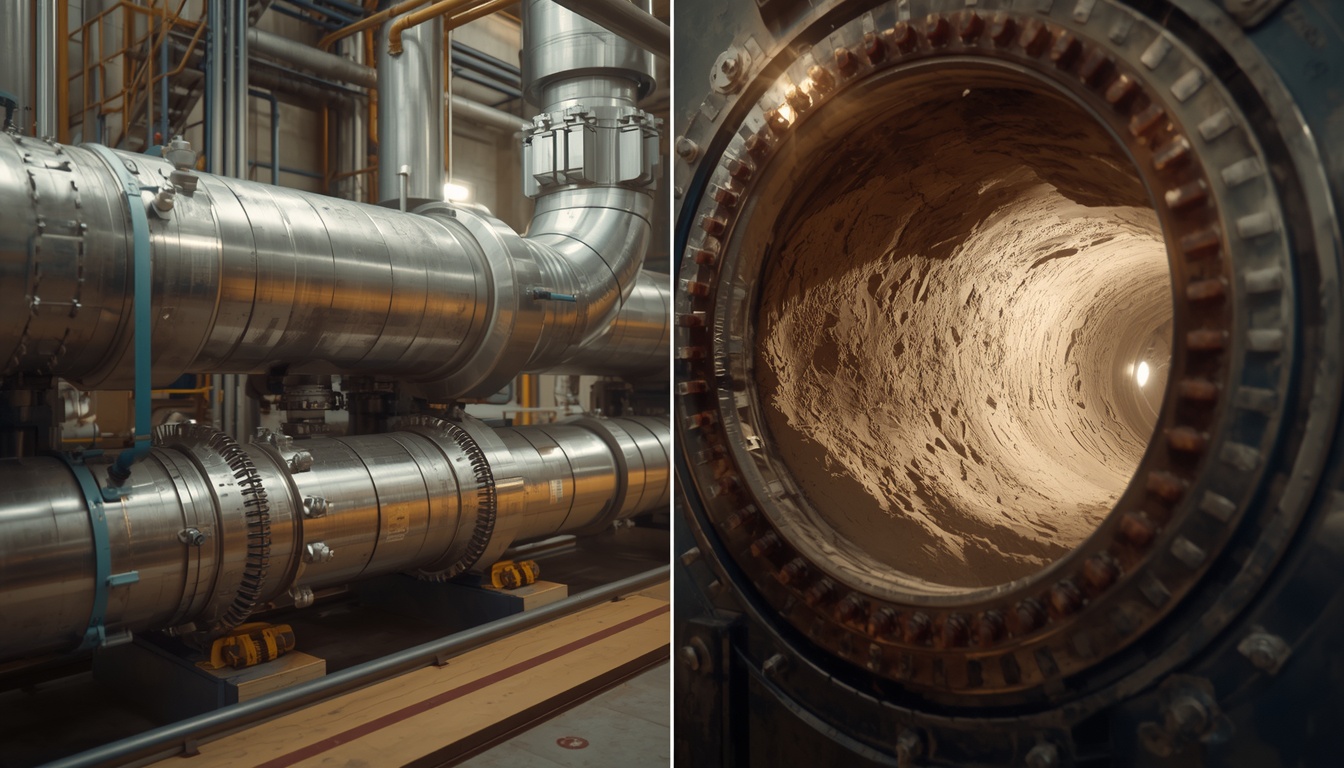
Insulation and refractory systems are essential to plant efficiency, safety, and equipment longevity. Insulation reduces heat loss from hot surfaces and prevents heat gain on cold surfaces. Refractory protects equipment from extreme temperatures and chemical attack. Together, they determine how much energy the plant consumes, how safe it is to operate, and how long critical equipment lasts.
For small to medium-scale industrial plants, insulation and refractory design is especially critical because there is less margin for error and fewer resources to manage unexpected failures. Poor insulation increases operating cost and creates safety hazards. Poor refractory leads to equipment damage and unplanned outages.
This article covers the key considerations in insulation and refractory system design for industrial plants, from material selection to installation and maintenance.
The Role of Insulation
Insulation serves several essential functions in an industrial plant:
Energy efficiency: Reducing heat loss from hot surfaces and heat gain on cold surfaces.
Personnel protection: Preventing burns from hot surfaces and frostbite from cold surfaces.
Process control: Maintaining process temperatures within required limits.
Condensation control: Preventing condensation on cold surfaces.
Freeze protection: Preventing liquids from freezing in cold weather.
Noise reduction: Some insulation materials also provide acoustic insulation.
Without proper insulation, a plant consumes more energy, operates less safely, and may not meet process requirements.
The Role of Refractory
Refractory materials protect equipment from extreme temperatures and chemical attack. They are used in:
Boilers and furnaces: Lining the combustion chamber.
Incinerators: Protecting the shell from high-temperature gases.
Kilns: Lining the rotating drum.
Reactor vessels: Protecting the shell from process temperatures.
Ductwork and stacks: Protecting from hot exhaust gases.
Refractory must withstand high temperatures, thermal cycling, chemical attack, and mechanical abrasion. Failure leads to equipment damage, energy loss, and safety hazards.
Insulation Materials
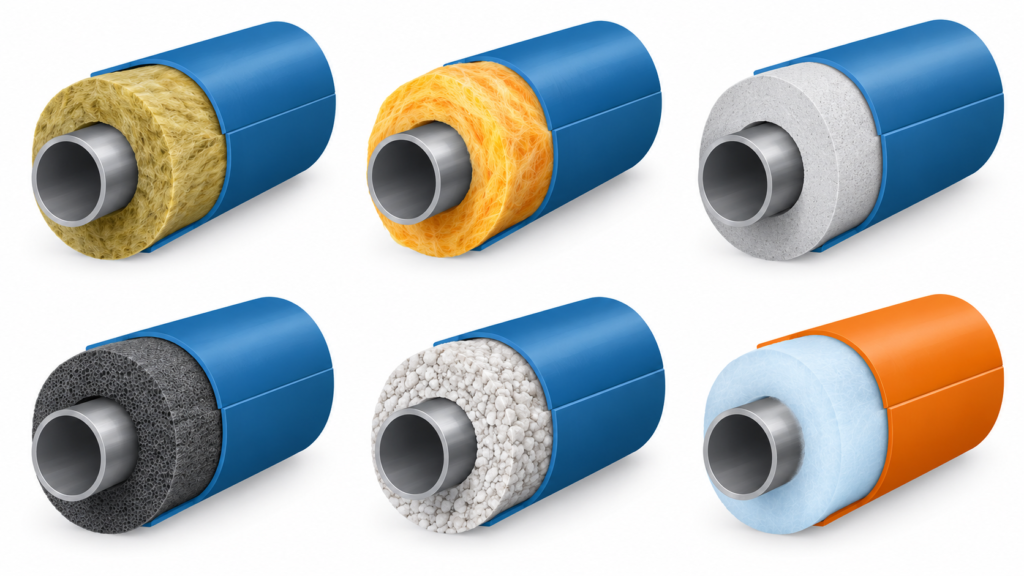
Common insulation materials for industrial plants
Insulation materials vary widely in temperature range, thermal conductivity, and cost.
| Material | Temperature Range | Characteristics | Typical Use |
|---|---|---|---|
| Mineral wool | Up to 650°C | Good thermal performance, fire-resistant | Pipes, vessels, equipment |
| Fiberglass | Up to 450°C | Lightweight, economical | Pipes, ducts, equipment |
| Calcium silicate | Up to 650°C | High strength, moisture-resistant | Pipes, vessels |
| Cellular glass | Up to 430°C | Closed-cell, moisture-resistant | Cold surfaces, underground |
| Perlite | Up to 650°C | Lightweight, thermal-resistant | Vessels, equipment |
| Aerogel | Up to 650°C | Excellent thermal performance, thin profile | Space-constrained applications |
| Polyurethane foam | Up to 120°C | Excellent for cold service | Cold pipes, tanks |
| Elastomeric foam | Up to 120°C | Flexible, closed-cell | HVAC, cold service |
Selection depends on temperature, environment, mechanical requirements, and cost.
Insulation Forms
Insulation is supplied in several forms, each suited to different applications.
| Form | Characteristics | Typical Use |
|---|---|---|
| Board | Rigid or semi-rigid panels | Vessels, tanks, large ducts |
| Blanket | Flexible, rolled | Large surfaces, irregular shapes |
| Pipe section | Pre-formed cylindrical | Pipes |
| Block | Rigid, molded | Vessels, equipment |
| Foam | Sprayed or poured | Complex shapes, voids |
The form affects installation speed, fit, and performance. Pre-formed pipe sections are faster to install than blankets on pipes, but blankets may be better for irregular shapes.
Refractory Materials
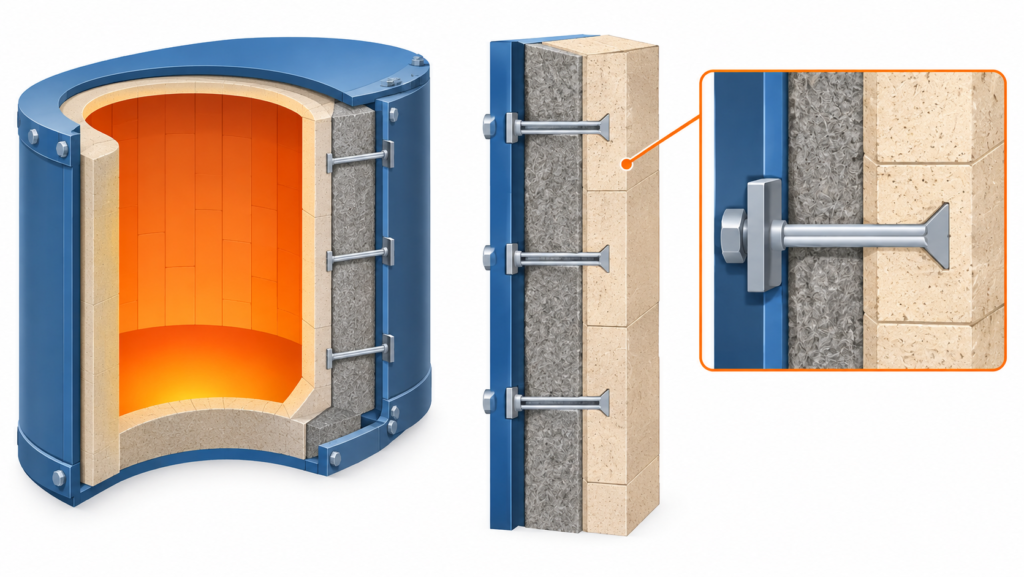
Refractory lining cross-section for industrial furnaces
Refractory materials are classified by their chemical composition and temperature resistance.
| Material | Temperature Range | Characteristics | Typical Use |
|---|---|---|---|
| Fireclay brick | Up to 1,400°C | Economical, moderate resistance | Boilers, furnaces |
| High-alumina brick | Up to 1,800°C | High temperature resistance | High-temperature furnaces |
| Silica brick | Up to 1,700°C | Resistance to acid slags | Glass furnaces, coke ovens |
| Magnesia brick | Up to 2,000°C | Resistance to basic slags | Steel furnaces |
| Castable refractory | Varies | Easy to install, complex shapes | Boilers, incinerators |
| Ceramic fiber | Up to 1,400°C | Lightweight, low thermal mass | Furnace linings, seals |
Selection depends on temperature, atmosphere, slag composition, and mechanical requirements.
Key Design Considerations for Insulation
1. Temperature Range
Insulation must be rated for the maximum operating temperature and any transient excursions.
2. Thermal Performance
Insulation thickness determines heat loss or gain. Thicker insulation reduces energy loss but increases cost and space requirements. The economic thickness of insulation is the thickness that minimizes total cost—capital cost plus the present value of energy losses over the plant’s life. It depends on energy prices, insulation cost, and the expected service life.
3. Moisture Resistance
Moisture reduces insulation performance and causes corrosion under insulation (CUI). Closed-cell materials and vapor barriers help prevent moisture ingress. Cold service insulation must prevent condensation and ice formation. Vapor barriers are critical to keep moisture out, and closed-cell materials are often preferred because they do not absorb water.
4. Mechanical Protection
Insulation must be protected from mechanical damage by metal jacketing, cladding, or coatings.
5. Fire Safety
Insulation materials must meet fire safety requirements. Some materials are non-combustible; others require fire-retardant treatments.
6. Installation and Maintenance
Insulation must be installed correctly and maintained over time. Damaged insulation must be repaired promptly.
Key Design Considerations for Refractory
1. Temperature and Atmosphere
Refractory must withstand the maximum temperature and the chemical composition of the atmosphere (oxidizing, reducing, or corrosive).
2. Thermal Cycling
Refractory in cycling service experiences thermal expansion and contraction. Design must accommodate this without cracking or spalling.
3. Mechanical Loads
Refractory must withstand mechanical loads from the process, including abrasion from solids and impact from materials.
4. Anchoring
Refractory must be properly anchored to the equipment shell. Anchors must withstand temperature and corrosion. Refractory anchors are typically made from heat-resistant alloys or ceramics. They must be designed to withstand thermal expansion, corrosion, and mechanical loads without failing.
5. Installation
Refractory installation requires skilled labor and careful quality control. Improper installation leads to premature failure. New refractory must be dried out gradually before service. A controlled heat-up schedule removes moisture and allows the refractory to cure without cracking. Skipping this step can cause premature failure.
6. Maintenance
Refractory degrades over time and requires inspection and repair. Regular inspection helps detect problems before failure.
Common Problems
Insulation problems:
Corrosion under insulation (CUI): Hidden corrosion caused by moisture trapped against the metal surface.
Insulation damage: Mechanical damage, water ingress, or UV degradation.
Thermal bridging: Heat conducting through supports or penetrations.
Incorrect thickness: Insufficient insulation causing excessive heat loss.
Poor installation: Gaps, compression, or inadequate fastening.
Refractory problems:
Cracking: Due to thermal cycling or thermal shock.
Spalling: Surface layers breaking away.
Erosion: Gradual wear from abrasive materials.
Chemical attack: Reaction with slags, gases, or liquids.
Anchor failure: Corrosion or thermal fatigue of anchors.
These problems reduce efficiency, increase maintenance cost, and can lead to equipment failure.
Key Design Considerations for Both Systems
1. Material Compatibility
Insulation and refractory materials must be compatible with the process environment, temperature, and chemicals.
2. Expansion and Contraction
Both systems must accommodate thermal expansion and contraction without damage.
3. Support and Attachment
Insulation and refractory must be properly supported and attached. Supports must withstand temperature and corrosion.
4. Access for Maintenance
Insulation and refractory must be accessible for inspection and repair. Access panels and removable sections help.
5. Documentation
Material specifications, installation procedures, inspection records, and maintenance history must be documented.
Common Mistakes in Insulation and Refractory Design
Even experienced designers make mistakes. Common ones include:
Underspecifying insulation thickness: Leading to excessive energy loss.
Ignoring CUI: Failing to design insulation to prevent moisture ingress.
Wrong refractory for the application: Causing premature failure.
Inadequate anchoring: Leading to refractory failure.
Poor installation: Gaps, compression, or inadequate fastening.
No access for maintenance: Making inspection and repair difficult.
Insufficient documentation: Making it difficult to troubleshoot and maintain.
These mistakes are costly to fix after construction. They are much cheaper to avoid during design.
How Japanese EPC Firms Approach Insulation and Refractory
Japanese engineering firms are known for their disciplined approach to insulation and refractory design. Common characteristics include:
Thorough material selection: Materials are selected for the specific temperature, atmosphere, and mechanical conditions.
Detailed specifications: Insulation thickness, refractory composition, anchoring, and installation procedures are carefully specified.
Quality control during installation: Installation is inspected and documented.
Comprehensive maintenance planning: Inspection intervals, repair procedures, and replacement schedules are planned.
Long-term reliability focus: Designs prioritize reliability and maintainability over lowest initial cost.
For plant owners, this often means lower energy costs, longer equipment life, and fewer unplanned outages.
How to Evaluate Insulation and Refractory Design
When reviewing insulation and refractory design, ask:
| Question | Why It Matters |
|---|---|
| Are materials rated for the actual temperature and environment? | Ensures reliable performance |
| Is insulation thickness optimized for energy and cost? | Balances capital and operating cost |
| Is CUI prevention addressed? | Prevents hidden corrosion |
| Is refractory suitable for the process atmosphere? | Prevents premature failure |
| Is anchoring designed for thermal and mechanical loads? | Prevents refractory failure |
| Is access provided for inspection and maintenance? | Enables long-term reliability |
| Is documentation complete? | Supports troubleshooting and maintenance |
A design that addresses these questions is likely to perform well over the plant’s life.
Key Takeaways
- Insulation reduces energy loss, protects personnel, and controls process temperature
- Refractory protects equipment from extreme temperatures and chemical attack
- Material selection depends on temperature, environment, and mechanical requirements
- CUI prevention is critical for insulation design
- Refractory anchoring and dry-out are critical for reliable performance
- Japanese EPC firms emphasize thorough material selection and quality control during installation
Conclusion
Insulation and refractory systems are essential to plant efficiency, safety, and equipment longevity. For small to medium-scale industrial plants, insulation and refractory design deserves careful attention from the earliest stages of design. By focusing on material selection, installation quality, and maintenance planning, owners and designers can ensure reliable performance for decades.