
When planning an industrial plant, one of the earliest and most consequential decisions is how to structure the contract with your engineering partner. Two models dominate the conversation: EPC and EPCM. They sound similar and are often confused, but they represent fundamentally different approaches to project delivery.
For owners of small to medium-scale plants, understanding the difference is critical. The wrong choice can leave you with more risk than you expected, or more administrative burden than you can handle.
This article explains both models, compares them side by side, and helps you decide which one fits your project.
What Is EPC?
EPC stands for Engineering, Procurement, and Construction. In this model, a single contractor takes full responsibility for the project, from detailed design through to commissioning.
The EPC contractor:
- Performs all engineering and design work
- Procures all equipment and materials
- Manages and executes all construction activities
- Delivers a completed, operational plant
The owner signs one contract, pays one price (usually a lump sum), and receives a facility that is ready to operate. This is often called turnkey delivery.
What Is EPCM?
EPCM stands for Engineering, Procurement, and Construction Management. The key word is Management.
In an EPCM arrangement, the contractor:
- Performs engineering and design work
- Manages procurement on behalf of the owner
- Manages construction contractors on behalf of the owner
- Does not carry out construction directly
The owner holds the individual construction contracts. The EPCM contractor acts as the owner’s agent, coordinating and supervising the work but not taking financial responsibility for the construction itself.
In EPCM delivery, the owner may also engage an independent owner’s engineer to review the EPCM contractor’s work. This adds another layer of oversight but requires additional coordination.
The Fundamental Difference
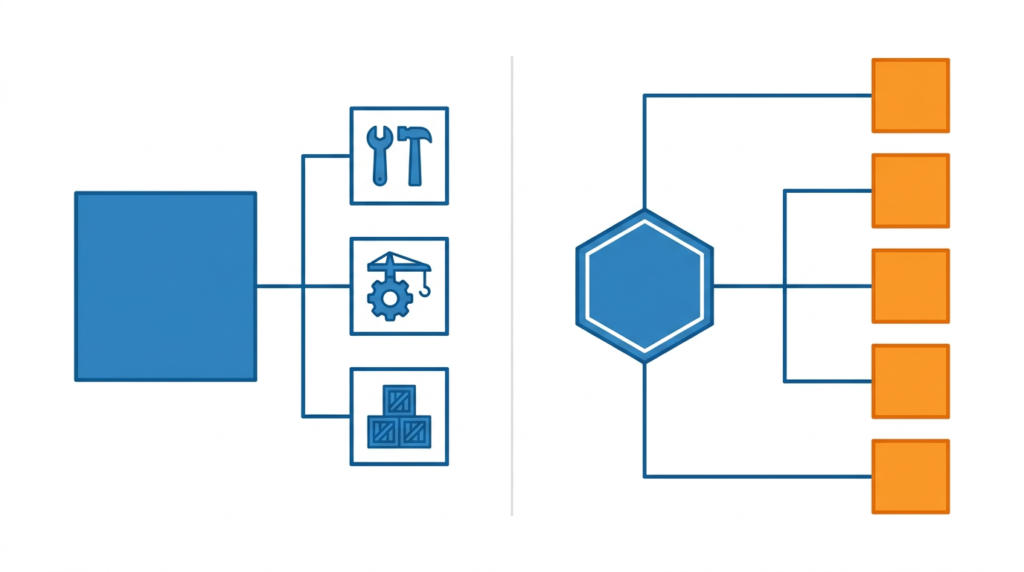
The simplest way to understand the difference is this:
EPC: The contractor builds the plant and hands you the keys.
EPCM: The contractor manages the building of the plant while you hold the contracts.
In EPC, the contractor carries the risk of cost overruns and schedule delays. In EPCM, the owner carries most of that risk, and the EPCM contractor is paid a fee for managing the process.
EPC also provides greater schedule certainty, since the contractor is responsible for coordinating all activities. In EPCM, schedule risk sits largely with the owner, since the owner holds the individual contracts and the EPCM contractor’s role is to coordinate them.
Side-by-Side Comparison
| Factor | EPC | EPCM |
|---|---|---|
| Contract structure | Single contract with one contractor | Multiple contracts; owner holds construction contracts |
| Risk bearer | Contractor (for most construction risk) | Owner |
| Cost certainty | High (lump-sum price) | Lower (cost-plus or reimbursable) |
| Schedule certainty | Higher (one party coordinates all activities) | Lower (owner holds the contracts) |
| Owner involvement | Lower | High |
| Owner staffing needs | Limited | Significant |
| Flexibility for changes | Low (changes are costly) | Higher (owner can adjust scope) |
| Contractor’s role | Single point of responsibility | Manager/agent |
| Typical project size | Small to large | Medium to very large |
When EPC Makes Sense
EPC is often the right choice when:
- The owner lacks in-house engineering staff. Without a technical team to manage multiple contractors, EPC transfers that burden to the contractor.
- Cost certainty is critical. Lenders and investors often prefer EPC because the lump-sum price reduces financial uncertainty. Lenders prefer EPC because the fixed price and single point of responsibility reduce the risk of cost overruns and delays that could affect debt service. Some lenders require EPC delivery as a condition of financing.
- The project is well-defined. If the scope is clear and unlikely to change, EPC locks in price and schedule.
- The plant is small to medium-scale. For smaller plants, the overhead of managing multiple contracts may not be justified.
For most small to medium-scale industrial plants, EPC is the default choice for these reasons.
When EPCM Makes Sense
EPCM is often the right choice when:
- The owner has strong in-house engineering capability. If you have the technical team to oversee design and construction, EPCM gives you more control.
- The project is large and complex. Very large projects often use EPCM because few contractors are willing to absorb the risk of a lump-sum price at that scale.
- Flexibility is important. If the scope is likely to evolve, EPCM allows changes without the heavy penalties typical of EPC contracts.
- The owner wants to retain control over key decisions. EPCM keeps the owner in the driver’s seat for equipment selection, contractor selection, and design changes.
The Risk Trade-Off
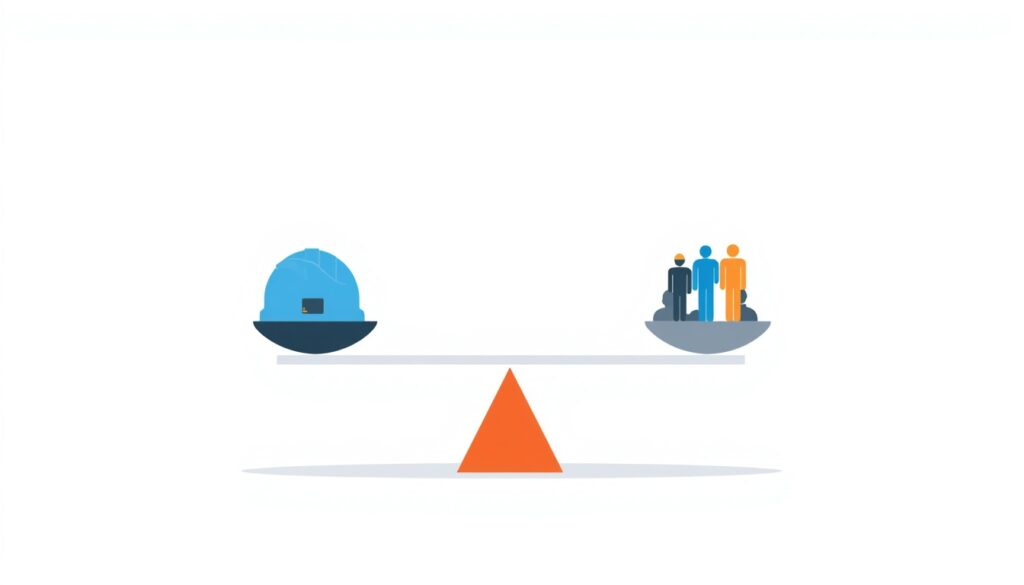
The core trade-off between EPC and EPCM is risk versus control.
| EPC | EPCM | |
|---|---|---|
| Risk | Contractor bears most risk | Owner bears most risk |
| Control | Owner has less control | Owner has more control |
| Cost | Higher price (includes a risk premium), but predictable | Lower management fee, but total project cost is uncertain |
| Effort | Lower owner effort | Higher owner effort |
There is no universally correct answer. The right choice depends on your team’s capabilities, your project’s complexity, and your appetite for risk.
Hybrid and Variant Models
The choice is not always strictly EPC or EPCM. In practice, some projects use hybrid models. For example, the main process plant may be delivered under EPC while balance-of-plant works are managed under EPCM. These hybrids can capture the benefits of both models, but they require careful interface management.
Another variant is sometimes called “EPC-Lite” or “open book EPC.” Here, the contractor takes EPC-style responsibility for delivering the plant, but the owner has visibility into actual costs. This suits owners who want cost certainty but also transparency. Because these terms are not standardized, always confirm in the contract exactly what the contractor guarantees and how costs, savings, and overruns are shared.
Common Mistakes Owners Make
1. Choosing EPC without understanding the scope.
If the scope is not clearly defined, an EPC contractor will either price in a large contingency or refuse to bid. Vague scopes lead to disputes later.
2. Choosing EPCM without the staff to manage it.
EPCM requires the owner to make decisions, review designs, and manage interfaces. If you do not have the team for this, EPCM can quickly become overwhelming.
3. Assuming EPC eliminates all risk.
EPC transfers most construction risk to the contractor, but the owner can still bear risks that the contract does not transfer, such as those tied to permits, owner-provided information, and, depending on the contract terms, site conditions. The owner also takes over operation and maintenance after handover.
4. Assuming EPCM is always cheaper.
EPCM fees may be lower, but the owner absorbs cost overruns. In a volatile market, EPCM can end up costing more than a fixed-price EPC.
How Japanese EPC Firms Approach This
Japanese engineering firms often favor EPC delivery for small to medium-scale plants. This reflects several common characteristics of Japanese project delivery:
- Preference for clear responsibility: A single point of accountability aligns with a strong emphasis on clear roles and ownership of outcomes.
- Long-term relationships: Japanese firms often work with trusted subcontractors, reducing the coordination burden that EPCM requires.
- Conservative risk assessment: Japanese contractors tend to price EPC contracts carefully, avoiding the aggressive bidding that can lead to disputes.
- Quality focus: EPC allows the contractor to control quality across design, procurement, and construction.
For plant owners working with Japanese EPC firms, this often means a smoother project with fewer surprises, though the initial price may be higher than some competitors.
How to Decide
Ask yourself these questions:
- Do we have in-house engineering staff? If no, EPC is likely the better choice.
- Is cost or schedule certainty a priority? If yes, EPC provides more predictable pricing and timelines.
- Is the scope likely to change? If yes, EPCM offers more flexibility.
- Do we want to be deeply involved in decisions? If yes, EPCM gives you more control.
- What is our risk tolerance? If low, EPC shifts risk to the contractor.
- Would a hybrid or open-book approach fit? If you want a mix of certainty, transparency, and control, discuss these options with your contractor.
For most small to medium-scale industrial plants, EPC is the practical choice. It simplifies management, provides cost and schedule certainty, and matches the scale of the project.
Conclusion
EPC and EPCM are both valid delivery models, but they serve different purposes. EPC transfers risk and responsibility to a single contractor, while EPCM keeps the owner in control at the cost of higher involvement and risk.
Understanding the difference, and choosing the model that matches your team, your project, and your risk appetite, is one of the most important decisions you will make. Get it right, and the project starts on solid ground. Get it wrong, and you may find yourself managing a project you were not prepared to handle.
Key Takeaways
- EPC: single contractor, lump-sum price, contractor bears most risk
- EPCM: owner holds contracts, EPCM contractor manages on the owner’s behalf
- EPC offers cost and schedule certainty; EPCM offers flexibility and control
- Choose EPC if you lack in-house engineering staff or need cost certainty
- Choose EPCM if you have strong in-house capability or need flexibility
- Japanese EPC firms often favor EPC for small to medium-scale plants